
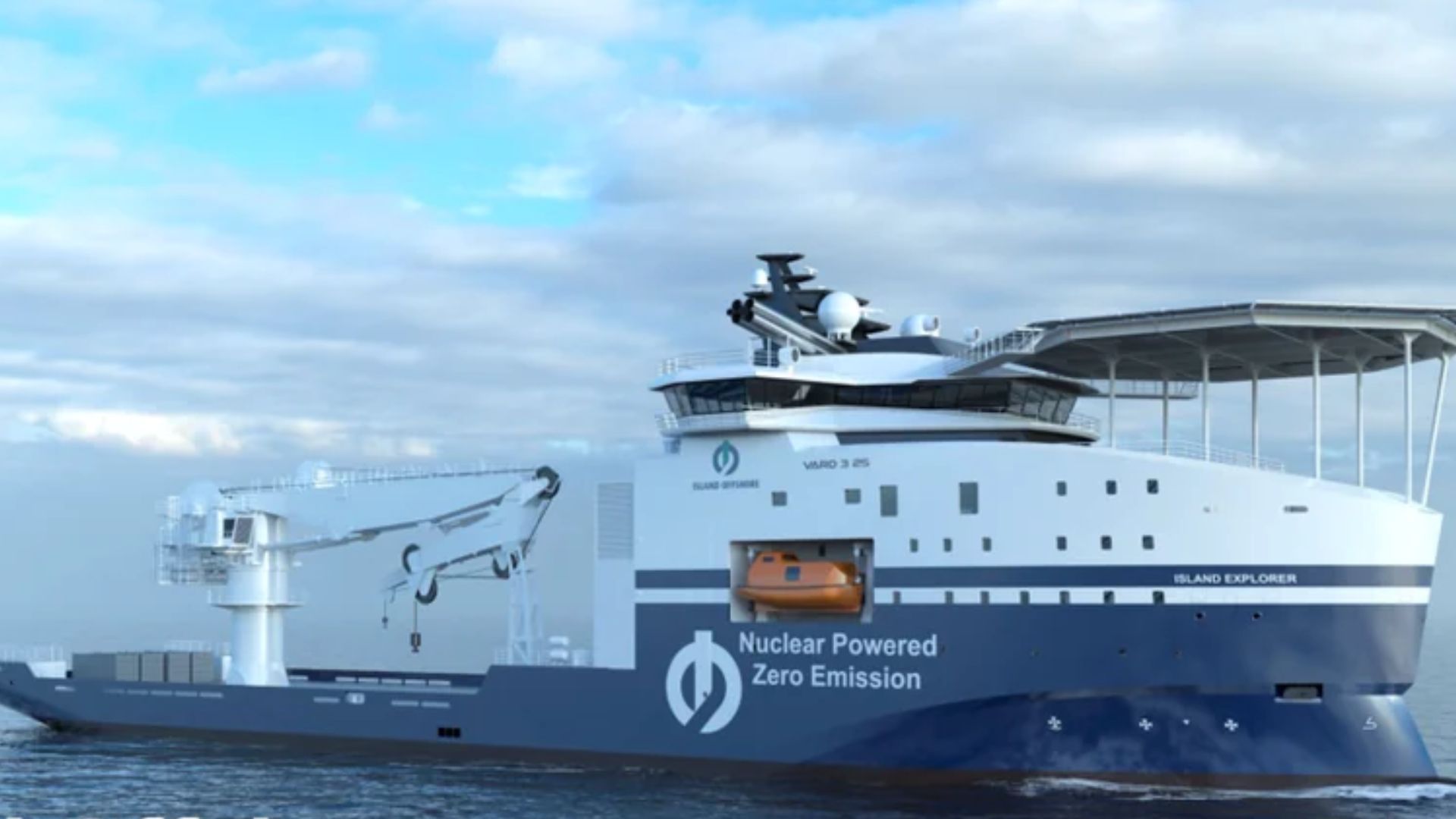
Norway is backing a project to develop and test an integrated nuclear propulsion system for commercial ships, marking a step toward nuclear-powered maritime transport. The Marine Nuclear Propulsion System (MarNuPS) Pilot project aims to demonstrate a new energy system combining a gas-cooled nuclear reactor with advanced power generation technology. The first phase is scheduled to begin in 2027, with private-sector commitments also supporting the initiative. The project targets the deployment of its first demonstration vessel, an offshore supply ship owned by Island Offshore, by 2031 or 2032. Microreactor powers ships MarNuPS Pilot project will combine a gas-cooled microreactor with a supercritical carbon dioxide (sCO2) turbine system to generate electricity for shipboard use. The project aims to demonstrate how a compact nuclear reactor can be integrated with the electrical and automation systems required to operate a commercial vessel. At the center of the design is a gas-cooled reactor energy system connected to an sCO2 gas turbine. The turbine will convert heat into electricity, which can then be distributed through the ship’s power management system. The architecture also incorporates energy storage, remote monitoring and control, and an interface with the vessel’s Integrated Automation System (IAS). Rather than immediately operating with nuclear fuel, the initial demonstration will use electricity to heat the reactor. Active nuclear operation will be considered at a later stage, after the integrated system and its essential safety parameters have been tested. The first phase will involve building an integrated test facility at Stette, near Ålesund, Norway. It will host a full-scale representation of the shipboard propulsion system, allowing engineers to evaluate its performance before installation on a vessel. MarNuPS has received approximately $2 million in initial funding from the Research Council of Norway. Stage 1 has an estimated total cost of around $15.6 million, with the remaining funding supported through contributions from project partners. The initiative builds on Norway’s earlier NuProShip I (2023–2024) and NuProShip II (2025–2026) research programs, which examined reactor designs, vessel integration, safety, regulation, and energy storage. Compact reactor leasing Testing will cover normal operating conditions, rapid changes in electricity demand, transient and stress conditions, and interactions between the system and its crew. The trials are intended to assess how the reactor, turbine, energy storage, power management, and automation components work together. Emerald Nuclear Norway will lead reactor technology and nuclear integration, while Island Offshore will represent vessel operations. Shipbuilder VARD will handle ship design and integration, with Vard Electro responsible for power management and automation. The Norwegian University of Science and Technology (NTNU) will oversee nuclear and thermohydraulic modeling, while Imperial College London will manage structural integrity. Maskindynamikk will contribute instrumentation, diagnostics, and condition-monitoring expertise. The project uses Emerald Nuclear’s proposed GEM Microreactor, which is designed for ships and floating remote-power applications. Emerald is also proposing a leasing-based business model in which it would retain ownership and operational responsibility for the reactor, including maintenance and the nuclear fuel cycle. Shipowners would pay for the electricity they consume rather than owning and managing the reactor themselves. Norwegian shipping firm Island Offshore plans to be the first shipowner to install the reactor and energy system, with vessel deployment targeted for 2031/32. “Nuclear energy has the potential to provide a new route to decarbonizing offshore vessels without compromising the power, endurance and operational flexibility these ships require,” said Tommy Walaunet, CEO of Island Offshore, in a statement. According to the team, these efforts aim to move maritime nuclear propulsion beyond feasibility studies and toward integrated system testing and eventual commercial deployment. Get the latest in engineering, tech, space & science - delivered daily to your inbox.Jijo is an automotive and business journalist based in India. Armed with a BA in History (Honors) from St. Stephen's College, Delhi University, and a PG diploma in Journalism from the Indian Institute of Mass Communication, Delhi, he has worked for news agencies, national newspapers, and automotive magazines. In his spare time, he likes to go off-roading, engage in political discourse, travel, and teach languages.
Gas-cooled microreactor pitched to power next-generation nuclear-powered ships
Full Article
Original Source
Read the full article at Interestingengineering →KhanList aggregates and links to publicly available news content. We do not host full articles from third-party sources. Always verify important information with original sources.