
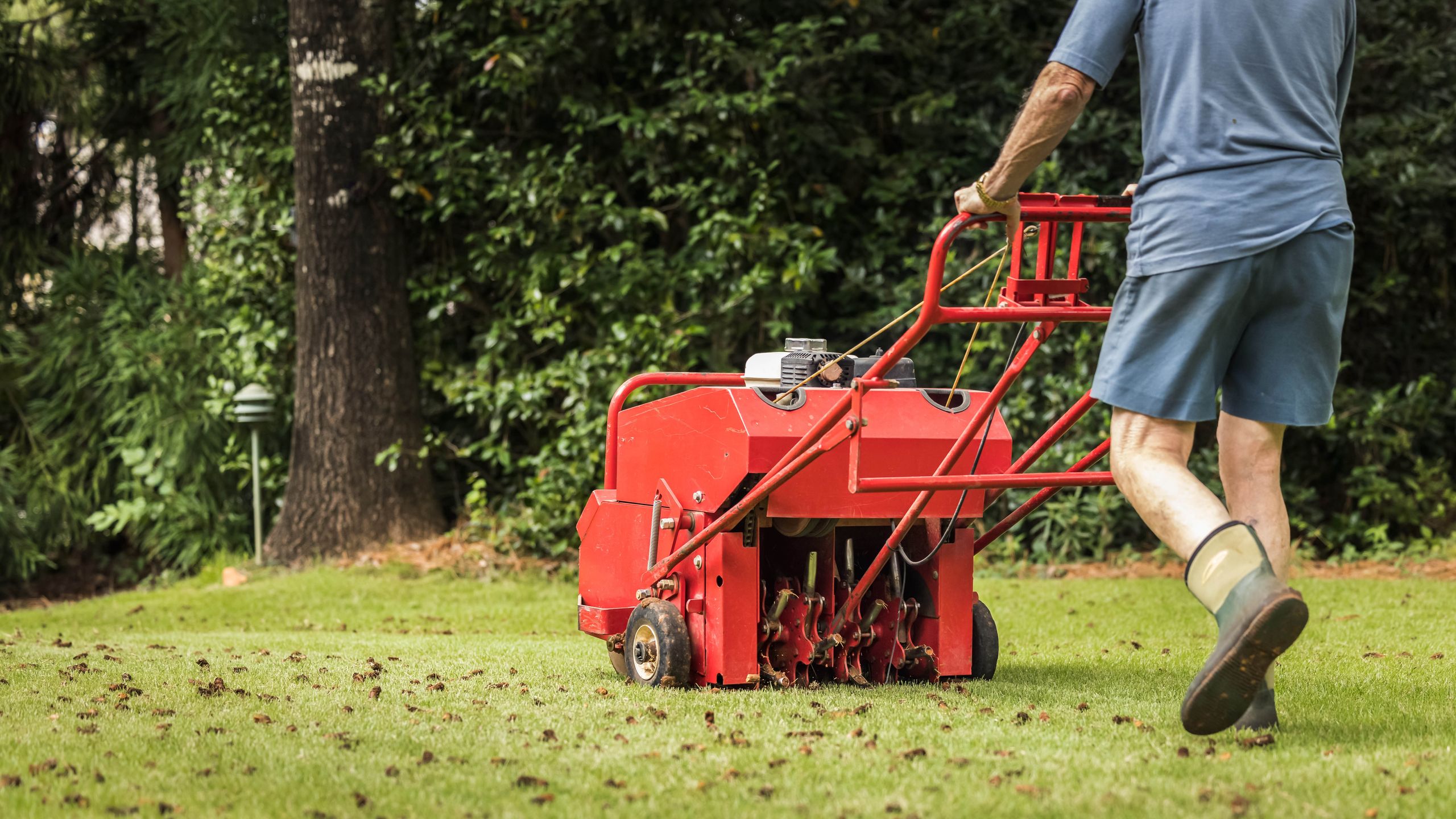
(Image credit: Shutterstock) It's a great time of year to roll out your lawn aerator and get to work. Bringing air into the lawn soil will not only help relieve any pressure and compaction that's happened over the year, but it'll also improve airflow, water absorption and your lawn's overall ability to access nutrients to help it grow.It's not something you need to do too often, but it's a step you don't really want to miss if your lawn is heavily compacted or struggling to drain water (especially with all the rain).Only after you put in all that effort to push your lawn aerator across your lawn, you might be left wondering if you've done a good enough job. It's certainly something I've contemplated as I stare at my own lawn, unsure whether I've made any real difference.I've asked the experts for their professional advice on how often you should aerate your lawn, how many passes are enough, and other tips and tricks to get the best results.When to aerate your lawn (Image credit: Shutterstock)Soil compaction is the ultimate telltale sign that your lawn needs aerating, but how exactly do you figure out if that's what's going on beneath the soil?Allison Koenig, a lawn and garden expert at Tractor Supply, says: "Homeowners should consider aeration if they're seeing standing water after rain, hard-packed soil, thinning grass, or areas that get a lot of traffic."A good rule of thumb is the screwdriver test: if it's hard to push a screwdriver into the soil, compaction is probably preventing healthy root growth."Get instant access to breaking news, the hottest reviews, great deals and helpful tips.And once you've figured out that your lawn needs aerating, you also have to consider if it's a good time to do it."Timing is everything when it comes to aeration. The best time to aerate your lawn depends on the grass type you have," explains Chris Ramos, PR & Events Coordinator at Blain's Farm & FleetWhen it comes to cool-season grasses like Fescue and Bluegrass, early fall or spring are ideal times, as these grasses grow most vigorously during colder months.And if you've got warm-season grasses like Bermuda or Zoysia, then late spring to early summer is optimal, coinciding with their peak growing season.Though Koenig adds: "However, once the ground freezes or the grass has gone fully dormant, it's best to hold off on aggressive projects like aerating, heavy raking, or major repairs."Once you've figured out the best time though, Ramos reveals you only really need to aerate your lawn once a year.How many passes should you make with your lawn aerator (Image credit: Shutterstock)So, you're planning to aerate your lawn, but how many passes should you be making to get the best results?According to Ramos, one or two passes should relieve soil compaction. In addition, choosing the right tool in the first place will have a major impact on how effective your lawn aeration is."There are two types of aerators. Spike Aerators: These tools create holes by pushing spikes into the soil," adds Ramos. "They're simple to use but might not be as effective on highly compacted soil."Plug Aerators: These remove small plugs of soil from your lawn, providing more lasting benefits by reducing compaction more effectively. They're generally the preferred option for most lawns."Additional top tips (Image credit: Shutterstock)Lawn aeration alone isn't all you should be doing. As Brian Feldman, Senior Director of Technical Operations and Agronomy at TruGreen explains: "One of the biggest misconceptions in the industry is viewing aeration as a standalone service."The greatest results occur when aeration is intergrated into a comprehensive turf management program that includes proper mowing, fertilization, irrigation, and overseeding practices."In fact, he suggests that if you're really looking for best practice when aerating your lawn, you should be "overseeding and fertilizing immediately after aerating to maximize growth.It's also important to leave the soil cores on your lawn after aerating, as they will naturally break down and help recycle nutrients and other beneficial microorganisms."So, while you can do an excellent job with your lawn aeration, timing it right and carrying out one or two passes until you're satisfied that you've relieved compaction, it's important to take the opportunity to do more for your lawn when it's at its most receptive. Follow Tom's Guide on Google News and add us as a preferred source to get our up-to-date news, analysis, and reviews in your feeds. Alternatively, you can read our content on the Tom's Guide app available now for iOS and Android. Subscribe to Tom's Guide on YouTube and follow us on TikTok. Finally, you can visit our dedicated Tom's Guide Savings Squad hub for expert help on getting the best products for less. More from Tom's GuideHow to aerate a lawn and when to do itI asked gardening experts the secret to a greener lawn — here's what they want you to do9 signs your lawn needs aerating Grace is a freelance journalist working across homes, lifestyle, gaming and entertainment. You'll find her writing for Tom's Guide, TechRadar, Space.com, and other sites. If she's not rearranging her furniture, decluttering her home, or relaxing in front of the latest streaming series, she'll be typing fervently about any of her much-loved hobbies and interests. To aid her writing, she loves to head down internet rabbit holes for an unprecedented amount of time.
Gardening experts reveal how often you should aerate your lawn and how many passes are best
Full Article
Original Source
Read the full article at Tomsguide →KhanList aggregates and links to publicly available news content. We do not host full articles from third-party sources. Always verify important information with original sources.