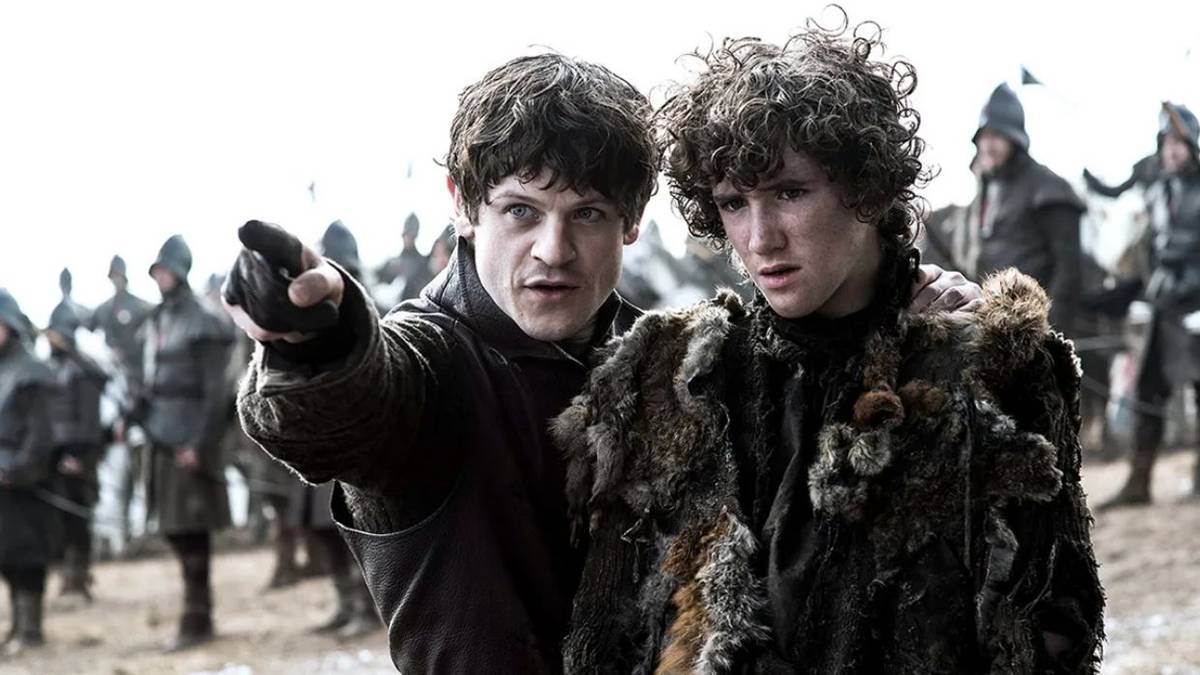
Image via HBO Published Jul 30, 2026, 12:30 AM EDT Gregory Mysogland is a freelance writer living in New York City. He is a passionate, lifelong fan of film and television and currently works as a Senior Movie and Television Features Writer for Collider. In addition to film, television, and writing, Gregory’s interests include comic books, playing basketball, watching football, martial arts, and going to the beach. Sign in to your Collider account Since its controversial conclusion in 2019, Game of Thrones has been used as one of the prime examples of the trend of multimedia adaptations being of lesser quality than their source material. But although there are some major problems with the final seasons of the blockbuster fantasy series that are hard to deny, one of the middle seasons is, for the most part, stronger than some viewers remember or are willing to admit. By Season 6, most of the source material from the completed entries in George R.R. Martin’s A Song of Ice and Fire series had been exhausted, and, while Martin told the series' creators David Benioff and D.B. Weiss some of the most crucial aspects of his plans for the still unreleased final novels, for the most part, it was up to them to continue the show how they saw fit. Without the guidance of the books, the ending provided by Seasons 7 and 8 became uneven, but the first full post-book season is one of the series’ most exhilarating and perhaps, its best. 'Game of Thrones' Season 6 Made Necessary Cuts to the Cast An earlier decision that Season 6 continued to benefit from was the creators’ choice to keep the cast a bit smaller than it is in the books. Both the written and filmed versions of Martin’s world are incredibly expansive, but the former became even more so during the most recent novels in the series, A Feast for Crows and A Dance With Dragons, which each introduced a host of new characters and storylines to the already sprawling narrative. After adhering fairly closely to the written canon of the first three novels throughout the first four seasons, the show began to diverge onto its own path in Season 5 by excluding a number of these additions and reducing the significance of others. Collider Exclusive · Game of Thrones Personality Quiz Which Game of Thrones House Do You Belong To? Stark · Lannister · Targaryen · Baratheon · Tyrell Five great houses. Five completely different answers to the same question: how do you hold power in a world that will take it from you the moment you stop paying attention? Eight questions will determine where your loyalties — and your nature — truly lie. 🐺Stark 🦁Lannister 🐉Targaryen 🦌Baratheon 🌹Tyrell FIND YOUR HOUSE → 01 Someone powerful is acting dishonourably and everyone knows it. What do you do? In Westeros, the answer to this question has ended more than one great house. ACall it out, openly and on the record. If honour means anything, it has to mean something when it's costly. BUse it. Information about someone else's dishonour is leverage — and leverage is power. CAct decisively to correct it — with or without the approval of those around me. DChallenge them directly. Strength settles disputes more honestly than courtroom manoeuvring. ENavigate carefully — build alliances, apply quiet pressure, and create a situation where the right outcome becomes inevitable. NEXT QUESTION → 02 What is the source of your power? Every house endures because of something. What is it for yours? AThe loyalty of people who trust me — earned over generations, not bought with gold. BWealth, intelligence, and the willingness to use both without sentiment. CA legacy so fearsome and a vision so total that opposition becomes unthinkable. DPhysical strength, military force, and the respect that comes from being the kind of person nobody wants to fight. ECharm, connection, and the ability to make powerful people feel that my success is also theirs. NEXT QUESTION → 03 Who do you truly fight for? Strip away the banners and the words. The honest answer tells you everything. AMy family and my people — those who depend on me and have kept faith with me through everything. BMy family — the ones who share my blood, even when they exhaust me, even when they disappoint me. CMy cause — a vision larger than any single person, including me. DMyself, and those few who've proven themselves worth fighting beside. EMy house — its name, its future, the position I intend to leave it in when I'm gone. NEXT QUESTION → 04 How do you deal with your enemies? A house's method reveals its character as clearly as its words ever could. AHonestly — I face them directly, and I give quarter when it's warranted. BThoroughly — I don't leave loose ends, and I don't make the same enemy twice. CDecisively — fire answers questions that diplomacy only delays. DHead-on — I'd rather meet a threat on the battlefield than behind closed doors. EElegantly — I prefer to make former enemies into allies, or at least into people who owe me something. NEXT QUESTION → 05 What kind of ruler do you believe in? Westeros is full of answers to this question. Most of them end badly. AA just one — someone who serves the realm rather than using it, who leads by example rather than fear. BA capable one — someone smart enough to navigate the game, ruthless enough to win it, and realistic about what winning costs. CA transformative one — someone who doesn't just rule what exists but reshapes what's possible. DA strong one — someone whose authority is beyond question because the alternative is obviously worse. EA wise one — someone who understands that the realm is fed by more than armies, and that a full stomach keeps more peace than a sharp sword. NEXT QUESTION → 06 You suffer a devastating loss. How does your house respond? How a house handles defeat tells you more about it than how it handles victory. AWe grieve, properly and together — and then we endure, because endurance is what we do. BWe adapt. We reassess. And we ensure that whoever caused this loss comes to regret it completely. CWe burn hotter. Setbacks don't soften us — they clarify what needs to happen next. DWe hit back. Grief and revenge are the same motion in our house. EWe regroup quietly, rebuild our position, and return when we're ready — on our terms, not theirs. NEXT QUESTION → 07 Which of these truths about Westeros do you most believe? Every house has a philosophy. This is yours. AThe lone wolf dies, but the pack survives. Nothing matters more than the people you protect. BA Lannister always pays their debts — in gold or in kind. Reputation is built on consistency. CI am the blood of the dragon. Some destinies are written before the person who carries them is born. DOurs is the fury. When we move, we move completely — and we don't stop until it's done. EGrowing strong means knowing when to bloom and when to wait. Patience is its own kind of power. NEXT QUESTION → 08 The Iron Throne is within reach. What do you do? The answer reveals not just your ambition — but your character. AClaim it only if the realm needs me to — and rule in a way that makes it worth having. BEnsure someone who owes us sits in it. The power behind the throne is safer than the throne itself. CTake it. It was always meant to be mine — I feel that in my bones and in my blood. DSeize it — with both hands, without hesitation. Opportunity in Westeros does not wait to be asked. EPosition my house to be indispensable to whoever sits there — influence outlasts any single reign. REVEAL MY HOUSE → The Maester Has Spoken Your House Is…Your answers point to the great house whose words, values, and way of surviving in Westeros match your own. Bend the knee — or don't. That's very much up to you. 🐺 House StarkWinter is Coming — and you have always known it. You prepare not out of fear but out of duty, because the people who depend on you deserve someone who takes the long view. You lead with honour even when it costs you, because you understand that a reputation built on integrity is the only one worth having. Your loyalty to family and people runs deep — not as sentiment but as a code that doesn't bend when things get difficult. The North endures because Starks endure — not by being the cleverest players in the game, but by being the kind of people others are willing to follow into the cold. You are that kind of person. The pack survives. The lone wolf dies. You already know which one you are. 🦁 House LannisterYou understand the game — its rules, its exceptions, and exactly when the rules become the exception. You play it without illusions and without apology. You are sharper than most people realise, and you have learned to use that gap to your advantage. A Lannister always pays their debts — and you always keep your word, because your word is an instrument of power, and instruments must be kept in working order. You love your family with a ferocity that sometimes blinds you, and you know it, and you do it anyway. The lion doesn't concern itself with the opinion of sheep. Neither, in the end, do you. 🐉 House TargaryenYou carry a sense of destiny that is difficult to explain and impossible to ignore — the feeling that you are not simply participating in the world but meant to reshape it. You are capable of extraordinary things, and you know it, and that knowledge is both your greatest strength and your most dangerous quality. Fire and blood are not just words to you — they are a philosophy about what change requires and what it costs. The Targaryens at their best were transformative rulers who broke chains and defied the limits of what anyone thought possible. At your best, so are you. The dragon has three heads. You are one of them. 🦌 House BaratheonYou are a force — direct, powerful, and difficult to ignore when you enter a room or a conflict. You do not negotiate with challenges. You meet them. Ours is the fury — and yours is a kind of intensity that commands attention, respect, and occasionally fear from those who underestimate what's behind it. You value strength and straight dealing. You'd rather know where you stand in a fight than navigate a web of courtly whispers. The Baratheons built their house on the back of one of the greatest military victories in Westerosi history — and then struggled with what came after. The lesson of your house is that winning is not the end of the story. Governing is. You are learning that too. 🌹 House TyrellYou understand that power does not always announce itself — that sometimes it arrives with flowers, good wine, and a smile that doesn't quite reach the eyes. Growing strong is your house's motto, and you live it: patiently, strategically, always investing in the relationships and resources that will matter most when it counts. You are charming by choice and calculating by nature — a combination that makes you one of the most effective players in any room you enter. The Tyrells fed King's Landing and shaped its politics without ever sitting on the Iron Throne — and they were arguably more powerful for it. You know that the person who controls the food controls the kingdom. And you always know where the food is. ↻ RETAKE THE QUIZ Although these choices remain divisive with the books’ most passionate fans and likely did contribute in at least some ways to the series’ later problems, for the most part, they paid off in Season 6. While the complexities of the world and plot are huge parts of the appeal of both the books and the show, the additions from Feast and Dance complicated things so much that the stories of some longer-running, more central characters arguably lost some of their momentum — and many fans suspect the increased scale is one of the major reasons Martin has not yet completed the final volumes. Reducing the complexity of the storylines centered on Dorne and the Iron Islands, and excluding the character of Young Griff, who was introduced in Dance, with the possibility raised that he is a long-lost relative of Daenerys Targaryen’s (Emilia Clarke) and therefore a possible heir to the Iron Throne, allowed Season 6 to maintain a tighter focus on the main cast and conclude the stories of some other supporting players. Both the books and the show are famous for their willingness to kill off major characters. But while none of the deaths featured in Season 6 are as dramatically impactful as, say, the death of Ned Stark (Sean Bean) or Tywin Lannister (Charles Dance) from earlier seasons, the sixth installment does have a particularly high body count, with many important supporting characters meeting their fates. Detractors will likely argue that this reduced the intricacy of the series’ plotting, and that’s true to some extent, but it also allowed for significant forward progress to be made in the more central storylines, much more so than in the recent novels. Most of Season 6’s deaths contribute to the story arcs of main characters in crucial ways. For example, Ramsay Bolton’s (Iwan Rheon) murder of his father Roose (Michael McElhatton) sets the former up as the ultimate tyrannical ruler in the North before his own defeat at the hands of Sansa Stark (Sophie Turner) and Jon Snow (Kit Harington) earns the latter pair their family’s home region back, which in turn allows them to shift their focus to the inevitable battle with the undead White Walkers. Likewise, Cersei Lannister (Lena Headey) assassinating several of her enemies, including the High Sparrow (Jonathan Pryce) and Margaery Tyrell (Natalie Dormer), by bombing the Sept of Baelor, cements her as the series' main human antagonist, a role she would occupy until Daenerys’ heel turn in the final episodes. And the tragic death of Hodor (Kristian Nairn) reveals the full extent of Bran Stark’s (Isaac Hempstead Wright) supernatural powers. In addition to propelling the plot forward, these developments also have important relevance to the series’ themes. Cersei taking power just before her son Tommen (Dean-Charles Chapman) kills himself is one of the show’s most devastatingly elegant illustrations of what an empty, costly prize the Iron Throne really is. Sansa feeding Ramsay to the dogs he used to slaughter many of his other victims is somewhat cathartic given the horrible things he did to her, but is also itself pretty chilling, again raising the kinds of questions about vengeance and when and to what extent violence is justified. And Bran’s time-traveling brainwashing of Hodor, though mostly accidental, is a dark turning point in the former’s story that foreshadows the cold character he becomes when he completes his mystical training. Though Hodor’s fate was one of the beats Martin informed the series creators of, Benioff and Weiss still deserve credit for how well the twist is executed within the series, especially given that a finished version of it hasn’t appeared in the books yet. 'Game of Thrones' Season 6 Shouldn't Be Blamed for the Show's Later Problems Another argument against Season 6 is that some of the momentous events that happen within it don’t have their aftermaths explored thoroughly enough. This is hard to completely refute in some cases, but it should really be used as a criticism of the subsequent seasons. Two of the events subject to this kind of discussion are Jon’s resurrection and Cersei’s aforementioned bombing of the Sept. Detractors argue that Melisandre (Carice van Houten) is able to resurrect Jon too easily, but at this point in the series, another follower of her religion, Thoros of Myr (Paul Kaye), is shown to be able to bring Beric Dondarrion (Richard Dormer) back from the dead multiple times. It is only after Jon does not prove instrumental in vanquishing the Whites in Season 8, suggesting that he might not be the prophesied “Prince That Was Promised” after all, that his resurrection and the other supernatural occurrences related to him begin to seem forced. Similarly, given the earlier worldbuilding, one would assume that Cersei would have a harder time maintaining control over King’s Landing without a living child in whose stead to rule than she does in Seasons 7 and 8. The actual bombing of the Sept is entirely in character for her, as it shows great ambition and ruthlessness while not necessarily being the most strategically wise choice, as has been the case with many of her past plots, to say nothing of the fact that she didn’t know Margaery’s death would lead Tommen to kill himself. 'Game of Thrones' Season 6 Is an Underrated Epic Image via HBO Hindsight seems to have warped the public perception of Season 6. Like earlier seasons, it does an excellent job of weaving the various storylines together and setting up future developments, even if one of the ways it does so is by trimming down the cast. The fact that the subsequent seasons squandered some of the potential it generated should not be held against the season itself. Indeed, between the faster pacing, the expected aesthetic mastery, and some iconic sequences, like the Battle of the Bastards, Hodor holding the door, and Daenerys eliminating the slavers before preparing to finally return to Westeros, Season 6 could easily be dubbed the most eventful and exciting installment and stands as proof that the series didn’t always need to adhere closely to the books to be great.
'Game of Thrones' Was at Its Best When It Finally Left the Books Behind
Full Article
Original Source
Read the full article at Collider →KhanList aggregates and links to publicly available news content. We do not host full articles from third-party sources. Always verify important information with original sources.