
JERUSALEM – With just over a week to go, Gadi Eisenkot is within striking distance of a coalition breakthrough that could secure him a parliamentary majority and loosen Benjamin Netanyahu’s three-decade grip on Israeli politics.The opposition leader has made significant advances during three weeks of horse trading extraordinary even for a country that’s no stranger to political wrangling.His strategy involves simultaneously negotiating with factions that cross multiple “third rails” in Israeli politics: the military draft, the place of Arabs in its democracy, and accountability for the failures that led to the Oct 7, 2023, attacks. “The day after the election, most assumed a government could only be formed through an Eisenkot-Netanyahu deal – or else Israel faced another vote,” said Nadav Perry, a political analyst and podcaster.“Yet Eisenkot defied expectations to make lemonade out of lemons: seeing Netanyahu’s bloc drop from 68 seats to 53, he spotted a rare, unmissable opportunity.”With his initial Dec 6 deadline looming, the opposition leader is charging ahead to seal a deal, though the outcome may only become clear in the final moments next week – or in three weeks, should he seek an extension.He could still fail.Netanyahu has been working to delegitimize the results, including by smearing Arab voters.His lawyers filed a court petition this week questioning the vote, despite election officials saying they found no fraud on a scale that would have impacted the outcome.He’s also sought to prevent his ultra-Orthodox allies from defecting to Eisenkot’s camp, with more success with one party than the other. Eisenkot, 66, has had to navigate a political minefield exceptional even by the standards of a country where coalition-building has always been a necessity, and of which Netanyahu has long been the master.The Oct 27 election disappointed the opposition.The four parties that coalesced under Eisenkot had hoped to approach a majority or at least outnumber Netanyahu’s bloc, with Israel’s Arab parties outside both camps, though broadly opposed to the incumbent.Instead, the opposition secured 48 seats to Netanyahu’s 53, out of the Knesset’s total 120.As exit polls projected an increasingly bleak showing, it became clear Eisenkot needed support from outside his bloc.His partners complicated the math, each pulling in a different direction: former Prime Minister Naftali Bennett advocated unity with Netanyahu’s Likud; nationalist Avigdor Liberman pushed to peel away Netanyahu’s ultra-Orthodox allies; and the Democrats’ liberal leader Yair Golan favored a minority government backed by Arab lawmakers.Rather than choosing one path, Eisenkot opted for all three.“There are three main tracks for forming a government, and I approach them all with utmost reverence and an open heart,” Eisenkot said last weekend, citing “serious dialogue” with an ultra-Orthodox party and “sincere and genuine efforts” with Likud.His two main avenues are almost diametrically opposed: even as he negotiates with Netanyahu over unity, he’s seeking to weaken his rival’s bargaining power by prizing away one of his most loyal allies, the seven-seat United Torah Judaism party.On Nov 26, Eisenkot was handed an opportunity when the two senior Ashkenazi ultra-Orthodox rabbis gave United Torah Judaism’s negotiating team the green light to start talks with his Yashar party, Channel 13 reported. A day later, the opposition leader further hinted at that path blaming Likud for “digging in his heels” throughout two weeks of talks. Negotiating with the ultra-Orthodox could prove a double-edged sword.Their alliance with Netanyahu dates to his first victory in 1996.Despite occasional ruptures, ties solidified over the past decade, with Netanyahu dubbing the parties his “natural partners.”They stuck with him through successive inconclusive elections.That loyalty was tested when Netanyahu prioritised his effort to strip the judiciary of power rather than legislation enshrining military exemptions for religious seminary students.The Oct 7 attacks and subsequent wars further derailed the legislation, while military manpower shortages intensified public pressure to draft ultra-Orthodox men.“We have no trust in the prime minister, we no longer feel we are his partners, we have no obligation to him,” influential Rabbi Dov Lando wrote to ultra-Orthodox lawmakers in May.Still, there’s a chance the ultra-Orthodox could extract concessions from Eisenkot only to use them as a blueprint for a renewed deal with Netanyahu.Conversely, with Netanyahu lacking a majority and court-mandated sanctions already affecting religious draft evaders, Eisenkot may offer the group a faster route to securing their objectives.At the same time, he would face a tricky balancing act with opposition allies like Bennett, who are pushing to draft far more ultra-Orthodox men to ease the strain on reservists and conscripts.Late on Nov 24, Eisenkot announced his first coalition agreement, with Liberman’s Israel Beytenu, followed by a deal with the Democrats on Nov 26.While Liberman’s agreement remains under wraps – he’s expected to return to the Defence Ministry – the Democrats secured the national security portfolio, currently held by hardliner Itamar Ben Gvir, and a commitment to reverse Netanyahu’s judicial overhaul and safeguard the judiciary’s independence.That leaves Bennett as the only opposition bloc leader yet to sign – leaving Eisenkot a dozen seats short.All of the uncertainty has sent made the shekel one of the world’s worst performing currencies, down 7.6% against the dollar since election day.With neither the Likud nor ultra-Orthodox talks yielding a formal breakthrough, signing with Liberman signalled a tilt toward the latter.Liberman fiercely opposes unity with Netanyahu, saying this week that even speaking to him was a mistake.Yet Bennett may be unlikely to abandon his preferred course, if Netanyahu offers a rotation letting Eisenkot serve as prime minister first. The two paths would yield materially different governments. Even if Eisenkot were to join forces with Likud on the condition that Netanyahu step aside as prime minister, the party – as Parliament’s largest – would still likely command the biggest share of Cabinet posts.Its support for curbing judicial powers, differences over West Bank law enforcement, and opposition to a state commission of inquiry into the October 2023 Hamas attacks could eventually plunge the coalition into chaos.Eisenkot said on Nov 27 that talks over who goes first in a premiership rotation are “merely the tip of the iceberg of Likud’s stubborn refusal to keep extremists out of the cabinet” and discuss a coalition capable of passing a universal military draft law, among other things.Looming over all this is Eisenkot’s fallback plan: putting a government to a parliamentary vote even if neither preferred route pans out.That would require support from all 48 opposition lawmakers and affirmative votes from Israel’s Arab Ra’am party, which has eight seats, at a minimum.Both Bennett and Liberman have vowed to oppose such an arrangement because they view them as non-Zionist factions whose support for Palestinian nationalism clashes with their own core security and ideological commitments.However, Mansour Abbas, head of the Ra’am party, is expected to declare Hamas a terrorist organisation, Channel 12 reported on Nov 27, delivering another boost to Eisenkot’s attempts to form a government.Lawmakers would have to “follow their conscience and decide whether a new government will be formed or whether they are prepared to drag Israel into another election, with Netanyahu as caretaker prime minister,” Eisenkot said last weekend. Eisenkot may yet prevail in his game of chicken.But Nov 26 saw a dramatic development in Netanyahu’s trial on charges of bribery, fraud and breach of trust. In a highly unusual move, the judges summoned the Attorney-General, indicating little prospect of a bribery conviction in the most serious case and difficulty identifying a criminal offence in another. While dropping charges remains the Attorney-General’s decision, the remarks handed Netanyahu a significant victory that could give him fresh electoral momentum should Israel return to the polls.“Netanyahu is aiming for fresh elections, which is why he’s delegitimising the Arab parties and working overtime to keep the ultra-Orthodox on his side,” said Shalom Yerushalmi, political analyst for Times of Israel.“He’ll do everything he can to scuttle a minority government and form a unity government that he doesn’t really want but that would keep him in power.” BLOOMBERG
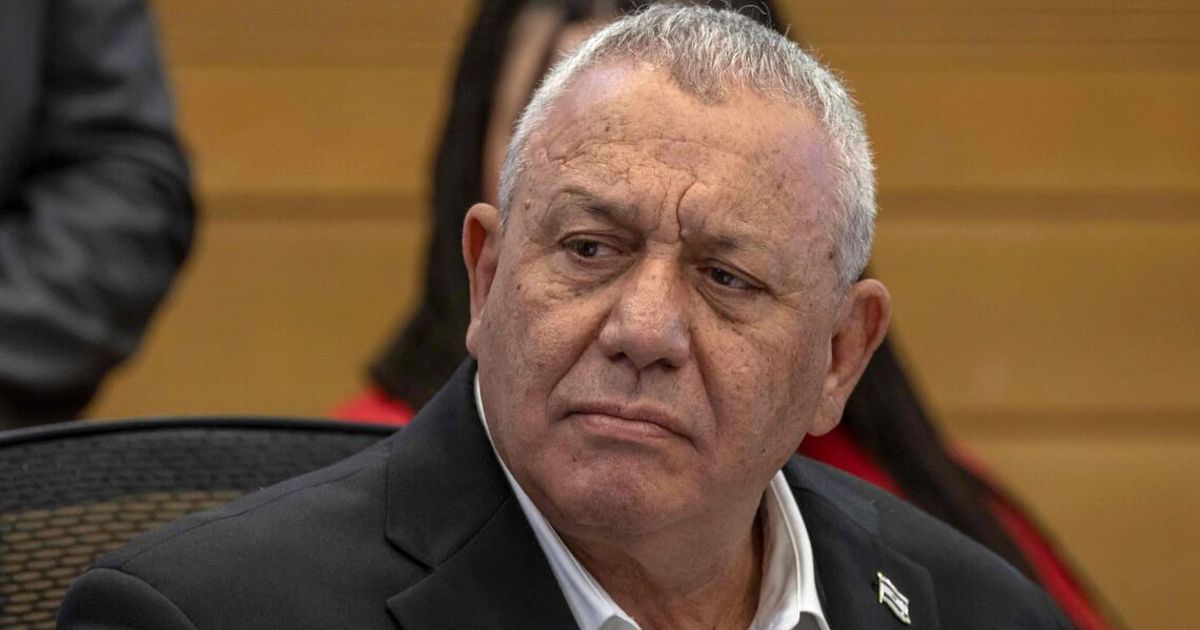
Gadi Eisenkot edging closer to leading Israel with talks progressing
Full Article
Original Source
Read the full article at Straitstimes →KhanList aggregates and links to publicly available news content. We do not host full articles from third-party sources. Always verify important information with original sources.