
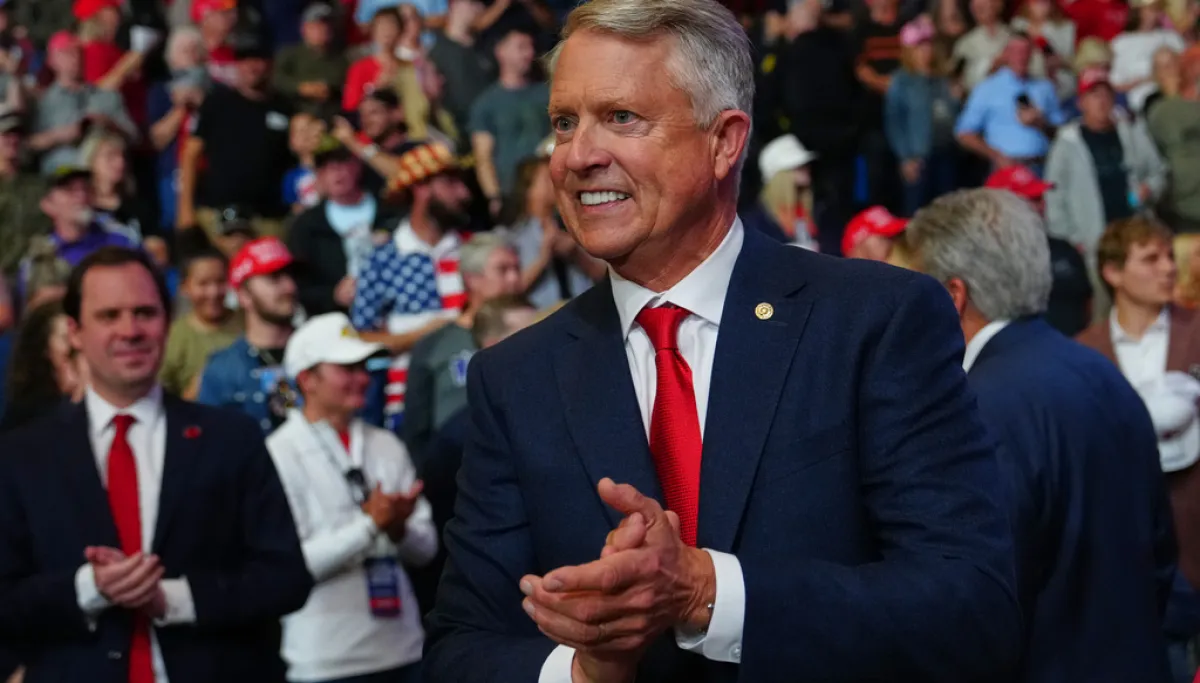
The future of Republican policy related to abortion and the Make America Healthy Again agenda in the next Congress largely hinges on whether Sen. Roger Marshall (R-KS) can manage to win reelection in Kansas.Marshall, who is running for reelection against Democrat megachurch pastor Adam Hamilton, has been a leading voice on healthcare policy as one of only four physicians in the Senate.Depending on the outcome of the midterm elections, Marshall could become the next chairman of the Senate Health, Education, Labor, and Pensions committee, where his commitment to advancing the MAHA priorities of Health and Human Services Secretary Robert F. Kennedy Jr. would stand in contrast to the leadership of the current chairman, outgoing Sen. Bill Cassidy (R-LA). The race for Marshall, whose team did not respond to the Washington Examiner’s request for comment, has been uncomfortably close for Marshall since the New York Times reported in September that he aggressively sought medical debt repayment from indigent patients.Despite President Donald Trump winning Kansas by 16 points in 2024, the RealClearPolling average of the past month’s polling shows Hamilton ahead by nearly 3 percentage points, and prediction markets project a similar result.Sen. Roger Marshall, R-Kan., greets people before President Donald Trump speaks at a campaign rally at Heartland Credit Union Arena, Monday, Oct. 19, 2026, in Park City, Kan. (AP Photo/Julia Demaree Nikhinson) MAHA and the anti-abortion movement Marshall has attempted to make inroads on advancing key food reform and anti-abortion policy objectives since taking office in 2021, although those areas have not been the main focus of his reelection campaign.In 2025, Marshall and his colleagues established the MAHA Caucus with the stated purpose of working “with RFK Jr. to be the legislative force that ensures the key pillars of MAHA are executed” and championing nutrition policy, according to the caucus’s founding documents.Marshall also attempted to shepherd a food labeling and ingredient transparency bill through the Senate, but it ultimately did not have enough support.Jennifer Galardi, a health and wellness policy analyst with the Heritage Foundation, told the Washington Examiner that she wished the MAHA Caucus could have been more effective in its first year, but she is nevertheless optimistic about Marshall’s leadership on MAHA issues.“I still believe that he believes in the ideals of the caucus and the food is nutrition and the root cause of chronic disease,” Galardi said.Marshall also received a strong endorsement from Susan B. Anthony Pro-Life America for his work on abortion policy, receiving an A+ on the organization’s scorecard for politicians for his anti-abortion voting record.Marilyn Musgrave, SBA’s chief of government affairs, praised Marshall for supporting the Hyde Amendment’s prohibition on taxpayer-funded abortion and for fighting to keep the one-year defunding of Planned Parenthood and other large abortion providers in the One Big Beautiful Bill Act signed by Trump last year.“Dr. Roger Marshall is a true champion of the ‘least among us,’ showing what it means to serve with compassion every day. Washington desperately needs a good doctor,” Musgrave said in her endorsement.In 2022, Marshall introduced the Born-Alive Abortion Survivors Protection Act with Sen. James Lankford (R-OK) to establish clear standards of care for infants born alive after failed abortions, with criminal penalties for healthcare professionals who violate the law. The measure received sweeping support from anti-abortion groups and Christian medical societies across the country but failed to pass.Although he has been relatively silent on the campaign trail about abortion, Marshall on Oct. 25 engaged in a faith-based event in Wichita with hard-line anti-abortion advocates in the state, including Troy Newman, head of the abortion clinic protest group Operation Rescue.Marshall said at the event that Kansans voters have told him “the most important thing for them is to protect our traditional Kansas values.Republican Sen. Roger Marshall, right, and Democratic nominee for U.S. Senate Adam Hamilton participate in a debate in Kansas City, Mo., Wednesday, Oct. 21, 2026. (AP Photo/Charlie Riedel, Pool) Marshall’s path to leadership Marshall would likely advance several MAHA and anti-abortion priorities if he were to, by circumstance, become the head of the Senate health committee, but his path to leadership is not a straight line.Marshall is third in the seniority line of succession to replace Sen. Bill Cassidy (R-LA), the current Senate health chairman, who lost his primary reelection bid in May. Sen. Rand Paul (R-KY) would have the most seniority to take over the leadership position on the committee, but he is unlikely to relinquish his chairmanship on the Homeland Security and Government Affairs Committee.Sen. Lisa Murkowski (R-AK) would follow Paul in rank, but she is more likely to assume the post as head of the Appropriations committee instead should current chairwoman Susan Collins (R-ME) lose her election in Maine. Murkowski assuming the top spot on Appropriations would clear the path for Marshall to take the HELP chairmanship.Murkowski has been a vocal supporter of both abortion rights and vaccines during her time on the HELP committee, but Galardi said she is less of an opponent to MAHA than Cassidy, who blocked several of Trump’s health appointees.Galardi said any of the Republicans, but especially Marshall, would be better than if Democrats take control of the Senate, meaning that likely Sen. Bernie Sanders (I-VT) would resume his post as chairman of the committee.“I think he would be obviously a wonderful leader in the health committee,” Galardi said. “And if he doesn’t get reelected, then we are doomed on that committee because that will most likely, if the Democrats take the Senate, that will most likely go to Bernie Sanders, which could be a disaster.”Public opinions It’s not clear that Marshall’s anti-abortion or MAHA record will affect his chances of winning reelection.Galardi said she does not believe MAHA is “pulling as much weight as it did in 2024” among swing voters because economic issues and foreign policy are top priorities.“We should always be concerned about health, but when people are struggling financially, it’s tough to get them to hear anything else,” Galardi said.More than 4 in 10 Kansas respondents to a CNN poll published Thursday said the cost of living was their No. 1 concern heading into Election Day, compared to only 6% who cited healthcare policy.On the national level, the importance of abortion policy for registered voters declined by 10 percentage points between 2022 and 2026, with only 46% calling it “very important” for their congressional vote, according to a Pew Research Center poll published in early October.Among voters overall, healthcare’s importance increased by 5 percentage points during that time, up to 68% of registered voters saying it would affect their choice for Congress.
Future of MAHA and anti-abortion policy hinges on Roger Marshall’s election chances
Full Article
Original Source
Read the full article at Washingtonexaminer →KhanList aggregates and links to publicly available news content. We do not host full articles from third-party sources. Always verify important information with original sources.