
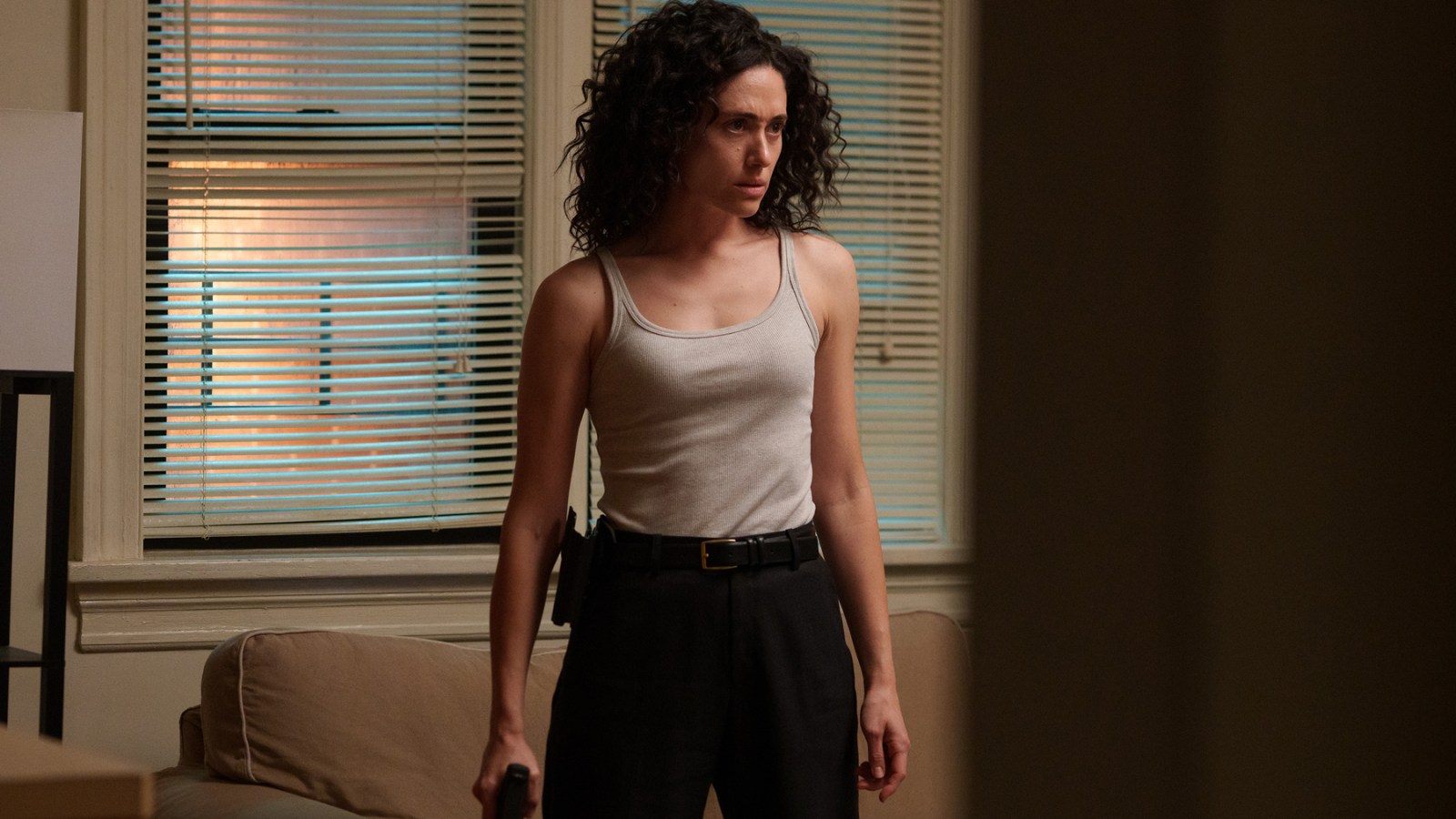
The showrunner takes us inside the making of her acclaimed crime procedural-thriller and the challenges of writing about abuse and trauma. Plus: What's in store for Season Two Liz Meriwether has created hit series from the long-running sitcom New Girl to the Elizabeth Holmes dramatization The Dropout and the Emmy-nominated cancer dramedy Dying For Sex. But she isn’t being humble when she says she had no idea just how much of a success her latest show, Hulu’s combo procedural-thriller Furious, would be. “I [felt] nervous and exposed, because for me as a writer, it was such a new genre,” she says. “I didn’t know if it was gonna work until two weeks into it airing. But it’s been amazing to see the passion that people have [for it]. I haven’t fully processed it and I probably won’t until 10 years from now, where I’m like, ‘Wait a second, how did I feel about all of that?’” Executive produced and starring Shameless matriarch Emmy Rossum, Furious follows FBI agent Alice Black (Rossum) as she attempts to track down a female serial killer operating in New York City. While the murders are at first believed to be random, Alice’s gut instinct that they’re linked soon turns out to be true. The perpetrator, Catherine (Lola Petticrew), was a victim of a years-long trafficking ring operated by one of the wealthiest men in the city: Jay Easton — a purposefully unsubtle nod to infamous trafficker Jeffrey Epstein. Alice is already dealing with her own shit, mainly the trauma from years of physical abuse at the hands of her cop ex-fiancé Marshall (Jake Lacy). But as one of the only FBI agents taking Easton’s crimes and Catherine’s intentions seriously, Alice is forced to confront her own pain and trauma in order to try and capture Catherine and hold Easton accountable for his crimes. As the cat-and-mouse game unfolds, the show is a marvel of pacing and tone, creating suspense around the inevitable, wringing emotion and dramatic tension out of small moments, and incorporating quirky humor to deliver unexpected laughs against the grim backdrop. Meriwether seems both bewildered and exhausted when she speaks to Rolling Stone by Zoom the day after the show’s final episode has dropped — completely understandable when you consider that amid all the press for Season One, she and her team have been in the writers room for Season Two for almost three weeks. The subject matter is not light: Furious explores how overwhelming the investigation of sexual crimes can be for law enforcement; how insidious and life-altering abuse of all kinds can be. It is also a potent examination of the different ways women still struggle to exercise their voice and their power, whether in the workplace, in romance, or in the larger world. Editor’s picks Meriwether spoke to Rolling Stone about the myth of the perfect victim, the emotional toll of creating a thriller with such serious themes, and her hopes for Season Two. The finale is officially out in the world. Did you watch it with people? Oh, God, no! I have trouble with that. When I’ve finished an episode, I’ve watched it so many times that I need time to pass before I can even look at it again. What kind of emotional impact did writing this show have on you? It’s difficult material to grapple with, and then you build it all to an incredibly tense, hour-long standoff for that Season One finale. The finale was really difficult to write. Mentally, at that point, I felt like I was also trapped in Jay Easton’s house. This show definitely took a toll on me. I started watching Instagram videos of this French doctor who would give babies massages and make them fart really loudly. I was like, “Why am I watching this so much?” I think I just needed to mentally go somewhere else for, like, long periods of time. And watching babies fart was definitely helping me. Meriwether on set with Rossum. Sarah Shatz/Disney What was your relationship with work like during New Girl, and how does that compare to Furious? This isn’t exactly a show you can take home with you in a healthy way. I’ve never been able to create firm boundaries in anything in my life, which is something I should maybe think about. When I was working on New Girl, I was single. I was 29. I didn’t have kids. I didn’t have a partner. New Girl was my life. I was sleeping at the office. Honestly, it’s so difficult making a network show. I don’t know how people have boundaries and balance in their life, and I know some people do. But that was just a really crazy, hard process. It was also the expectation at that time in 2011. There was less focus on work-life balance. There was a badge of honor with how hard you could work, how many hours you could spend at the office. Especially as a 29-year-old woman who had never been in a writer’s room before, I felt like I had something to prove. With this, I have three kids. I have a husband. It was a different thing. But when I’m working on something, it takes over my brain. It takes over my heart. That’s how I write. Related Content What experts did you consult to make the series feel accurate? I did speak to a lot of people directly — [female FBI agents and women who have been trafficked]. That helped me get through the toughest moments, because I kept thinking back to those conversations and the real-world experience of it and I was like, “Well, what I’m feeling is nothing.” And also, this isn’t a story that I have the power to tell alone. Where did you start with creating Alice? The cool thing about the character is [that] Emmy and Hulu really went on this journey with me. I wanted [Alice] to be mysterious. Every episode we’re learning something new about her, or pieces of her biography come out. You’re not sure if they’re real or true, and that continues on in the show to the very last moments of the show. So I purposefully went into it holding a lot of stuff back. Alice has suffered numerous traumas, from her abusive boyfriend to a complicated family history, including being kicked out of the house by her dad at 14. How is that manifesting when the audience meets her? When we meet her, she’s about a year or two out of an abusive relationship. That’s important. The story of a woman who’s still dealing with the aftereffects of that [abuse] isn’t told as much as a woman who’s currently in an abusive relationship and trying to get out. I was interested in “What [do] the aftereffects look like?” With the idea of a perfect victim, is she? She is a domestic abuse survivor, but she’s seeking out physical violence in a sexual way from partners. She has a recklessness when it comes to men in her life. I was interested in that part of the process. It’s hard to watch the women who experience abuse then experience another layer of guilt about their own recovery. If they feel like their recovery doesn’t fit into [what] we want it to be, then they’ve failed again. It was important to tell that story. How do you walk the tightrope between tension and humor, especially with such serious subject matter? The show I did right before this was Dying for Sex, which was this comedy about a woman dying of cancer. Something I learned from working on that was when you can get an audience to laugh, you really get them to open up. They’re willing to go to these darker places if they are given a release or a break from that darkness. So going into it, I had that in my head. Also when I spoke to the female FBI agents, they were so funny. They were gallows humor, raunchy, really funny women. And I have to be truthful about that. This is their way of coping with the job that they do. I don’t think it’s taking away from the drama for something to be funny. It’s the opposite. It’s showing the humanity in all of it, which makes it more intense. These are actual people that laugh and you feel the cost of their jobs on them. You understand them as humans not as these superhuman law enforcement people. Meriwether says Petticrew delivers an “incredible performance” as Catherine. Sarah Shatz/Disney How do Catherine and Alice mirror each other? And how does this central relationship change the characters’ ideas of justice and healing? They both understand what it’s like to be afraid for their lives in a situation where they had no control. People can see it in somebody who’s also had that experience. They’ve experienced real fear, and they’ve kind of gone different ways with it. One of them has tried to gain back her sense of control and power by killing people. And the other one has done that by trying to help people and trying to work within the justice system. These two characters can’t really fully be themselves with anybody but each other. This is just a cool thing from a writing standpoint. They’re the most honest with the person that they’re supposed to be hiding the most from. In the finale, Alice confronts Easton at his home and has to acknowledge that an entire cohort of people — cops, other wealthy men, even Easton’s own daughter — were complicit in his crimes. It was hard to watch. How hard was it to film? The finale was hard. I’d been living in the show for so long at that point. We shot the whole scene in the room with Emma Easton and Catherine and Alice in one day. It was such an intense day. And watching what Lola Petticrew, who plays Catherine, went through that day was so intense. As a writer, you feel for the actor, because you’re asking a lot of them. But at the same time, it was beautiful to watch, because it was an incredible performance. How does the format of the crime procedural allow you to explore the ways that corruption and coverups play into this world? This is a story that explores where we are with the criminal justice system when it comes to violence against women, specifically domestic violence and trafficking. We’ve seen in the past few years a lot of these big cases and how hard they are to prosecute. That feeling of “What is the justice we’re getting for people that have experienced this?” I’ve been watching from the sidelines and asking those questions. Yes, there’s corruption, for sure, but it’s also showing that the criminal justice system is run by flawed human beings that make mistakes and sometimes never have the full picture. They’re trying to work within a system that they know is flawed, and they’re trying to game it. My job as a TV writer is to look at the human beings as opposed to [big systems] like the criminal justice system and the FBI — all these things that become really abstract in conversation. The job of the show was to put faces to those things. What are the unanswered questions you want to tackle in Season Two? We’ve been having such great conversations in the writers room. Unfortunately, there’s a lot of issues that are still out there to talk about with these kinds of crimes. We’re just digging in. We’re trying to build a new case. I don’t want to get into it before it’s ready. Trending Stories You didn’t think about a Season Two when you wrote Season One. What freedom does not having a drawn out plan give you? Not having a plan — there’s good and bad to that. I am deeply envious of the writers and the showrunners that map out their whole series and know how the whole thing is going to end. But the good part of being more seat-of-your-pants is that you’re surprising yourself. You’re writing yourself into corners and then having to figure out how to get out of it; which is crazy-making, but also potentially exciting for the audience. Because you’re not seeing everything coming. The most charitable version of it is that it keeps you fresh. And it has ended up feeling like a very topical show. We’re trying to keep the spirit of that alive and exploring those conversations that are happening right now as opposed to having an idea of what we want to say. Is there anything else you want people to know? This is your chance to say something Max Greenfield has to answer for, for once. I wish I was, but I’m not [New Girl stars] Jake [Johnson] and Lamorne [Morris]. I can’t do the bits. But yeah, Max actually wrote the scripts for the [New Girl] reunion and he put my name on them. I didn’t bring it up with the Writers Guild but I may have to.
‘Furious’ Creator Liz Meriwether on the Season 1 Finale, Funny FBI Agents, and Farting Babies
Full Article
Original Source
Read the full article at Rollingstone →KhanList aggregates and links to publicly available news content. We do not host full articles from third-party sources. Always verify important information with original sources.