
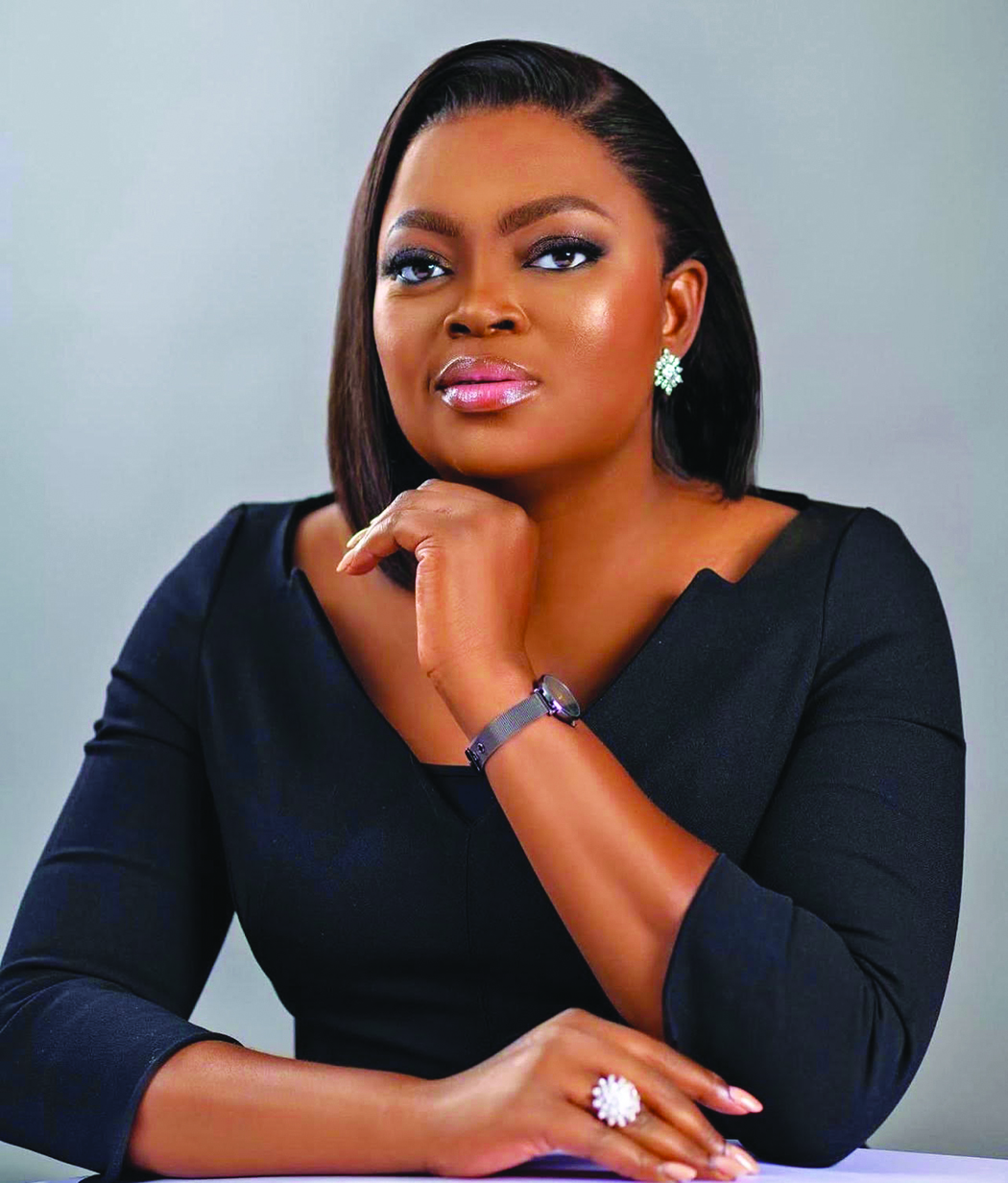
Follow THISDAYLIVE on GoogleAdd us as a preferred source to see more of our stories in Google Follow us on Google From her breakthrough role as Jenifa to becoming one of Nollywood’s most successful filmmakers, Funke Akindele’s remarkable career is a story of talent, hard work, discipline and reinvention. While her box-office records have cemented her place among Africa’s leading filmmakers, she believes talent alone is not enough to sustain success. Over the years, Akindele has built a formidable connection with audiences through television sitcoms, dramas and blockbuster movies, earning their loyalty with stories that resonate across generations. As she prepares for another December release, ‘The Four: No One Fights Alone,’ a drama exploring friendship, motherhood and the strength of ordinary women, she speaks with Ferdinand Ekechukwu about the values that have shaped her journey, the demands of sustaining success, her relationship with fans and the evolving business of filmmaking. Excerpts. Your career has moved from actor to filmmaker and producer. What turning points changed how you see your work and yourself? There were a few. Jenifa in 2008 changed my life. Suddenly the whole country knew me, and I learnt how powerful one character can be. Jenifa’s Diary was the next one. Producing a TV series taught me the business side: budgets, crew, distribution, and the sleepless nights. That was when I stopped seeing myself as only an actress and started seeing myself as a builder. Then cinema: ‘Omo Ghetto: The Saga,’ showed me Nigerians would come out in their numbers for our stories. When A Tribe Called Judah became the first Nollywood film to gross one billion naira, I understood it was bigger than me. It was about what our industry could become. Through it all, I learnt to trust God, trust my team, and trust myself. When you start a new project, how do you decide what to carry forward, what to change, and when to trust an idea your audience has not seen yet? I carry forward the heart: family, humour, and characters you feel you know. My audience comes for that feeling, and I will never take it away from them. What I change is the scale and the angle. Every film must stretch me a little. If I’m comfortable, I’m probably repeating myself. As for trusting a new idea, if it moves me in the writers’ room and my team argues about it passionately, I know we have something. ‘The Four’ is a good example. It is a drama about friendship, motherhood and the strength of ordinary women, which is a different shade from what people expect from me. But the moment we cracked the story, I knew my audience was ready for it. Audiences love the familiarity of a Funke Akindele film. How do you protect that while giving yourself freedom to tell different stories? The familiarity is not the genre. It is the feeling. You laugh, you cry, you see your mother or your sister on screen, and you go home talking about it. As long as I protect that feeling, I am free to change everything else: the setting, the tone, even the kind of character I play. I also protect it by never talking down on my audience. They are smart. They can follow me into a new kind of story, as long as they can feel it is still me telling it. You’ve built a loyal audience over the years and social media has shaped how filmmakers connect with audiences. How has Facebook shaped your journey as a filmmaker, especially in building and sustaining a community around your work? Facebook is one of the places where my community lives, and it has been with me for a long time. My earliest online fans found me there, and many of them are still there, now with their children and friends abroad. What it has given me is a direct line. I don’t need a middleman to tell my audience a film is coming. I tell them myself, they tell their people, and before you know it, the whole family is booking tickets. It has also kept me honest. The comments tell you the truth very fast. I have learnt to listen, laugh at myself sometimes, and keep the conversation going between films, not only when I have something to sell. From sharing behind-the-scenes moments to giving audiences a glimpse into your creative process, Facebook has become a space where filmmakers can take fans along on the journey. How intentional are you about using Facebook to build anticipation and keep audiences engaged beyond the cinema? Very intentional. Our content plan starts in pre-production, not in release week. From the first announcement to the first look, the cast reveals, the behind-the-scenes clips and the premieres, every step is designed so the audience feels they are building the film with us. By the time the film opens, they are not just viewers. They are part of it. After the cinema run, we keep going: fan reactions, bloopers, conversations about the themes. A film should not die when it leaves the cinema. It should keep living in the culture. Facebook is partnering with you for ‘The Four: No One Fights Alone,’ with experiences spanning the London World Premiere and Lagos Homecoming Premiere. What does having Facebook celebrate your work and connect with audiences across these two cities mean to you? It means a lot. It tells me the work is being seen at a global level, and it tells every Nollywood filmmaker that the world is paying attention. London is special because our people there have supported us so strongly, and opening the world premiere there is my way of saying thank you. Lagos is home. The homecoming premiere is where it all started for me, so it will always feel like a family celebration. The film is about women who refuse to let one another fight alone, so it feels right to have a partner standing with us across both cities. I’m grateful. You’ve built a strong following beyond Nigeria. How important is it that Nigerian stories travel internationally while retaining the cultural nuances that make them authentic. It is very important, and I don’t believe in watering down our stories to travel. Subtitle it, don’t dilute it. The world doesn’t want a copy of Hollywood from us. They want the Yoruba proverb, the Pidgin joke, the market woman, the way our mothers pray for us. That specificity is exactly why our stories travel. People everywhere understand family, struggle, love and survival. They just want to see it through our eyes. When a viewer in London who has never been to Nigeria laughs at the same scene as someone in Lagos, that is the magic. How has the relationship with your fans changed as an actress to the filmmaker that has given them blockbuster movies back to back? Before, they were fans of a character. Now they are stakeholders. They feel ownership of every record, because they bought the tickets. When a film breaks a box-office record, they say “we did it,” and they are right. That also means they hold me accountable. They expect quality every December, and they let me know when they are not satisfied. I take that seriously. It is a relationship of trust. They give me their money and their time, and I owe them a good story every single time. How do you separate the internet noise from the genuine desires of your audience when looking at feedback from a movie release? I look for patterns, not the loudest voice. If one person is shouting, that is an opinion. If thousands of people are saying the same thing in different ways, that is feedback. I also watch what people do, not just what they type. Are they coming back to watch it a second time? Are they bringing their family? Are week-two numbers holding? The box office doesn’t lie. And I still go into cinemas quietly to watch with the audience. When you hear a whole hall laugh, or go silent, you learn more than a thousand comments can teach you. How do you adapt your stories to capture Gen Z audience without alienating the older generation that has supported you for two decades? I tell family stories, because every family has both. The mother and the daughter are in the same cinema, so the film must speak to both of them. For Gen Z, it is about pace, music, fashion, and seeing faces they know. That is why we bring in young stars and musicians. In ‘The Four’ we have Timini, Shoday and Waje alongside legends like RMD. On social media, we meet the younger audience in their own language and formats. The core values don’t change: respect, love, loyalty and laughter. My older audience recognises those, and the younger ones are discovering them. Nobody is left out. What is the human element you ensure in every script to enable it resonates across audiences? A person you know. Every script must have someone the audience can point at and say, “That’s my aunty,” “That’s my brother,” or “That’s me.” Then vulnerability. My characters can be loud and funny, but at some point you must see their pain and what they are fighting for. That is where people connect. Comedy brings them in, but truth makes them stay. There has been recent industry debate regarding modern contents like dancing, skits, for promotion. How do you view this approach as a necessity to connect with movie audience and generate desired social media buzz? It is not either or. Promotion has changed. Cinema is competing with phones, football, streaming and everything else fighting for people’s attention. If a dance or a skit gets people talking and buying tickets, we will dance. But let me be clear: buzz is not a substitute for a good film. A dance can bring someone to the cinema once. Only a good story will make them come back and bring their whole family. So, we do both. We create buzz, and then we deliver. Beyond the cameras, movie sets and business demands, what does relaxation look like for you? How do you unwind and create time for yourself amid your busy schedule? Sleep. When you are a filmmaker, sleep is luxury. Beyond that, it is time with my children. Nothing resets me like being mum at home, with no cameras and no call sheets. I also make time for quiet moments with God, good music, and good food. And sometimes I just switch off my phone. The world will still be there when I switch it back on. You have become a major influence, particularly among young women aspiring to succeed in the entertainment industry. What personal values and life lessons have kept you grounded despite fame, success and public expectations? God first. Everything I have is grace, and I never forget it. After that, hard work and discipline. Talent will open the door, but discipline keeps you in the room. I also value humility and respect for people. The driver, the caterer and the extra on set all deserve the same respect as the lead actor. To young women, I would say this: don’t wait for anybody’s permission. Learn the business side, own your work, and surround yourself with people who will tell you the truth. And when you fall, because you will, get up and keep going. That is what The Four is about too: no woman should have to fight alone. Looking back at your journey, what has success taught you about happiness, family, friendship and the importance of protecting your personal space? Success taught me that the box office cannot hug you. Happiness comes from peace of mind, from my children, and from knowing who I am when the lights go off. Family is everything, and real friends are few. Keep them close and treat them well. Friendship is actually at the heart of The Four, because the people who stand with you in your dark days are the ones who matter. I have also learnt that not everything belongs online. I share my work generously, but some parts of my life are mine. Protecting that space is how I stay whole enough to keep giving my best to my audience.
Funke Akindele: Talent Opens Doors, But Discipline KeepsYou in the Room
Full Article
Original Source
Read the full article at Thisdaylive →KhanList aggregates and links to publicly available news content. We do not host full articles from third-party sources. Always verify important information with original sources.