
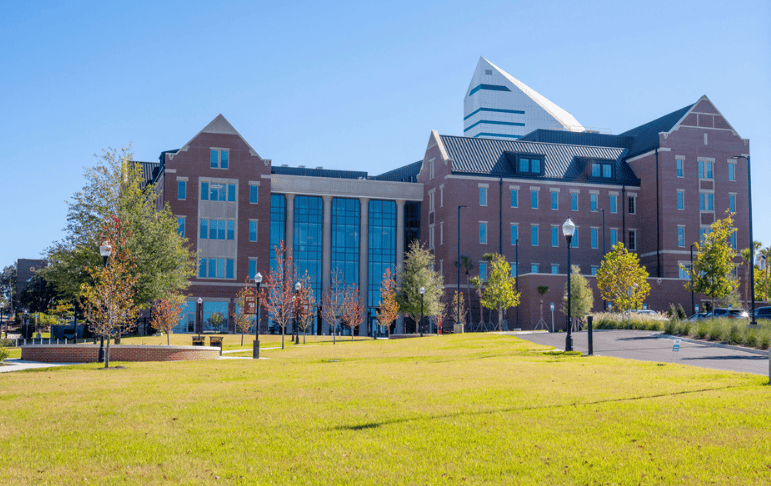
The Florida Surplus Lines Service Office announced a $12 million gift to Florida State University’s risk management and insurance program, a grant that should enable deeper research into Florida’s ever-evolving insurance landscape. It’s by far the largest grant yet for FSLSO, which has donated $2.5 million to universities in the state since the stamping office began operations 28 years ago. Shealy The endowment, which leaders with FSU’s Herbert Wertheim College of Business called “transformational,” reflects the growing presence of excess and surplus lines coverage in Florida, a state that in recent years saw many policyholders turn to surplus lines because of rising primary-market premiums and insurers’ litigation costs. Surplus lines’ policy counts in Florida climbed from less than 1.2 million in 2020, for example, to more than 1.7 million in 2025. Total surplus lines’ premium in the state more than doubled, from $7.5 billion in 2020 to $17.3 billion in 2025, the FSLSO’s annual reports indicate. The Surplus Lines Office, established by Florida statute in 1997, is a non-profit, quasi-governmental body that oversees compliance and collection of taxes on surplus lines policies, as well as an online portal for insurance agents and some back-office support for seven other states’ stamping offices. The FSLSO appears to be well positioned to provide large grants: Last year, the organization reported almost $20 million in revenue from stamping fees and assessments on surplus policies. That’s more than double its revenue in 2020 and well above its reported 2025 expenses of $11.5 million. Total assets stood at almost $78 million, the annual report shows. E&S Coverage in Florida, Q3 2026 (Source: FSLSO). Click to enlarge. If anyone should question whether such revenue and margins are appropriate, the FSLSO’s director of communications pointed out that the office this year slashed its stamping fee in half, bringing it from .06% per policy to .03%. That’s less than $300 per policy and is the lowest among surplus lines stamping offices nationwide, FSLSO Communications Director Ashlee Weber noted. The average surplus lines premium was about $7,700 in the third quarter of this year, the Office reported. The $12 million endowment to FSU will establish the Florida Surplus Lines Center for Insurance Excellence and will be used to fund faculty salary stipends, student assistance, conferences and more. “Our continued support, including this endowment, reflects our commitment to strengthening both the surplus lines industry and the broader insurance marketplace by investing in the education, research and talent that will shape the future,” Mark Shealy, FSLSO’s executive director, said in a statement. Shealy graduated from FSU with a bachelor’s degree in accounting in 1991 before starting his career in the insurance industry. The center will be led by FSU Professor Charles Nyce, who is already known for his department’s research into property-casualty insurance in recent years. Nyce’s position as director was funded by a separate, $1 million grant from the FSLSO that was announced in August. Nyce said the center will be able to delve deeply into many areas of insurance, including property, liability and health insurance. “For example, we will be able to combine data from the Office of Insurance Regulation along with E&S data on homeowners to provide a more complete picture of how the Florida market is performing,” Nyce told Insurance Journal. “The surplus lines market serves a very important function in Florida. But their products are not meant to be a replacement for the admitted market.” Nyce One project already underway combines National Flood Insurance Program data, admitted flood-market data from OIR, and private flood data from E&S carriers. When examining just the NFIP data, it appears that Floridians have been dropping flood coverage, Nyce said. But in reality, they are purchasing coverage in the private market. Demand has remained relatively flat, he said. The center will publish regular reports on its research findings. Nyce’ office is now putting together an advisory board for the center. Invitations have been sent to the Florida Insurance Consumer Advocate, housed in the state Department of Financial Services; the OIR; the FSLSO; and representatives from the FSU Risk Management and Insurance program’s executive council. While it’s the largest academic grant made by FSLSO, it’s not the only one. The Office also has provided support to programs at the University of South Florida and the University of Central Florida. And surplus lines offices around the country have made donations to other programs. The Nevada Surplus Lines Association, which operates Nevada’s stamping office, gave some $5 million to establish the Kerestesi Center for Insurance and Risk Management at the University of Nevada-Las Vegas, and the North Carolina Surplus Lines Association has a longstanding history of supporting university programs, FSLSO’s Weber noted. Top photo: FSU’s Wertheim College of Business (FSU) Topics Florida
FSLSO Donates $12M for Insurance Research Center at Florida State
Full Article
Original Source
Read the full article at Insurancejournal →KhanList aggregates and links to publicly available news content. We do not host full articles from third-party sources. Always verify important information with original sources.