
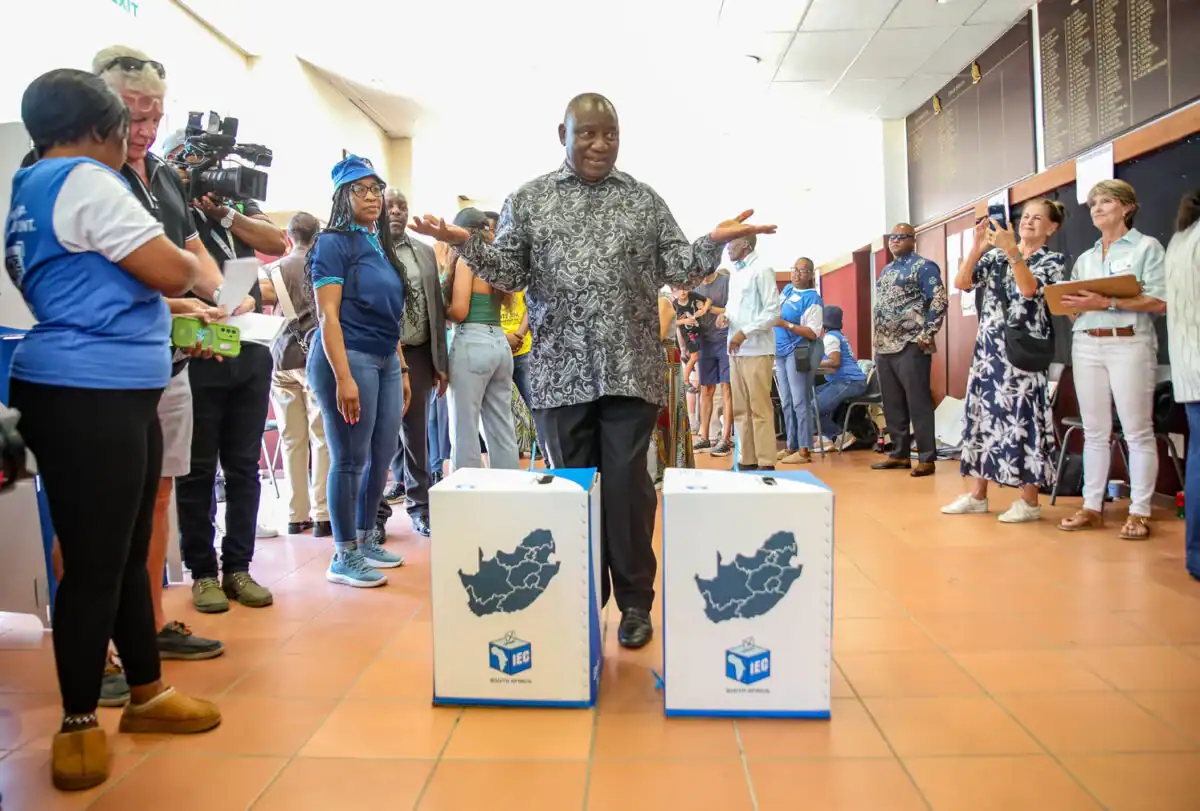
From sewage and illegal dumping to unemployment and water shortages, residents say they have had enough of broken promises. Masetumo Marago, who constantly has raw sewage flowing into her house in the ANC-run area of Boipatong in Gauteng, took the power of the vote in her hand yesterday. She wanted to send a message to the party she has supported since 1994: “You have failed me and now I hope someone else will make changes.” Voters turn away from longstanding political loyalties Marago, 63, declined to reveal which party she voted for, but confirmed she had abandoned the party she had supported since South Africa’s first democratic elections in 1994. LIVE interactive map, latest news, multimedia and more! View Map “The party I have been voting for has failed me and I have hope that the one I have given a chance now will deal with the sewage and illegal dumping in front of my yard,” she said. Other people also used their votes for change. One is Moses Mashaba, a 27-year-old street vendor from Soweto. He said he was driven to vote by the sense that “things have been horrible”. “Sometimes we don’t have water or electricity. There is also a high unemployment rate, which has been frustrating,” he said. The frustrations were echoed hundreds of kilometres away in Cape Town, where Thembinkosi Somana, 50, was first in line to cast his ballot at a polling station in Langa. “I want things to change… people must get work. People mustn’t suffer,” he said. Service delivery failures fuel voter frustration More than 29 million voters are registered but the last municipal elections in 2021 drew a turnout of just 46%. Some 2.6 million people were allowed to vote early on Monday and Tuesday, but only 1.4 million did so, the Electoral Commission of South Africa said. But many South Africans are disillusioned because life is getting worse. In Gqeberha, Eastern Cape, 26-year-old Shane Jacob, who is unemployed, shared a cigarette with two friends as they watched voters go to the polling station in the working-class neighbourhood of Helenvale. “Voting? Never, not again. I have been voting since 2018 and what did I get? Nothing,” he said. “My life has not changed. If anything it has gotten worse.” Final results, expected at the weekend, will offer a clearer picture of the political landscape before the general election in 2029. The elections carry implications for the ANC’s own future, with the party due to elect a new leader at its December 2027 conference that will help determine who leads it into the next national race. Election results could signal shifting political loyalties Voters are likely to be influenced by “bread and butter issues” such as water, electricity, roads and sewage, rather than political loyalties, political analyst Kingsley Makhubela said. “People are not going to vote on sentiments,” said the former diplomat. An increase in voter turnout could signal that South Africans are increasingly voting for better service delivery, rather than remaining loyal to political parties. This is according to independent political analyst, Solly Masilela, who said that with municipalities facing mounting pressure over water shortages, failing infrastructure, unemployment and deteriorating basic services, these elections could provide an indication of whether voters are prepared to use the ballot box to demand political accountability. While the local government elections will not determine who governs nationally, they will provide voters with an opportunity to hold municipal administrations accountable for the condition of roads, water infrastructure, sanitation, electricity and waste management. Turnout may reveal the depth of voter disillusionment The extent of voter participation, therefore, could offer an important indication of whether citizens still view elections as an effective mechanism for demanding change, or whether growing disillusionment is driving them away from the ballot box. Masilela said worsening socioeconomic conditions, limited employment opportunities and persistent service delivery challenges had potentially encouraged voters who stayed away from the previous local government elections to participate this time around. He cautioned against predicting the election outcome before the results were known, but said increased participation could reflect growing frustration with the performance of the governing party. “The ANC, as a governing party that oversaw government for the last 30 years, will be negatively impacted,” he said. Masilela said a low turnout would paint a different picture, potentially reinforcing concerns that voters had become disillusioned with the electoral process and no longer believed their participation could change their socio-economic circumstances. “Where the voter turnout was low, it would have confirmed the theory that voters are despondent and no longer viewing elections as a tool that can change their socioeconomic conditions through the betterment of their lives,” he said.
Frustrated voters turn to ballot box to demand change
Full Article
Original Source
Read the full article at Citizen →KhanList aggregates and links to publicly available news content. We do not host full articles from third-party sources. Always verify important information with original sources.