
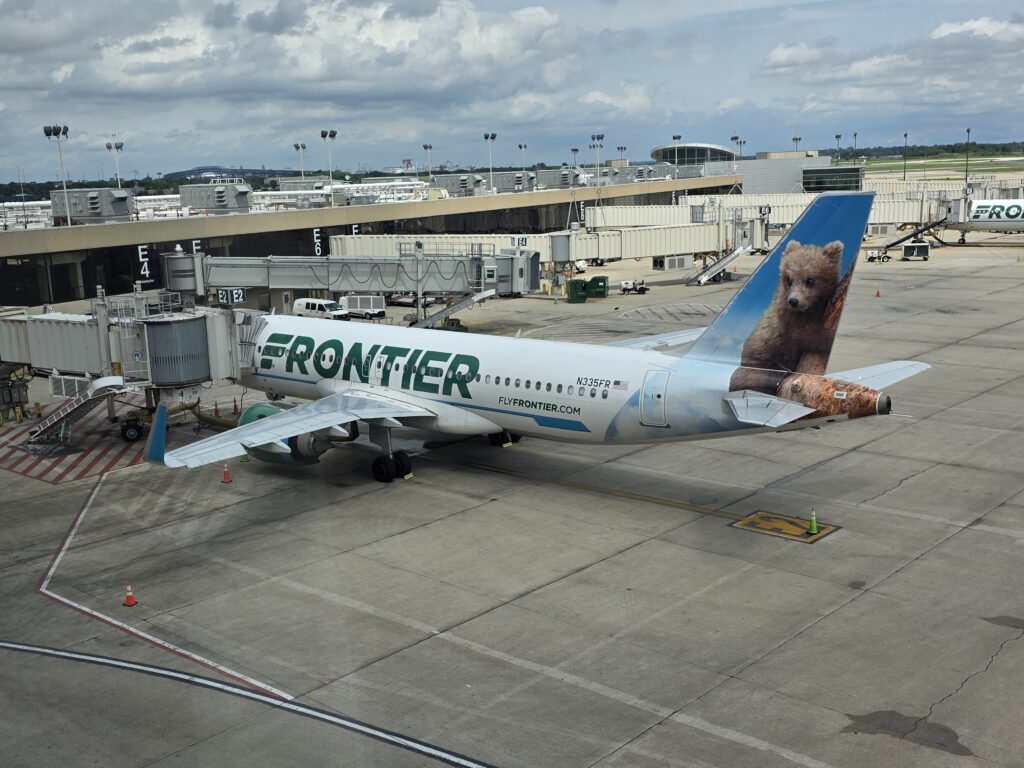
Frontier has returned 24 Airbus jets early and recorded $209 million in related charges. Its new CEO says the airline had more aircraft than it could productively use. The decisions that got it there went well beyond his predecessor, Barry Biffle. Indigo Partners negotiated enormous aircraft orders for its portfolio airlines, with specified allocations going to Frontier. Bill Franke, Indigo’s managing partner, chairs Frontier’s board. CEO Jimmy Dempsey, now explaining the cleanup, was Frontier’s chief financial officer and then its president during the buildup. On Airlines Confidential, Dempsey described having roughly 175 aircraft but enough pilots for about 140 “if you flattened the week.” Frontier’s annual SEC filing put the actual year-end 2025 fleet at 176 aircraft, all on operating leases. A fleet sized around the busiest days can sit underused on quieter ones. You still pay for the planes, and spreading the flying more evenly can let fewer aircraft do more work, but it may not match passenger demand. Indigo Negotiated The Orders Indigo bargained with Airbus at scale, and doled out the planes to the carriers it controlled. In December 2017, Airbus finalized a 430-plane deal with Indigo and its portfolio airlines. Frontier’s allocation was 134 aircraft: 100 A320neos and 34 A321neos. In November 2021, another group order covered 255 aircraft. Frontier’s portion was 91 A321neos. Those are orders placed for delivery over years, but this wasn’t just the Frontier Airlines CEO shopping for planes on his own. An Indigo-managed fund was Frontier’s controlling shareholder until it distributed its shares to its members in April 2024. Frontier’s corporate parent is now publicly traded Frontier Group Holdings. Their 2026 proxy reports Bill Franke’s beneficial ownership at 43% as of March 20. I called Dempsey’s promotion a continuity move when Biffle left in December. He’d been CFO since 2014 before becoming president in 2023. He was there for both of those group orders. It seems to me a problem to suggest ‘prior management made mistakes ordering too many planes.’ Frontier Inflated Earnings Through Aircraft Sale-Leasebacks Frontier bought planes at volume, then sold them to lessors at a profit, along with leasing back the aircraft. That let them boost their current returns at the expense of higher costs in the future. You can more or less name any sales price if you’re willing to pay a higher lease rate to compensate (and that rate may need to be even higher still to compensate for payment risk). This explains the one annual profit Frontier Airlines ran since the pandemic. It wasn’t an operating profit. Frontier announced a plan in February to return 24 A320neos to AerCap, whose leases still had two to eight years to run. The package contemplated 10 future sale-leasebacks in 2028 and 2029. The airline’s second-quarter results confirmed that all 24 returns were completed. Frontier finished June with 165 aircraft, after also taking new deliveries. The early returns generated $209 million in charges during the first half. That includes lease-return costs, maintenance write-offs and accelerated depreciation. In July, Frontier still projected third-quarter capacity growth of 17% – 18% and fourth-quarter growth of about 7% over 2025. More flying per plane and more seats per departure raises capacity even with fewer planes. Topics on this page
Frontier Returned 24 Jets And Took A $209 Million Hit—Its Fleet Problem Goes Beyond The Former CEO
Full Article
Original Source
Read the full article at Viewfromthewing →KhanList aggregates and links to publicly available news content. We do not host full articles from third-party sources. Always verify important information with original sources.