
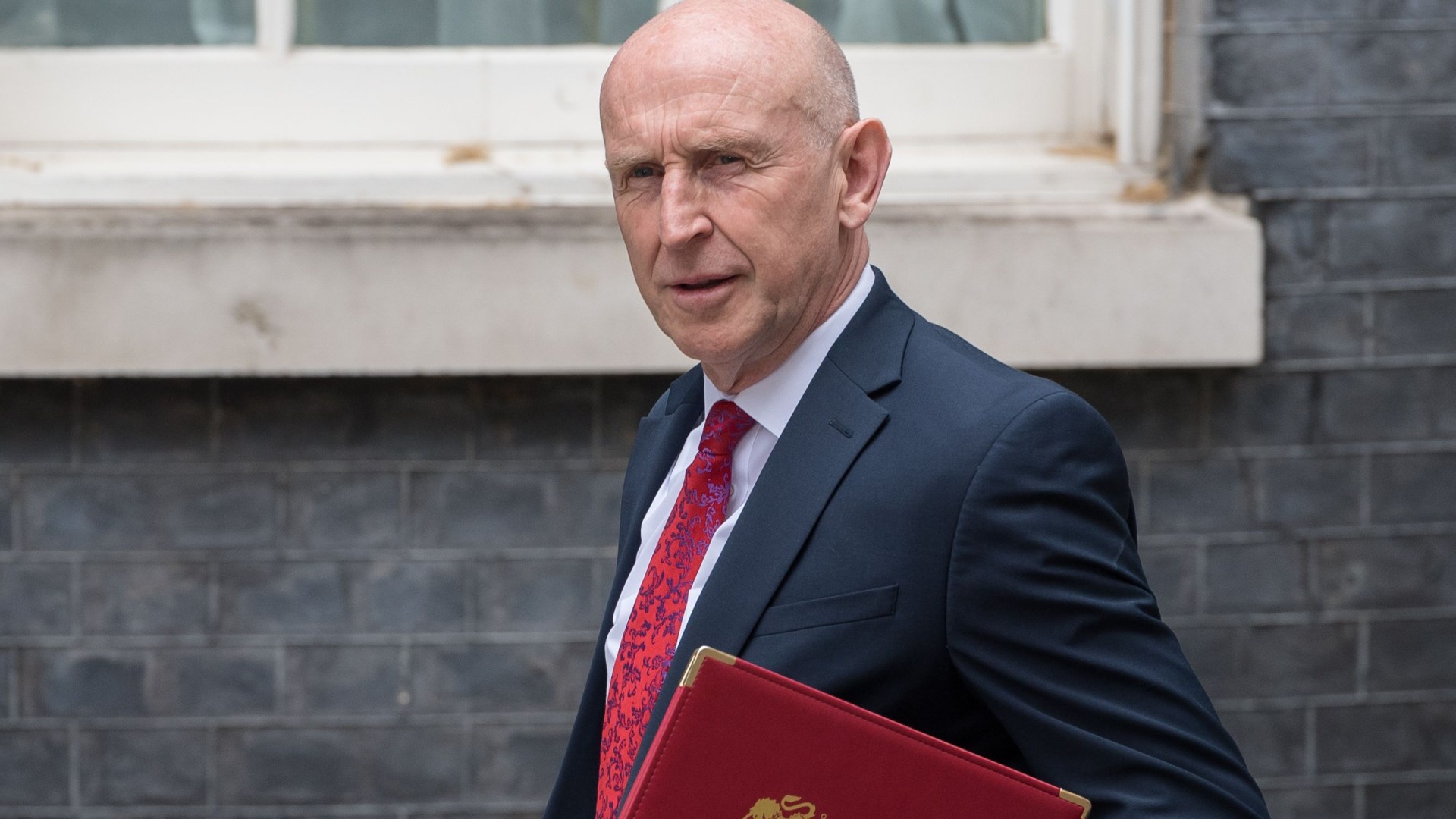
INDUSTRY leaders have hit out at Government plans to push “buying British” – urging ministers to first tackle crippling taxes, energy costs and restrictive red tape. Chancellor John Healey has insisted he would make sure “every government department” was “backing Britain”. Chancellor John Healey has insisted he would make sure “every government department” was “backing Britain” Credit: Shutterstock Editorial Garage boss Bilal Khan, from Newcastle, wants a cut in high business rates Credit: NNP In an interview with The Sun on Sunday, he explained: “You will see this as a determined drive that you have not seen before from a British government. “Buying British not if possible, but by design – so that every procurement pound supports British jobs, British apprenticeships and British skills.” Sign up for the Money newsletter Thank you! But struggling bosses accused him of offering “empty promises” rather than “tackling the real problems crippling businesses”. Bricklayer and construction boss Ian Hodgkinson, who works in a sector that contributes £140billion a year to the economy, said: “It’s a nice soundbite, but it’s hardly what the sector needs to kick-start a building boom. “The best thing he could do is scrap VAT on extensions and home improvements, which is the bane of so many in our industry. I hope the Chancellor listens.” Public procurement is a process by which public sector organisations buy or rent anything, from loo paper to battle tanks. It accounts for roughly one-third of public spending, amounting to almost £400billion last year. Today, we speak to experts in four key areas to find out what action the Chancellor needs to take to back British business and fix the real problems holding back their sectors. Most read in Money Mike Hawes, CEO of the Society of Motor Manufacturers and Traders says the cost of energy is a problem for the sector Credit: Stan Papior MOTORING MOTORING has long been a jewel in the UK’s crown, adding around £25billion a year to the economy. Now, mechanics and garage owners are calling on the Government to reduce business rates. Bilal Khan, 35, who has been a mechanic for 17 years and owns Billy’s Auto & Body shop in Newcastle, said: “The Government’s Buying British initiative is a nice-sounding idea, but there are much more pressing issues. “For example, I have two businesses and now pay £900 a month in rates on each. This is so much. The costs are getting higher and our margins are smaller.” Other industry leaders have called on Chancellor Healey to make slashing energy costs his priority. Mike Hawes, CEO of the Society of Motor Manufacturers and Traders, said: “There’s a lot the Government can do to make our lives easier — and one of those is the huge cost of energy to the sector. “We need to try to get the fundamental cost of energy down as we’re dependent on things like gas to keep production moving. “Energy is the second-biggest input cost into vehicle manufacturing. We don’t qualify as an energy-intensive user at the moment. We’d like that to change. “I admire the ‘Buy British by design’ notion, but this change in regulation would help us more.” UK car manufacturers, which include Aston Martin, Jaguar and Bentley, pay about 59 per cent more for energy overall than EU-based rivals and costs are set to jump again this year — threatening competitiveness. Racing kit car boss Stewart Mutch, 48 — who runs MEV Kit Cars in Gloucester — makes all his components in Britain, but imports raw steel and aluminium from China and Europe to stay competitive. He said: “The government needs to focus on the never-ending spiral of regulations and cost-of-living increases. On raw materials we can’t compete with China and Europe. The cutting tools we use have gone up 120 per cent in 12 months.” Farmer Richard Dryden says the new chancellor needs to go much further to help the industry Credit: NNP FARMING TURKEY farmer Richard Dryden said the new Chancellor needs to go much further to help farmers who are buckling under the strain. Richard, 40, who runs Murton Moor Farm in Durham, employs two full-time staff and two seasonal workers. He said: “The minimum wage has been increasing hugely over the last few years and I don’t think it’s beneficial to any industry. “It’s counterproductive. It means fewer people in work. The Government doesn’t seem to consider this. “There’s an agricultural college close by and we would love to take on a student for an apprenticeship, but with the red tape and how much you have to pay them, it’s simply not worth it. “You wonder what that will mean for the future.” Richard praised the “buy British” concept, but was sceptical as to whether it would help the wider industry. He said: “It sounds great, but will this filter down to the man on the ground? What I would really appreciate the Government doing to support farmers and enabling customers to buy British produce is banning the import of genetically-modified crops. “We are not allowed to grow these in the UK, which I actually agree with, but it makes it very difficult to compete. A lot of imports, particularly from the US, are genetically modified, which makes them cheaper to produce. “If we are going to ban something in this country, let’s ban the import of these crops. I would like a level playing field. We’re trying to compete against markets that have far lower costs.” Richard also called on the Government to relax planning laws, saying: “We’ve run into many problems while trying to expand the business. We keep hitting roadblocks. “Getting rid of some of the red tape would be of more use than the Chancellor promising to award contracts to UK firms. “We’re not close enough to that market to see a difference.” Construction boss boss Ian Hodgkinson has urged the Government to consider scrapping VAT on extensions and house improvements Credit: Paul Tonge CONSTRUCTION CONSTRUCTION boss Ian Hodgkinson has always taken pride in investing in UK workers and buying materials from local suppliers where possible. But Ian, 63, from Derby, who has worked on building sites for the past 40 years, said the Chancellor’s plan was an “empty promise”. Instead, he called on John Healey to consider scrapping VAT on extensions and house improvements — a tax he says is crippling many in the industry — to get the construction trade booming again. The average single extension in the UK costs around £52,000 for the homeowner, with £10,400 VAT on top. Ian said: “While ‘buying British’ will obviously be great for the businesses that benefit from big-money Government contracts, it won’t tackle the real issues facing our industry. “Homeowners are struggling to afford extensions because the 20 per cent VAT rate is pushing prices out of their range. “In turn, we are not getting the work. We also need to invest more in apprentices, so we have more high-level UK workers.” According to data from the Construction Products Association, approximately 72.3 per cent of all construction products used in the UK are manufactured domestically. But DIY SOS star Ian says Government plans to buy British will do little to improve this, adding: “At the moment, we bring in so much steel from abroad, timber from Norway or bricks from Germany — not because it’s easier, but simply because there just isn’t the capacity in the UK to get these things. “For example, there are only six steel mills in the UK and productivity in that sector fell by almost seven per cent a couple of years ago. “And there are only around 45,000 bricks in the UK to buy at one time. “The bricks we get from Germany are not only cheaper because of the volume made there each year, but we can get them much faster.” Landlady Lynsey Smith wants to reduce VAT from 20 per cent to ten per cent to give the sector a chance Credit: Dave Nelson HOSPITALITY LANDLADY Lynsey Smith prides herself on buying all-British produce for her country pub and restaurant. But more British procurement will do nothing to help struggling pubs like hers. Lynsey, 46, who runs The Saracens Head in Ormskirk, Lancs, called on the Chancellor to slash the crippling VAT she has to pay on all her income. She said: “I’d urge the Chancellor to reduce VAT from 20 per cent to ten per cent to give us a chance. “Buying British is all well and good, and we pride ourselves on doing that, but we need help with our bottom line.” New PM Andy Burnham recently announced he was cutting business rates by 20 per cent for 32,000 pubs, clubs and live music venues — saving an estimated £1,100 for a typical boozer. But Lynsey says that the cut in business rates makes “little difference” compared to slashing VAT, which is “directly linked to our cost base and turnover”. Hospitality contributes nearly £93billion to the economy, employing around three million people. Other businesses are also worried about being hit by plans for a “holiday tax” — which would add extra costs for people taking breaks in the UK. This would allow mayors and other local leaders to introduce a tourist tax to raise money — something Burnham has already launched in Manchester. Allen Simpson, chief executive of UK Hospitality, said: “If we want to buy British then maybe don’t make the tax on buying a British holiday twice that imposed on buying a holiday abroad. “VAT on a holiday is already 20 per cent — so if you pay VAT on the tourism tax, that would make it 27 per cent. “It’s a disaster for restaurants, and hotels will be even worse affected.” Comment now
From VAT to energy bills, business leaders reveal action Chancellor MUST take after backlash over his ‘buy British’ vow
Full Article
Original Source
Read the full article at Thesun →KhanList aggregates and links to publicly available news content. We do not host full articles from third-party sources. Always verify important information with original sources.