
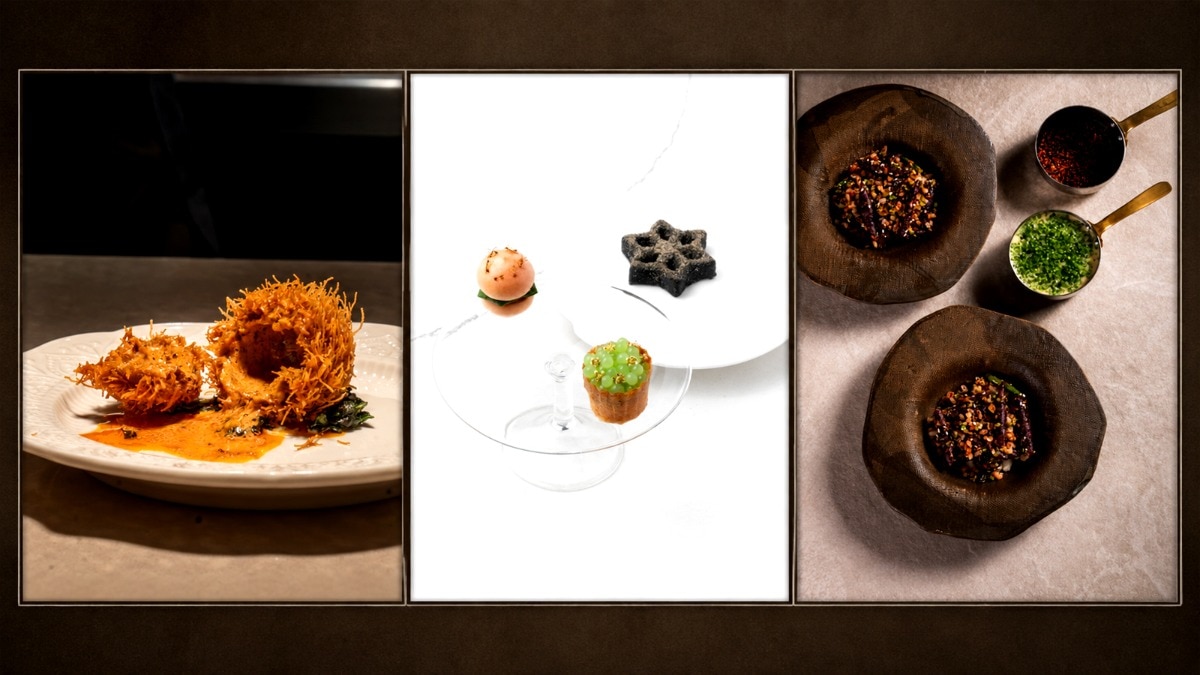
Indian chefs and bartenders are bringing ants and other insects into tasting menus and cocktails. The shift draws on long-standing tribal food knowledge rather than treating the ingredient as a novelty.Long before "entomophagy" became a word chefs used at tasting menus, tribal communities across eastern and northeastern India had already worked out what to do with ants. In Chhattisgarh, Jharkhand, Odisha and West Bengal, red weaver ants and their eggs are ground into a sour, spicy condiment known variously as kai chutney, chapra, chapda or hao rit. The appeal was never about shock value: the chutney is a genuine source of protein, iron, calcium, zinc and Vitamin B12, and tribal healers have long used it, and a mustard-oil infusion made from the same ants, to treat everything from fever and colds to joint pain and poor eyesight.So when an urban diner encounters ants at a restaurant today, the ingredient may look like an act of culinary rebellion. For communities that have eaten them for generations, it is anything but. These red weaver ants are consumed as a traditional delicacy and rich nutritional source in parts of India. Culinary cultures in Latin American and Asian countries, apart from India, have also been using ants as ingredients.What has changed now is the setting. At restaurants such as Mumbai's Masque and Papa's, ants are being treated not as a dare but as an ingredient with a particular flavour and function. And chefs are beginning to look at insects not simply as an object of curiosity, but as ingredients capable of bringing acidity, umami, texture and even a sense of place to a dish.The world discovered ants, and then got nervous about themGlobal fine dining arrived at the same ingredient decades later, and with considerably more fanfare. At Noma's pop-up at Claridge's in London in 2012, the kitchen brought in 22,000 live ants to serve crawling over a starter, chosen after a "rigorous tasting of 13 different varieties" for a flavour that head chef Matthew Orlando compared to lemongrass. By the time Noma opened a temporary outpost in Tokyo, the same trick reappeared as a showstopper — jumbo shrimp served twitching, topped with ants "providing flavours of the Nagano forest," their formic acid doing the work that citrus usually does. Ants became, in the words of one report, "old hat" for a restaurant that had already served them with beef tartare back in Copenhagen. But the ants didn't stay on the menu forever. In November 2021, Noma had to pull them entirely, after Denmark's food safety authority confirmed the restaurant was removing ants "from tonight" — the fallout of an EU directive on novel foods that essentially outlawed serving insects that hadn't gone through a formal safety approval process.South Korea's brush with the same ingredient was considerably more serious. In July 2026, prosecutors sought jail time and a fine for the owner of a two-Michelin-starred restaurant in Seoul, accused of serving nearly 49,000 ants across roughly 12,200 fruit sorbets since 2021.It's a telling contrast: the same ingredient that tribal communities in eastern India have safely built into their diet for generations became, in two of the world's most celebrated culinary capitals, either a regulatory casualty or a criminal charge. What was indigenous knowledge in one country needed a government approval process in another.India's chefs, meanwhile, are asking a different questionFor a clutch of Indian chefs and bartenders now putting ants on their own menus, the starting point wasn't "can we get away with this", it was "how do we do right by where this came from."Varun Totlani, head chef at Mumbai's Masque and Bar Paradox, puts it plainly: "Tribal communities in different parts of India have already been eating ants, but how many of us even knew about it? It's not an ingredient the entire country has grown up with, like say, potatoes." His approach, he says, is "to try and learn from the knowledge that exists among us, instead of playing up its 'discovery.'"Johnson Ebenezer, chef patron and co-founder of Bangalore's Farmlore, goes further, pushing back on the idea that using the ingredient elevates it at all: "Indigenous communities across Chhattisgarh, Jharkhand, Odisha (kai chutney), and the Western Ghats and Coorg (chigali) have never regarded red weaver ants as a novelty. They are a seasonal staple, a medicinal tonic, and a vibrant condiment. Bringing this ingredient into a tasting menu is not about 'elevating' tribal knowledge; it is about acknowledging that indigenous foraging and preservation traditions are profoundly sophisticated culinary systems." Ingredients to prepare red ant chutney. (Photo: Getty Images) Meanwhile, Rehan Guha, founder of Oxymorons, arrived at a similar realisation through a personal route. His first exposure to ants as food came through the Northeast, where he encountered them while travelling with his wife, who is from the region.“What we often call ‘exotic’ is really just food from a culture we may not have been exposed to,” he says.So, what does it actually taste like?Strip away the novelty framing, and three chefs land on almost the same word independently: acid.Totlani describes ants as carrying “an almost citrusy acidity with a complexity that’s difficult to replicate”. Guha points to “acidity, salinity, and interesting savoury notes”. And it is Ebenezer who offers the most detailed account.Red weaver ants, he explains, interact with the terpenes and aromatic compounds of the trees they inhabit, meaning ants harvested from different environments can carry different nuances.Asked to describe the flavour, he calls it “a sharp, effervescent burst of pure, piney citrus with a resinous, lemongrass-like finish and a clean, lingering tang” — sharper and more volatile than lemon, without its rounded sweetness.That acidity is not just a flavour note. In some kitchens, it is doing real technical work.At Papa’s in Mumbai, executive chef Hussain Shahzad built an entire dish, Bugs Bunny, around it. The name began as a joke, Shahzad explains, after the kitchen’s attempt at fried rabbit eventually evolved into a rabbit shawarma. Yash Bhanage, one of the restaurant’s founders, suggested that if they threw ants on the rabbit, they could call it “Bugs Bunny”. Bugs Bunny" is an iconic, playful signature dish served at Papa's, Mumbai. The dish is elevated with a sharp red weaver ant chutney. The joke stuck. So did the technique.“We found that they naturally contain a high amount of formic acid. So, instead of adding acid to the rabbit marinade, we use the ants as a puree to brush the rabbit with. This helps tenderise the meat while doing the job that an acid would normally do in the marinade,” Shahzad says.The dish, made with red weaver ants sourced from Chhattisgarh or Jharkhand, has gone through five or six iterations: shawarma, seekh paratha, hot dog, baida roti and, now, an la Kiev filled with smoked tomato and red-ant-infused butter (see the picture above).At Farmlore, Ebenezer’s Ant Bite, a crisp meringue paired with tangy chigali chutney, took dozens of iterations to get right. Early versions lost the ants’ citrus lift when they were ground too finely or exposed to heat. The current version uses cold processing to preserve their acidity and crunch. Ant bite, pumpkin & peanuts & thattai served at Farmlore, Bengaluru. For Ebenezer, ants function “much like sumac, yuzu, or raw mango” — an active seasoning agent rather than a garnish for shock value.Totlani’s approach is similar. At Masque, he has used toasted fire ants as an optional topping on Black Rice Farra, Mud Crab and Grillo dish, adding “an acidic kick and a texture” to Manipuri black-rice dumplings and mud crab. This was part of a previous menu. At Masque, red ants are an optional topping on Black Rice Farra, Mud Crab and Grillo. He has also taken the ingredient beyond India. At a Bangkok pop-up, he served a version of pani puri filled with Thai heirloom tomatoes and fermented bean, with coconut milk and aromatics replacing the conventional pani. Fire ants from Chhattisgarh finished the dish.“The internet had a lot of reactions to it,” Totlani recalls, although he says it was “very well-received at the dinner”.Ants are only the beginningAnts, it turns out, are just the most visible entry point into a much wider pantry.Ebenezer points to silkworm pupae, which he describes as savoury, buttery and nutty; termites, which can be rich, fatty and woodsy when lightly toasted; cricket and locust meal, which can be used in crackers, savoury tuiles and broths; and cicadas and bamboo worms, valued for their crisp texture and toasted-nut character.Jeet Rana, co-founder of Delhi’s Barbet & Pals, has already taken another insect into the bar. His cocktail The Silk uses silkworm for what he describes as a “subtle earthy, nutty and slightly roasted umami character”.For Rana, the ingredient fits into their Bird’s Eye View philosophy of bringing regional Indian ingredients that are “completely normal in one part of India but unfamiliar” elsewhere into the glass.The diners, mostly, come aroundNow, this might be of particular interest to readers as to how diners react to having a one-of-a-kind ingredient served as a part of their meal.At Papa’s, Shahzad says diners often ask, “Are you serious? Actual ants?” Once they taste the dish, however, the novelty starts to wear off. Some become curious enough to try the ants on their own.Ebenezer sees a similar shift. Diners expecting bitterness or an “earthy insect flavour” instead encounter a clean, citrus-like burst. The psychological barrier, he says, often dissolves once the flavour registers.Totlani is more measured. Some diners who happily eat “all types of meats” still draw the line at ants. But among those who do try them, he says, the reaction can be surprisingly enthusiastic — with some asking for a second helping.Bon ApetitVarun Totlani had, infact, said it best at the very start: ants aren't an ingredient the whole country grew up on, the way it did with potatoes. Perhaps that's about to change. Not because a Copenhagen restaurant said so, and not because Instagram found it interesting, but because a handful of Indian kitchens finally decided an ingredient tribal India has trusted for generations was worth trusting too.- EndsPublished By: Tiasa Bhowal Published On: Aug 23, 2026 12:41 IST
From tribal chutney to tasting menus: How ants went gourmet in India
Full Article
Original Source
Read the full article at Indiatoday →KhanList aggregates and links to publicly available news content. We do not host full articles from third-party sources. Always verify important information with original sources.