
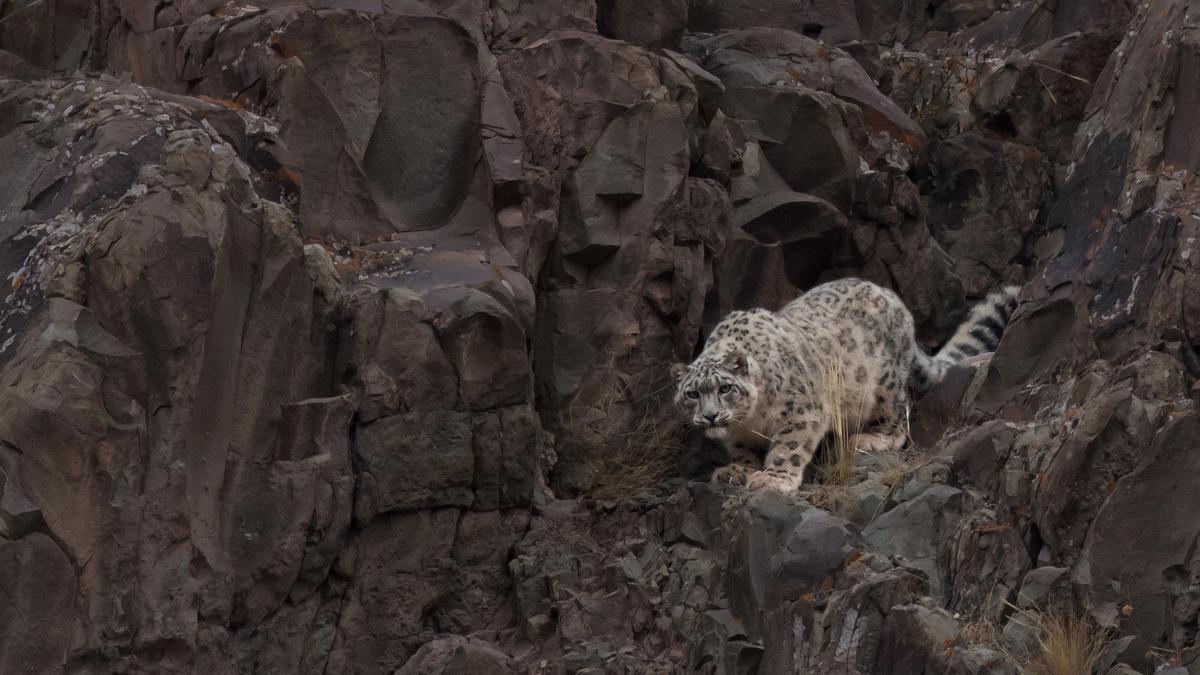
Across the world, scientists, governments and communities are bringing plants and animals back from the brink of extinction. In India, a Great Indian Bustard chick has hatched in Kutch, Gujarat, after a decade, bringing fresh hope for this critically endangered bird. In Spain and Portugal, restoring habitat and prey, breeding lynx and returning them to the wild helped the Iberian lynx grow from 62 mature individuals in 2001 to 648 in 2022. The return of the scimitar-horned oryx to the wild in Chad, Africa, and the saiga antelope’s recovery in Kazakhstan offer further proof of what determined action can achieve. During Wildlife Week (October 2-8), we can celebrate these gains while asking what it will take to sustain them.The Government of India’s Integrated Development of Wildlife Habitats scheme supports recovery action for 24 identified species and their habitats. States are mandated to undertake research, habitat improvement, protection and community participation. The species span India’s landscapes: the great Indian bustard in Rajasthan’s grasslands, the Sangai in Manipur’s wetlands, the dugong in coastal seagrass meadows and the hangul in Kashmir’s forests. The list is a starting point; India’s National Red List Assessment can show where focused efforts are needed next.India launched its National Red List Roadmap at the IUCN World Conservation Congress in Abu Dhabi in 2025; the aim was to produce National Red Data Books for plants and animals by 2030. India occupies just 2.4% of the world’s land area, yet supports nearly 8% of its flora and 7.5% of its fauna. It is one of 17 megadiverse countries and contains parts of four of the world’s 36 biodiversity hotspots. Around 28% of its plants and more than 30% of its animals are found nowhere else. Of the 7,516 Indian animal species assessed for the IUCN Red List, 1,012 are threatened, which includes Vulnerable, Endangered and Critically Endangered species.These assessments cover only 7.2% of India’s documented animal species. The figure of 1,012 tells us what is known so far, not the full extent of the threat. The National Red List Assessment can help close that gap and direct recovery efforts where they are needed most.The projects in StatesIn Tamil Nadu, Project Nilgiri Tahr combines population surveys, radio-collaring, habitat assessment and mapping across Tamil Nadu and Keralam to conserve the tahr, which is the State animal of Tamil Nadu. Working with the Wildlife Institute of India (WII), the Advanced Institute for Wildlife Conservation, the International Union for Conservation of Nature (IUCN), the Tamil Nadu Veterinary and Animal Sciences University (TANUVAS) and other partners, the project is strengthening the scientific understanding needed to secure the tahr’s future. Surveys recorded 1,303 tahrs in 2025 and 1,364 in 2026.Vulture conservation is an example of how sustained action through conservation breeding, safer habitats, monitoring and public awareness can help reverse a devastating decline. India’s ban on the veterinary use of diclofenac, which had caused catastrophic losses in vulture populations, was a crucial step in this effort. At Pinjore, the Jatayu Conservation Breeding Centre, run by the Haryana Forest Department and the Bombay Natural History Society, works with white-rumped, long-billed and slender-billed vultures. Madhya Pradesh’s 2025 census recorded 12,981 vultures, up from 8,397 in 2019. Tamil Nadu’s Segur Plateau remains an important habitat. Tamil Nadu’s raptor conservation work and synchronised surveys across Tamil Nadu, Keralam and Karnataka track these birds, which include breeding populations in the Mudumalai Tiger Reserve.Long-term protection, including habitat management, scientific monitoring and the help of local communities, has helped the Asiatic lion in Gujarat — the population rose from 674 in 2020 to 891 in 2025, with lions occupying a wider part of Saurashtra.Monitoring, grassland management, invasive plant control, research and translocation have helped secure and expand greater one-horned rhinoceros populations against poaching. In Assam’s Pobitora Wildlife Sanctuary, which has an exceptionally high rhino density, working with communities on awareness, monitoring, livelihoods and conflict reduction has made rhino protection an enduring part of the landscape.In Meghalaya, the action plan for the clouded leopard, the elusive State animal, combines habitat protection and restoration, scientific monitoring, frontline training and community participation. As the animal is dispersed across the northeast, 14 priority landscapes have been identified as understanding population connections and keeping them intact are central to its future.Dugong conservation calls for a different approach. Tamil Nadu established India’s first dugong conservation reserve across 448.34 square kilometres of the Palk Bay and its seagrass habitat. A 2026 Wildlife Institute of India assessment estimated a total of 270 dugongs, including 158 dugongs in the Palk Bay and 112 in the Gulf of Mannar, providing a baseline for measuring change. Fishermen who release dugongs caught in nets may lose valuable gear. But the government provides compensation for damaged nets and recognises their efforts.High up in the Himalayas, science and local stewardship have helped the snow leopard. In 2024, India’s first scientific population assessment estimated 718 snow leopards. In Himachal Pradesh, women from Kibber have worked with Forest Department field teams, the Snow Leopard Trust and the Nature Conservation Foundation to set camera traps, monitor population and participate in protection activities.Political support is essentialMuch depends on the commitment of State governments. Political leadership is crucial in prioritising the recovery of species, bringing government departments together and, most importantly sustaining action through successive budgets. Transferring that commitment into land use, infrastructure and livelihood decisions are what will help recovery plans being implemented. State forest teams have to turn plans into work on the ground. Recovery requires lasting cooperation with communities, scientists and national agencies. Results may take years, and setbacks require programmes to adapt. This would require clear goals, steady investment and careful monitoring.Species that receive little public attention can struggle to attract funding. State-level funds can bring government, industry, philanthropy and scientific institutions together around local priorities. Tamil Nadu’s recently established Endangered Species Conservation Fund reflects this approach, with its focus on the mahseer, striped hyena, Madras hedgehog, lion-tailed macaque and the hornbill.There is similar commitment internationally. Launched in 2026 by Re:wild and the Bezos Earth Fund, the Phoenix Species Project has committed $200 million to recovering 100 of the world’s most threatened species, by supporting conservationists, indigenous peoples and local communities over several years. This is a lesson for India: recovery needs dependable resources for habitats, monitoring and the people doing the work.Forest departments need scientific support close to the field and staff need to be trained in surveys, habitat assessment, conservation breeding and genetic analysis. Communities must be involved meaningfully in surveys, habitat work and ground decisions. Their knowledge can sharpen plans and their true participation can sustain them.For India, a national picture of risk can guide priorities; States, scientists and communities can translate them into plans with mapped habitats, clear timelines and measurable outcomes. The bustard, vulture, tahr and dugong show that species recover in different ways. But their survival depends on sustained effort — to learn, to act and to stay with a species long enough for its future to change.Supriya Sahu is a senior administrator in the Government of Tamil Nadu, and has worked extensively on environmental policy, ecosystem restoration, wildlife and biodiversity conservation and climate action. She is a recipient of the UNEP Champions of the Earth award 2025. Yash Veer Bhatnagar, the Country Representative for the International Union for Conservation of Nature (IUCN) in India, is a scientist with over three decades of experience in conservation science and practice. He received the SANCTUARY Asia Wildlife Service Award in 2015.
From the brink to a comeback, hope for India’s wildlife
Full Article
Original Source
Read the full article at Thehindu →KhanList aggregates and links to publicly available news content. We do not host full articles from third-party sources. Always verify important information with original sources.