
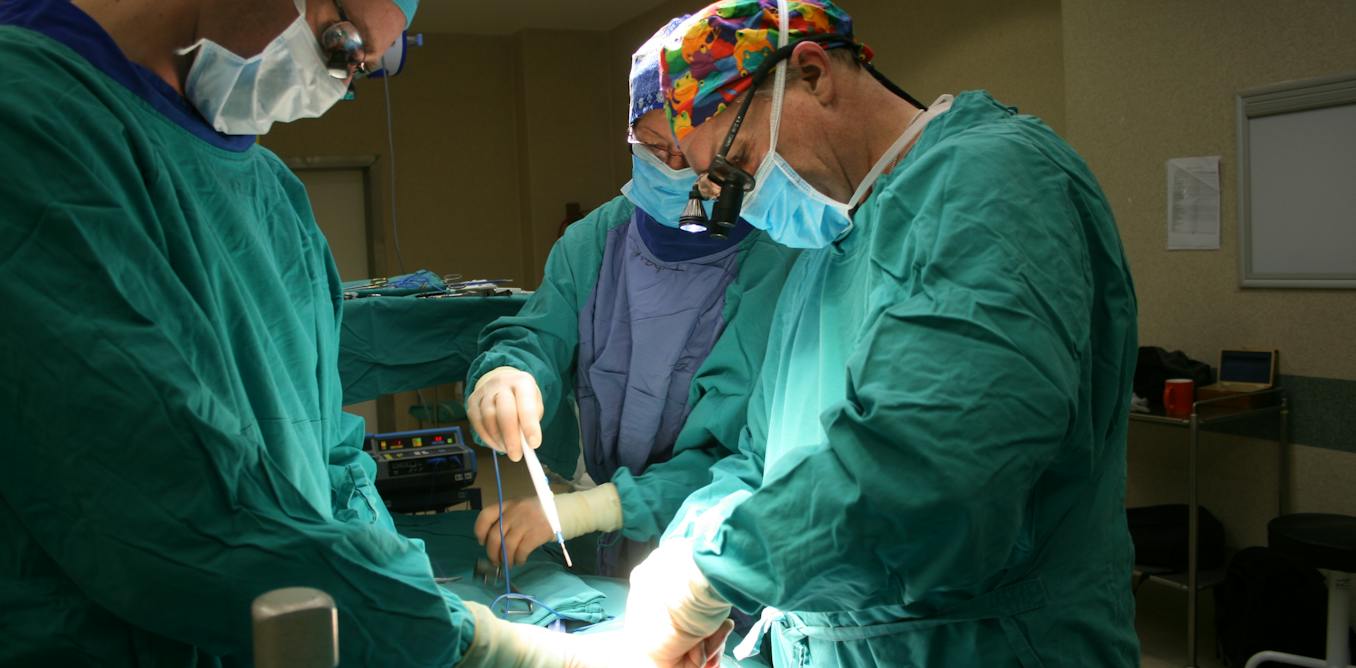
South Africa is no stranger to organ transplants. The world’s first heart transplant was performed in the country in the 1960s. There have been major developments in the decades since then. In the 1980s an organ donor registry was set up and local surgeons have been pushing the boundaries of what is possible. The Wits Donald Gordon Medical Centre recently marked a milestone of completing 1,000 liver transplants since initiating its programme in 2004. The Conversation Africa asked Jerome Loveland, head of transplant surgery at the centre and academic head of transplantation at the University of the Witwatersrand, about the current state – and future – of liver transplantation in the country. How has the liver transplant landscape in South Africa changed? In the 1980s, the University of Cape Town started to build a deceased donor liver transplant programme. It became the centre of liver transplantation in South Africa for decades. When we at the Wits Donald Gordon Medical Centre started our own unit around 2004, it shifted the landscape. Obviously, it’s never smooth, and one of the most limiting factors around transplantation is the availability of deceased donor organs. Right from the beginning we were looking for ways to optimise the use of the livers that did become available. Very early on we embarked on more complex transplants, like reducing a whole liver into a small piece to put into a child, or dividing a whole liver into two usable pieces where one piece goes to an adult and the other to a child. So “split liver” transplants allowed us to use those livers optimally. From there, we expanded into living donor transplantation, typically from a parent to a child, and then transplants across the blood group barrier. We were the first in South Africa to perform transplants in patients with acute liver failure. All these key moments have allowed us to optimise the organs available and we’ve become a relatively high-volume centre. What other developments have changed things? The most recent game-changer is machine perfusion of the liver. This machine allows us to resuscitate and store donor organs more viably for extended periods of time. We have introduced this technology as the standard of care for our extended criteria donor livers, which include livers from older donors. Donald Gordon is currently the only unit in Africa using this technology. It allows us to transplant an additional 10% to 15% of livers that we otherwise wouldn’t have used, as we would have most likely discarded them as unsafe to use. With the resuscitative component of machine perfusion, we can now use these livers with confidence. Most importantly, the machine resuscitates the donor liver so that once it’s put into the recipient it functions much better and much sooner. It avoids what we call early graft dysfunction. It has a whole lot of benefits in terms of avoiding complications in the recipient, and reduces the costs of post-operative care. We are excited to prove the cost-benefit to funders over the next 10 to 20 transplants. With all these advancements, what challenges remain? The availability of deceased donor organs is what drives the waiting list. We’ve got the capacity from a staffing and a hospital perspective to double our transplants per month very easily. We currently do about 50 to 60 liver transplants a year, or one a week. There are still patients who fall off the waiting list because they get too ill or because they die. My message for South Africans is to become organ donors when you die. By donating one’s organs you’re saving seven lives, probably more. There are seven recipients of those solid organs that will have a life-changing transplant. The register is run by the Organ Donor Foundation; people can sign up to be donors on their website. South Africa runs a single waiting list for all transplant recipients, whether from the private or public sector. It’s estimated that more than 4,000 people in the country are waiting for an organ transplant. These patients are all discussed and listed at a collaborative weekly meeting, and deceased donor organs are allocated to the sickest patient on the list. Has the demand for liver transplants increased over the last 20 years? Yes. We have broadened our criteria for patients who are eligible for transplantation, such as transplanting for acute liver failure and for certain liver malignancies with strict criteria. These are categories of patients who benefit greatly, but it does add pressure to the system. I think this increase is driven less by rising lifestyle diseases like obesity or alcohol use, and more by increased awareness. Physicians are better at diagnosing end-stage liver disease and referring patients, and patients themselves are becoming more self-aware. They are asking the right questions and self-referring to the hospital. Before, someone with end-stage disease might have just been palliated until the end, but now patients are seeking out transplantation. That is a very positive development.
From split livers to machine perfusion: the 20-year evolution of liver transplants in South Africa
Full Article
Original Source
Read the full article at Theconversation →KhanList aggregates and links to publicly available news content. We do not host full articles from third-party sources. Always verify important information with original sources.