
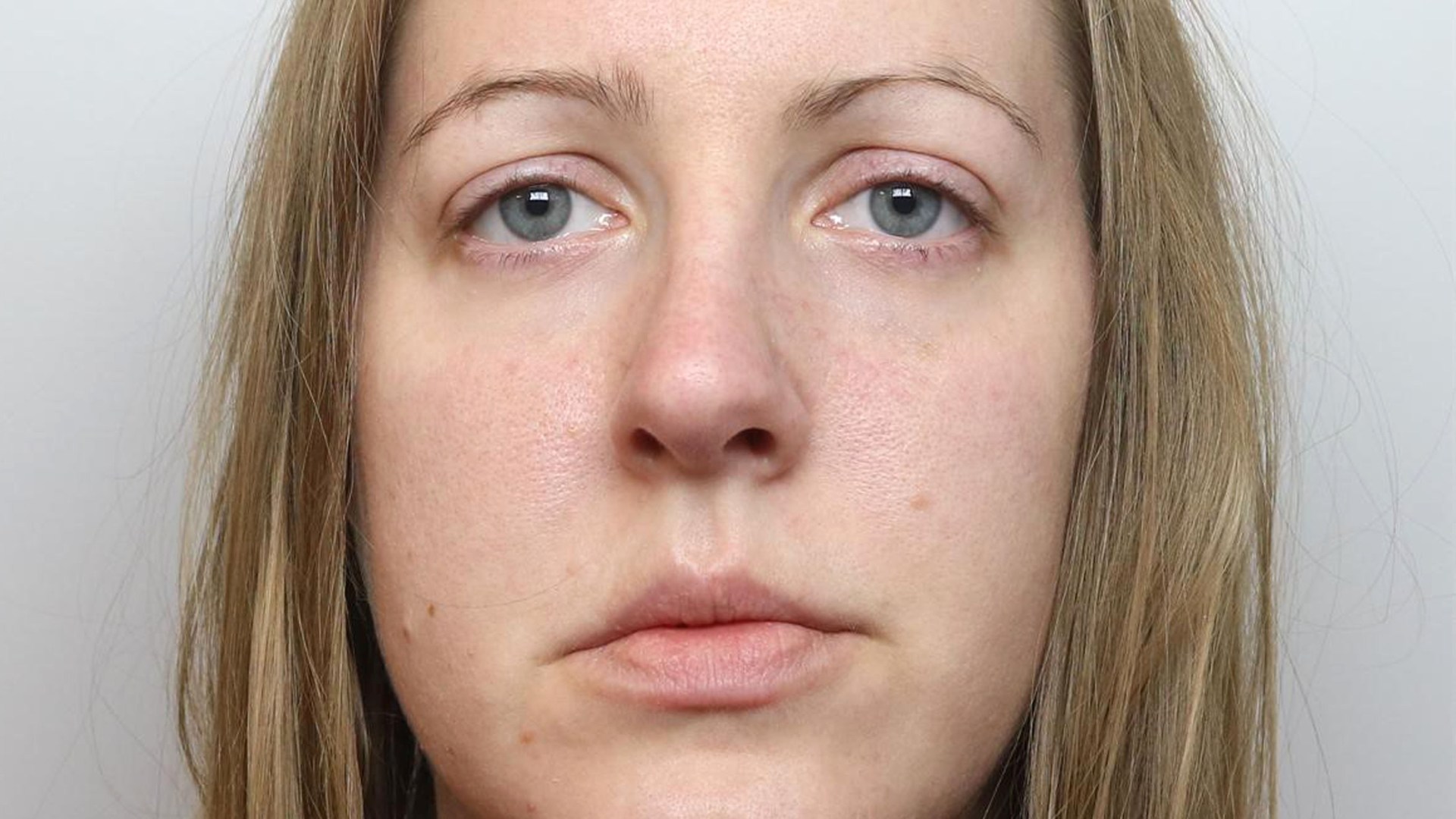
THE feeling that Lucy Letby was the victim of a major miscarriage of justice won’t go away. An imminent decision by the Criminal Cases Review Commission, the final rejection of further criminal charges and the sudden death of a key trial figure have thrown the former nurse’s case back into the public spotlight in recent weeks – and with it a string of still unanswered questions. Lucy Letby was convicted of the murder of seven babies and the attempted murder of seven more Credit: PA The deaths occurred between 2015 and 2016 Credit: Getty The now-36-year-old is serving 14 whole-life orders after being convicted in 2023 and 2024 for the murders of seven babies and attempting to kill seven more at Countess of Chester Hospital between June 2015 and June 2016. However, suspicions she was in fact innocent came to a head when in February last year a panel of 14 international experts concluded her convictions were “unsafe”, suggesting there was “no medical evidence to support malfeasance”. Sign up for The Sun newsletter Thank you! Instead, they believed the babies’ deteriorations were down to natural causes or poor hospital care, while the nurse had been tried on flawed evidence. Here, The Sun explores the list of questions surrounding Letby’s case that remain unanswered. No smoking gun The trial itself relied on highly technical, interpretation-heavy expert testimony instead of direct physical proof tying Letby to the crimes. The prosecution presented several independent medical experts to review the clinical charts of the babies, and they presented specific data to support the argument the collapses were not natural – but overtime an argument over whether this was scientifically valid has brewed. In a number of cases, the prosecution argued Letby injected air into her victims’ veins and stomachs, relying heavily on a 1989 academic paper to argue the unusual skin discolouration was proof. However, Dr Shoo Lee, one of the experts behind the paper, has since testified publicly that the prosecution misused his research and said the skin discolouration described in the trial did not match true air embolisms and could have occurred naturally. Most read in The Sun Dr Shoo Lee has hit back at the ‘flawed’ science prosecutors relied on in court Credit: Getty The Criminal Cases Review Commission continue to review the case in Letby’s last bid for freedom Credit: Alamy Meanwhile, prosecutors presented exceptionally high levels of insulin in two babies as the closest thing to a smoking gun pinning Letby to intended harm of patients – and her original legal team did not have an answer. But since the trial, experts have said the testing used was prone to “cross-reactivity”, and because original blood samples were discarded, gold-standard tests required for criminal court forensics were not possible. A further audit showed the lab that processed one of the two babies’ blood exaggerated the level of insulin in a quality control sample by nearly 800% – a critical piece of evidence never presented to the jury. A landmark study also showed chemical ratios of high insulin and low C-peptide naturally reverse in premature and low-birth-weight infants, meaning such an imbalance was not naturally “impossible” as the jury was made to believe. Police bodycam footage shows Lucy Letby being arrested at home in Chester in July 2018 Credit: AFP Dutch nurse Lucia de Berk was wrongly convicted of killing seven patients, including babies Credit: Wikipedia At the centre of the prosecution’s timeline evidence was a roster chart comparing Letby’s shifts during all 25 incidents over 13 months presented in court amongst those of 38 different neonatal nurses – showing an unbroken line, meaning she was on duty during every incident. However, since the trial, an expert panel convened by the Royal Statistical Society (RSS) said the shift roster data was “scientifically worthless”, arguing the chart was created working backwards, with the assumption Letby was guilty. Statisticians have also compared the Letby shift chart to previous miscarriages of justice, including that of Dutch nurse Lucia de Berk where prosecutors explicitly used a flawed statistical probability calculation claiming there was a “1-in-7-billion chance” that de Berk’s presence at multiple incidents was pure coincidence, But, like Letby they had stripped it of any context and was ultimately calculated wrongly. Lack of motivation The lack of an established motive in the case is one of the most concerning issues, with prosecutors struggling to pin down exactly why Letby committed the crimes. However, it must be noted, by law the CPS only has to prove a defendant committed such a crime and intended to cause death or serious harm – but does not have to prove why the crime was committed. Lead prosecutor Nick Johnson KC put forward several theories, including her thrill for “playing God”, boredom and most prominently attention-seeking and infatuation for the registrar Dr A – who cannot be named due to reporting restrictions, described as the nurse’s “boyfriend” in court. The implication was Letby intentionally crashed babies so Dr A would be paged and rush to the scene to save the day and she could see him. Professor Richard Gill, the statistician who was part of the team that freed convicted nurse Lucia de Berk Lawyer Mark McDonald is leading Letby’s current appeal Credit: AP A possible issue with this theory is that the pair – who kept in touch even after Letby was removed from the ward amid growing suspicions – only began messaging on June 14 2016, just a couple of weeks before the end of her crime spree. Professor Richard Gill, a statistician who successfully fought for the exonerations of Lucia de Berk and Daniela Poggiali, nurses also convicted of killing patients, told The Sun her supposed infatuation being used as a motivation is “totally ludicrous”. “It doesn’t stand up in any investigation – but they had a problem that she had no motivation, so they had to invent a motivation,” he said. “The idea that someone would carry out murderous attacks to gain the attention of a doctor who might or might not be called in to help out, just doesn’t stand up to any scrutiny whatsoever and the amazing thing is the judge let it all pass.” Dr A was found dead in his car last month on the anniversary of Letby’s first arrest after reportedly being sacked following a disciplinary hearing relating to texts he’d sent the former nurse. Dr A mystery Mystery still surrounds the relationship between Dr A and Letby. The anonymous married registrar, who cannot be identified due to reporting restrictions, could well be named in the wake of his death, aged 53, on July 3 – with MP David Davis telling The Sun it could take place at any future retrial. Although the court heard the pair exchanged 1,300 messages and enjoyed day trips to London, Letby denied a romance and insisted they were simply “trusted friends”. But she called him “sweetie” in messages and broke down in tears when he entered the dock to give evidence against her. The Thirlwall Inquiry later found the doctor had been “misled” and “maybe manipulated” into giving Letby information about the babies she had attacked. The charges Letby was convicted on in full Child A, allegation of murder. The Crown said Letby injected air intravenously into the bloodstream of the baby boy. COUNT 1 GUILTY. Child B, allegation of attempted murder. The Crown said Letby attempted to murder the baby girl, the twin sister of Child A, by injecting air into her bloodstream. COUNT 2 GUILTY. Child C, allegation of murder. Prosecutors said Letby forced air down a feeding tube and into the stomach of the baby boy. COUNT 3 GUILTY. Child D, allegation of murder. The Crown said air was injected intravenously into the baby girl. COUNT 4 GUILTY. Child E, allegation of murder. The Crown said Letby murdered the twin baby boy with an injection of air into the bloodstream and also deliberately caused bleeding to the infant. COUNT 5 GUILTY. Child F, allegation of attempted murder. Letby was said by prosecutors to have poisoned the twin brother of Child E with insulin. COUNT 6 GUILTY. Child G, three allegations of attempted murder. The Crown said Letby targeted the baby girl by overfeeding her with milk and pushing air down her feeding tube. COUNT 7 GUILTY, COUNT 8 GUILTY, COUNT 9 NOT GUILTY. Child H, two allegations of attempted murder. Prosecutors said Letby sabotaged the care of the baby girl in some way which led to two profound oxygen desaturations. COUNT 10 NOT GUILTY, COUNT 11 JURY COULD NOT REACH VERDICT. Child I, allegation of murder. The prosecution said Letby killed the baby girl at the fourth attempt and had given her air and overfed her with milk. COUNT 12 GUILTY. Child J, allegation of attempted murder. No specific form of harm was identified by the prosecution but they said Letby did something to cause the collapse of the baby girl. COUNT 13 JURY COULD NOT REACH VERDICT. Child K, allegation of attempted murder. The prosecution said Letby compromised the baby girl as she deliberately dislodged a breathing tube. COUNT 14 JURY COULD NOT REACH VERDICT. Child L, allegation of attempted murder. The Crown said the nurse poisoned the twin baby boy with insulin. COUNT 15 GUILTY. Child M, allegation of attempted murder. Prosecutors said Letby injected air into the bloodstream of Child L’s twin brother. COUNT 16 GUILTY. Child N, three allegations of attempted murder. The Crown said Letby inflicted trauma in the baby boy’s throat and also injected him with air in the bloodstream. COUNT 17 GUILTY, COUNT 18 JURY COULD NOT REACH VERDICT, COUNT 19 JURY COULD NOT REACH VERDICT. Child O, allegation of murder. Prosecutors say Letby attacked the triplet boy by injecting him with air, overfeeding him with milk and inflicting trauma to his liver with “severe force”. COUNT 20 GUILTY. Child P, allegation of murder. Prosecutors said the nurse targeted the triplet brother of Child O by overfeeding him with milk, injecting air and dislodging his breathing tube. COUNT 21 GUILTY. Child Q, allegation of attempted murder. The Crown said Letby injected the baby boy with liquid, and possibly air, down his feeding tube. COUNT 22 JURY COULD NOT REACH VERDICT. The doctor was hauled before a disciplinary hearing in June over a series of inappropriate texts he sent the former neo-natal nurse while they worked together. They are reported to have involved details of the care of a premature baby boy with haemophilia, known only as Baby N – who Letby was found guilty of attempting to murder. The messages are understood to have breached patient confidentiality. It is suggested the doctor struggled with work issues following Letby’s August 2023 conviction. But the truth of their relationship remains a mystery. Poor staffing and conditions Chronic understaffing, systematic hospital failures and hazardous infrastructure conditions form part of Letby’s ongoing defence, and are central to the independent Thirlwall Inquiry, the results of which are due later this year. The suggestion is it created a “perfect storm” that contributed to a spike in baby collapses and deaths – with Letby the scapegoat in a retrofitted criminal narrative. Michele Warden, who previously worked on the ward, told The Sun: “It came together to be an absolute perfect storm… I’ve been calling this out for a long, long time. “I think there was a witchhunt… But I don’t know why they earmarked Lucy.” Michele Warden called the police after hearing Letby had been arrested Credit: Michele Halligan There’s a growing fear that Letby was the victim of a miscarriage of justice Credit: SWNS After hearing Letby had been arrested, she even called Cheshire Police saying: “I’m telling you the problem’s on this unit.” She added: “Everything’s been weaponised against Lucy to say that was macabre. She was portrayed as a lying, macabre, horrible, gloating killer.” Official service reviews given to the inquiry show the Countess of Chester’s neonatal unit was operating with about a fifth fewer nurses than required by the British Association of Perinatal Medicine (BAPM) national safety standards during the supposed crime spree. Letby herself had even messaged colleagues saying the ward was “completely unsafe”, with the trial highlighting at least one occasion when the maximum number of patients was exceeded despite the low staffing levels. The convicted nurse also noted in court she was forced to care for highly complex, crashing infants without clinical oversight or support required for ICU-level care. On top of this, neonatologists have since argued the unit was treating babies far too sick for its lower-tier capabilities – with evidence presented to the inquiry noting multiple serious mistakes made by junior doctors, including an incident in which a new born was accidentally given 10 times the safe dose of morphine. The hospital itself suffered from severe plumbing failures, resulting in raw sewage regularly backing up and bursting out of hand-washing sinks – as well as a superbug contamination, namely Pseudomonas aeruginosa in the taps. The waterborne superbug – which can cause lethal respiratory infection in a premature baby – was even detected in one of Letby’s alleged victims, with experts, including Dr Lee, claiming the child’s medical file showed this may have caused a blockage of the baby’s airways, resulting in its collapse. The jury was never informed of the presence of the bacteria. Police ‘tunnel vision’ and delays Tory MP Sir David Davis has been among critics to accuse Cheshire Police of “tunnel vision” during its investigation i.e. trying to build a case around Letby instead of exploring wider issues and evidence. Cops have received heavy criticism for over-reliance on a single independent medical witness, namely retired consultant paediatrician Dr Dewi Evans, rather than consulting a broader, peer-reviewed panel of active neonatal specialists. And while the Court of Appeal maintained Dr Evans’ evidence was robust and thoroughly tested, Letby’s defence barrister Mark McDonald, as part of his CCRC application, said he was actually fundamentally unreliable because he allegedly changed his medical theories on how certain babies died, meaning there was not a consistent medical theory on the mechanism of murder. The police force has rejected any such criticism, denying procedural wrongdoing, and arguing all evidence was verified by multiple Court of Appeal judges. David Davis MP says the anonymity order given to a doctor Lucy Letby was infatuated with is likely to be reviewed in the wake of his death Credit: PA And while the Thirlwall Inquiry has not looked at the police investigation itself, it has examined why police were not called in by the hospital trust sooner. The first deaths pinned on Letby began in June 2015 but the police were not called until May 2017, with meetings involving hospital executives and consultants initially resisting involving Cheshire Constabulary over internal and royal college reviews instead. Critics suggest this delay could have hindered the police investigations, fuelling the narrative of a witch hunt. Comment now
From ‘smoking gun’ to ‘no motive’ & mysterious ‘Dr A’… five questions in Lucy Letby case that MUST be answered
Full Article
Original Source
Read the full article at Thesun →KhanList aggregates and links to publicly available news content. We do not host full articles from third-party sources. Always verify important information with original sources.