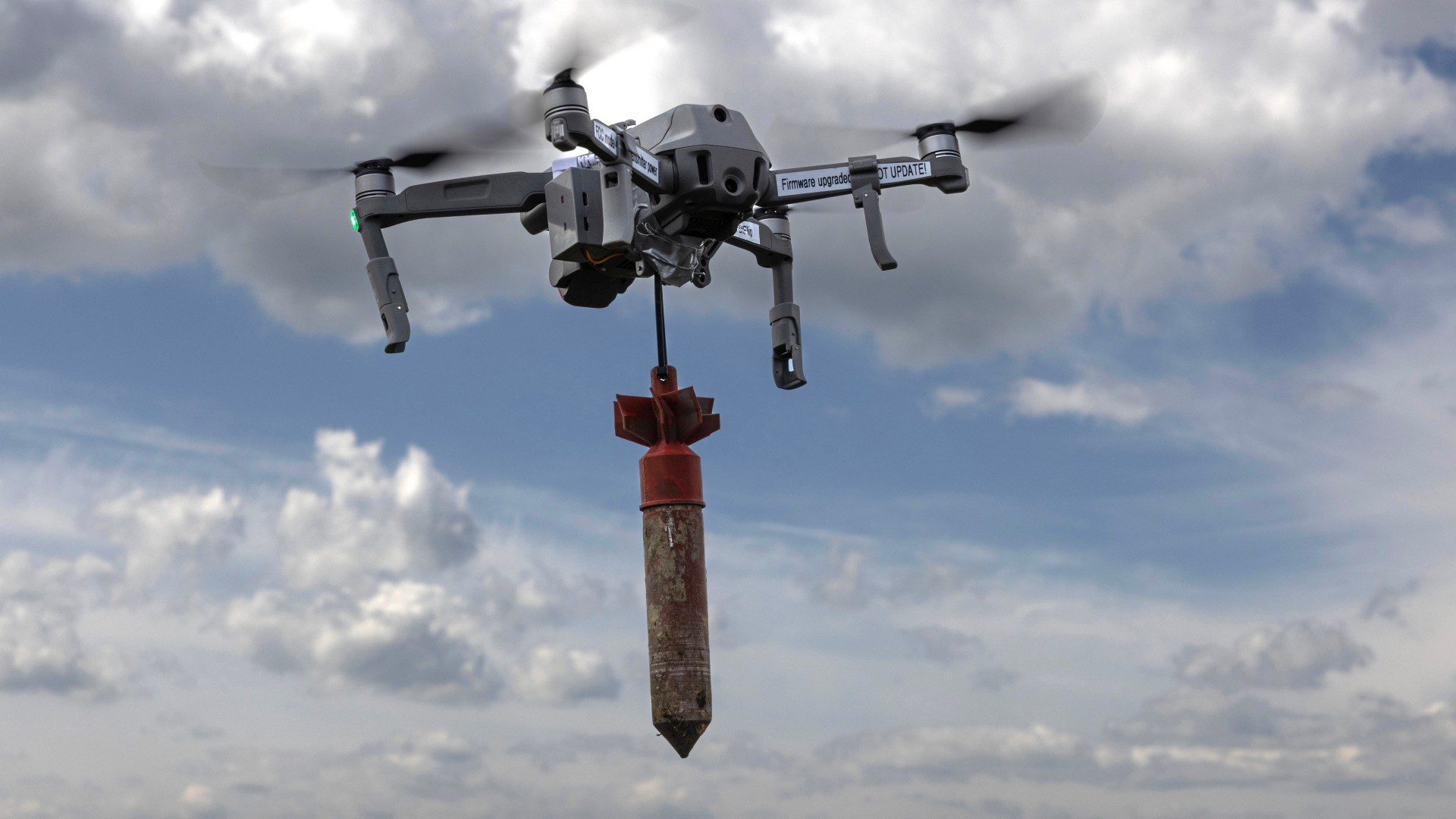
BRITISH-MADE drones hit deep into Russian territory for the first time last night, killing at least six people in the biggest air raid on Moscow in two years. The attacks on a distribution warehouse south of the capital, which involved more than 800 of the deadly flying robots, is part of the tech innovation that has changed the face of combat. Brit soldier LCpl Snoots with a machine she controls Credit: UK MOD Crown copyright Ukraine UAV with a bomb payload Credit: Getty A warehouse in Russia yesterday after a deadly drone attack Credit: East2West The US-style Predator devices – first fielded 30 years ago – which can fly thousands of miles, loiter for hours and unleash hellfire missiles Credit: Getty Never before has a war been fought largely by drones. They are everywhere and do everything, from sinking ships to hauling half-dead soldiers off the battlefield. Sign up for the Tech newsletter Thank you! They can fly, dive and hover. They can sense, shoot and supply. The smallest fit inside matchboxes while others dwarf 40ft sea containers. In a single day in Ukraine alone there were 12,000 drones darkening the skies over the town of Pokrovsk. And they don’t just hunt humans. Drones wage war on drones and deliver other drones into battle. Some can fly 1,200 miles to Moscow. Others stay tethered to pilots by fibre-optic thread. They range from space rockets and weather balloons to off-the-shelf DJI quadcopters that cost £300 from Currys. Among the British ones deployed by Ukraine are the Nyan, which has a wingspan of nine and a half feet and a strike range of over 150 miles. Most read in Tech The weapons break down into three broad categories: Attack drones, spy drones and supply drones. Here, we look at each type and the roles they have been playing on the battlefield during Russia’s conflict with Ukraine. ATTACK DRONES Ukraine’s P1-Sun Interceptor costs a few thousand pounds each and are designed to shoot down Russian Shahed drones, which cost £20,000 to £30,000 each Credit: Getty The Octopus Interceptor is faster than its target and can catch their prey, crash into it or explode nearby Among the most deadly long-range are the twin- fuselages drones such as Ukraine’s Blitz-2 Loitering munitions include the HX-2 Credit: Alamy Remote- controlled speedboats packed with explosives can launch Kamikaze attack by water Credit: Getty Among the British drones deployed by Ukraine are the Nyan, which has a wingspan of nine and a half feet and a strike range of over 150 miles Credit: © Jerome Starkey 2025 One-way attack drones: Pioneered by forces who strapped bombs to off-the-shelf drones, designed for filming and photography, and crashing them into enemies. Soon they evolved into faster and nimbler racing machines, and most are now custom-built with a combination of commercially available parts and 3D-printed chassis. Dubbed kamikaze or suicide drones, their latest evolution is the fibre-optic FPV. These devices are fitted with fibre optic thread that unspools as the drone flies. It is tethered to a controller, giving them a crystal-clear 4K view transmitted at the speed of light. Loitering munitions: Military-grade, purpose-built drones that often have a tell-tale X-shaped wing. They are designed to loiter over the battlefield looking for suitable targets before dive-bombing at speeds of around 200mph with a significant explosive warhead. Western versions include the Helsing HX-2. Interceptors: These are designed to take down other drones. They come with a lower price tag than air defence missiles (which can cost £1million each) and are cheaper than the machine they are trying to destroy. The best-known examples include Ukraine’s P1-Sun and the Octopus. They cost a few thousand pounds each and are designed to shoot down Russian Shahed drones, which cost £20,000 to £30,000 each. Some take off vertically. They can also be launched from helicopters and small aircraft or fired from handheld launching rails. Faster than their target, they can catch their prey, crash into it or explode nearby. These were the weapons Ukraine developed and offered to the Gulf States to defend against Tehran’s reprisals after Donald Trump attacked Iran. Long-range strike drones: Just like long-range missiles, these deliver explosive payloads over hundreds or thousands of miles. Iran’s Shahed model, with its distinctive delta-shaped wing, is perhaps the best-known of this type. But the martyr drone has been eclipsed by at least 25 types of Ukrainian long-range strike weapons that hit oil refineries, weapons factories and ammunition dumps on an almost nightly basis. Among the most deadly are the twin-fuselages drones such as Ukraine’s Blitz-2. The line between missile, drone and cruise missile is blurred, but drones are usually slower and cheaper. Bomber drones: These include US-style Predator devices – first fielded 30 years ago – which can fly thousands of miles, loiter for hours and unleash hellfire missiles. The bomber drones in Ukraine work closer to the front line. They hover over targets and drop mortar bombs, grenades or home-made explosives on to soldiers, bunkers and armoured vehicles. In the first months of the Ukraine war, hand grenades were strung in paper coffee cups beneath DJI quadcopters. This sub-category of drone is often larger than FPVs and includes models originally designed for heavy agriculture – such as the Vampire – that were also popular with smugglers sneaking contraband into the EU before the war. Their most dramatic “kills” include dropping bombs through tank hatches, igniting ammunition inside and blowing off the turrets. Kamikaze attack boats: Remote- controlled speedboats packed with explosives. This type of craft includes Ukraine’s Magura and Sea Baby drones that have devastated Russia’s Black Sea fleet – sinking ships and forcing the remaining vessels to retreat from occupied Crimea to Novorossiysk in the eastern Black Sea. Missile launching boats: Ukraine developed the world’s first sea drones armed with Archer air defence missiles to protect the surface attack drones from helicopters. It fielded naval drones packed with interceptors to stop Russia’s long-range attack weapons, such as Shaheds, over the Black Sea, before they reached key port cities such as Odessa. Submarines: Ukraine said its little-known Sub Sea Baby drone snuck into Russian port Novorossiysk in the eastern Black Sea, and exploded next to a Kilo-class Russian submarine. Kyiv recently claimed that its Sea Trident sub can carry a one-ton warhead. Britain and America have also developed so-called extra-large submarine drones capable of a range of missions including surveillance and delivery. The vessels float antennae on the surface to receive instructions. Kamikaze attack drones: Remote- controlled cars on wheels or tracks loaded with explosives that trundle up to enemy positions and explode. Mobile reusable guns: Cars with machine guns, rockets or mortars mounted on the chassis. The vehicles are controlled remotely. Ukraine claims it has held positions and even captured Russian soldiers using only drones. SPY DRONES Long-range endurance drones such as America’s Puma aircraft system which loiters over targets Credit: UK MOD Crown copyright The Leleka might spot targets with cameras, or transmissions with antennae, or air defence systems with their own inbuilt radars Credit: Peter Jordan Intelligence collection: Anything with a camera or even an antenna capable of picking up signals can perform the role of a surveillance drone. These range from the DJI quadcopters used to spot enemy positions and correct artillery and mortar fire, to long-range endurance drones such as America’s Puma aircraft system which loiters over targets, undetected and immune to jamming for hours, while the attack drones make their way to their mark. They might spot targets with cameras, or transmissions with antennae, or air defence systems with their own inbuilt radars. Early versions included Ukraine’s Leleka and versions of Russia’s Lancet. We see the spy drones less often, but we often see the footage they film as other drones explode on target. At sea and on land, intelligence collection could include acoustic sensors listening for submarines and ships, detecting movement from soldiers or transmissions from radios. Jamming and communications: Drones can carry electronic warfare kit to jam enemy communications or relay friendly signals. SUPPLY DRONES The Royal Navy tested Malloy drones for transferring stores between ships Credit: UK MOD Crown copyright The Gereon UGV, which is essentially a remote-controlled car on tracks Credit: UK MOD Crown copyright Uncrewed ground vehicles: Sky drones have created a kill zone up to 30 miles either side of the front lines. Anything that moves is at risk of being hit. So in order to deliver food, fuel, ammunition and building supplies, soldiers have turned to UGVs, which are essentially remote-controlled cars on tracks and wheels, from the size of a small suitcase to the size of a family car. They also evacuate wounded soldiers. Some versions come with armoured cocoons to protect the patient from further attacks. Mothership drones: These are larger, sometimes repurposed spy drones that can carry smaller unmanned aerial vehicles. Almost any large UAVs can be fitted with almost any cargo and can resupply troops or evacuate the wounded. The Royal Navy tested Malloy drones for transferring stores between ships. Troops have also used them for moving ammunition and wounded comrades. Comment now
From sinking ships to catching enemies, how super drones have become kings of war as British devices make it to Russia
Full Article
Original Source
Read the full article at Thesun →KhanList aggregates and links to publicly available news content. We do not host full articles from third-party sources. Always verify important information with original sources.