
US intelligence agencies have detected what officials describe as Iranian planning to potentially target senior members of President Donald Trump's administration in Washington DC using a so-called dirty bomb or a chemical weapon, according to a CNN report citing seven US officials.The intelligence has triggered contingency planning in the United States, although officials remain divided over whether Iran has the capability or intention to carry out such an attack. Sources familiar with the assessment said the planning appeared to be an effort by Tehran to keep its options open rather than evidence of an imminent operationTwo sources cited by CNN claimed that the alleged plotting included specific locations and potential targets. US officials have also held several meetings over the past week to discuss ways to counter the threat.However, Iran's foreign ministry denied the report and termed the allegations as 'baseless'.White House spokesperson Lauren Bis said the administration was monitoring potential threats but added that “at this time there are no credible threats to the homeland”.The Iranian Mission to the United Nations in New York rejected allegations concerning chemical weapons, saying Iran “considers the use of chemical weapons under any circumstances to be wholly illegitimate and categorically rejects and unequivocally refutes the false and fabricated allegations circulated in this regard”. The statement did not explicitly address the intelligence about a possible dirty bomb plan.The reported threat comes as the US and Iran remain locked in conflict, with Washington continuing military strikes and an economic blockade against Tehran. Diplomatic efforts to end the hostilities have made little progress.Against this backdrop, the alleged planning has renewed attention on dirty bombs, which are different from nuclear weapons but can spread radioactive material over populated areas.What is a dirty bomb and how does it work?A dirty bomb, technically known as a radiological dispersion device, combines conventional explosives with radioactive material. When the explosive detonates, it scatters the radioactive substance into the surrounding environment through dust, smoke and debris.Unlike a nuclear bomb, a dirty bomb does not trigger a nuclear-fission reaction. It does not produce a nuclear explosion capable of destroying an entire city. Instead, its purpose is to disperse radioactive contamination, potentially forcing people to evacuate affected areas and disrupting normal life.The device is considered relatively crude and easier to assemble than a nuclear weapon. It does not necessarily require sophisticated technology, although obtaining radioactive material remains a key challenge.Radioactive substances used in medicine, industrial equipment and research facilities could potentially be used in such a device.The quantity and type of radioactive material, the strength of the conventional explosive and weather conditions, particularly wind direction, would determine how widely contamination spreads.In 2022, the term “dirty bomb” became a talking point during the Russia-Ukraine war after Moscow accused Kyiv of preparing to use such a device on its own territory.Ukraine rejected the allegation, calling it false, while the United States and its Western allies dismissed Russia’s claims as an attempt to create a pretext for escalation.The International Atomic Energy Agency (IAEA) subsequently carried out inspections at three Ukrainian locations identified by Russia and found no indications of undeclared nuclear activities or materials.How dangerous can a dirty bomb be?The immediate casualties from a dirty bomb would largely depend on the conventional explosion rather than radiation exposure, experts say. While radioactive material can cause harm, most such devices would not release enough radiation to kill large numbers of people or cause severe illness across a wide area.However, radioactive dust and smoke can be dangerous, particularly when inhaled close to the blast site. The material could contaminate buildings, public infrastructure and surrounding areas, requiring evacuations and costly clean-up operations.The extent of contamination would depend on the radioactive substance used and how it disperses. In some scenarios, affected buildings and public spaces could remain inaccessible for extended periods.The economic consequences could be substantial even if the immediate health impact was limited. Evacuations, restrictions on access to urban areas and decontamination work could disrupt businesses and public services.The psychological impact is also a major concern. Since radiation cannot be seen, smelled or tasted, people may not know whether they have been exposed. Detecting contamination requires specialised equipment.For this reason, dirty bombs are often described as weapons of terror or mass disruption rather than precision weapons.Why are US officials concerned about the alleged Iranian plans?According to CNN, US intelligence has picked up Iranian communications claiming that bomb-making materials have been stored inside the United States. However, officials remain divided over how credible that information is.Sources familiar with the intelligence told CNN that Iran may not need to bring trained operatives into the country to carry out an attack. It could potentially persuade someone already living in the US to execute a plot.One official said the capability to carry out such an attack had not necessarily increased, but that Iran's incentive to consider one may have changed amid the conflict.US officials are also monitoring separate intelligence suggesting that Iran could use chemical weapons against American troops stationed in the Middle East. The concerns have prompted parallel contingency planning to ensure diplomatic and intelligence personnel in the region have appropriate protective equipment and training.The report also highlighted concerns about the availability of protective equipment and training for US troops in the region.What happens if a dirty bomb is detonated?The response to a suspected dirty bomb attack would involve identifying the radioactive material, assessing the extent of contamination and restricting access to affected areas.Specialised equipment would be needed to detect radiation and determine which locations require evacuation or decontamination. Emergency teams would also have to assess the risks to people who may have inhaled or come into contact with radioactive particles.The scale of the response would depend on the type and quantity of material released, the area affected and the level of exposure.As per news agency AP, radioactive contamination could make homes, businesses and public facilities unusable until they had undergone expensive clean-up operations.Depending on the material involved, restrictions could last for months or longer.The primary challenge, therefore, may not necessarily be the number of people killed by radiation but the disruption caused by contamination, evacuation and the difficulty of restoring affected areas to normal use.
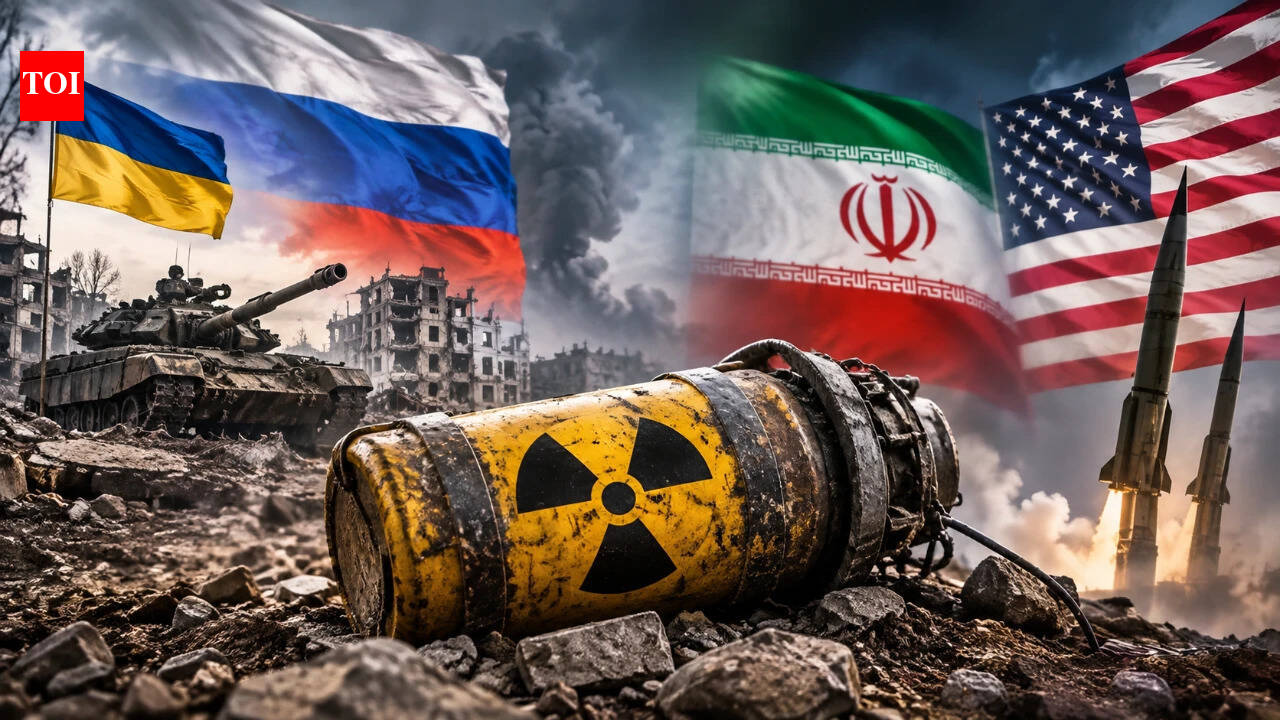
From Russia-Ukraine war to Iran-US conflict: The return of the 'dirty bomb' threat
Full Article
Original Source
Read the full article at Timesofindia →KhanList aggregates and links to publicly available news content. We do not host full articles from third-party sources. Always verify important information with original sources.