
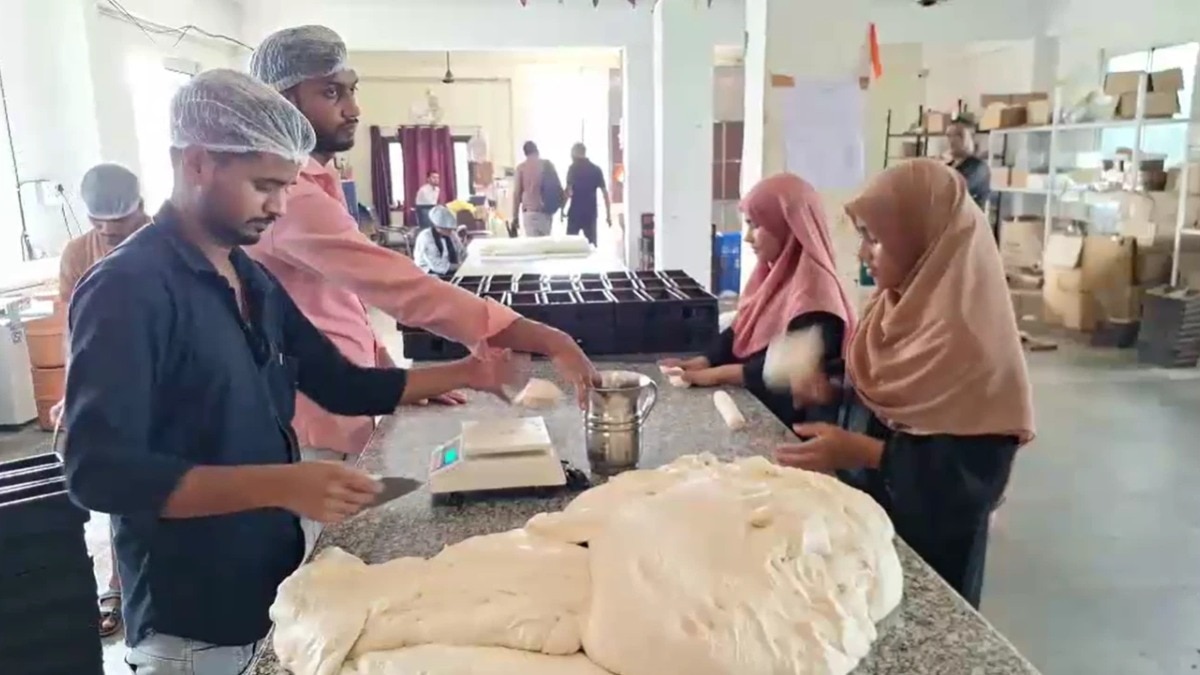
After the Uttar Pradesh government's One District One Product push, farmers who once struggled to find buyers for the traditional rice now say traders approach them even before the crop is harvested, offering advance payments to secure supplies.Farmers say the sharp increase in demand has even made the rice difficult to procure.In Uttar Pradesh’s Siddharthnagar district, Kalanamak rice has emerged as a lucrative crop for farmers after being selected under the state’s One District One Product (ODOP) scheme in 2018, with increased government promotion, better market access and value-added products helping drive up demand and prices. Farmers who once struggled to find buyers for the traditional rice now say traders approach them even before the crop is harvested, offering advance payments to secure supplies.Kalanamak rice, known for its distinctive aroma and nutritional properties, previously sold for around Rs 35-70 per kg, according to farmers. It now fetches around Rs 180-200 per kg in the market, while the wholesale price has risen to about Rs 20,000 per quintal. Farmers say the sharp increase in demand has even made the rice difficult to procure, with buyers from cities including Delhi, Mumbai, Gorakhpur and Sant Kabir Nagar approaching growers for supplies. The growing popularity of Kalanamak rice has also significantly expanded its cultivation in the district. According to officials, the crop was grown across around 2,000 hectares in 2017, before its inclusion under ODOP.The area under cultivation has since expanded to nearly 20,000 hectares, with officials saying production needs to increase further to keep pace with demand. Ajay Rawat, a beneficiary associated with Buddha Delights, said his family has been cultivating Kalanamak rice for nearly three generations. He said its inclusion under ODOP in 2018 helped open up national and international markets for the traditional crop and also encouraged the development of value-added products.“We have also ventured into value-added products made from Kalanamak rice, including cookies,” Rawat said, adding that the products are positioned for their nutritional value and contain nutrients such as zinc and protein.Rawat said he received a Rs 2.06-crore grant from the District Industries Department in Siddharthnagar under the ODOP scheme. The support helped him participate in fairs and festivals, where the products were showcased and promoted beyond the district. He said that before 2018, farmers had limited awareness about the nutritional properties of Kalanamak rice, including its low glycaemic index, and there was little organised demand for the crop.According to Rawat, the increased promotion under ODOP has changed the market dynamics. Rice that previously struggled to find buyers at Rs 50-60 per kg now sells for around Rs 200 per kg, he said.Farmer Pankaj Chaubey said the improvement in prices has had a direct impact on growers. He said farmers who once struggled to sell Kalanamak rice for Rs 5,000-6,000 per quintal can now command around Rs 20,000 per quintal.Chaubey said the Alidapur belt is particularly known for producing good-quality Kalanamak rice. He added that farmers who once had to approach buyers themselves now receive calls from different parts of the country seeking supplies.“Earlier, people would go around asking buyers to take Kalanamak rice. Now we receive calls from places such as Gorakhpur, Sant Kabir Nagar, Khaliabad, Mumbai and Delhi asking us to arrange supplies,” he said.Another farmer, Mohit, said Kalanamak has been cultivated by his family for generations, but the crop fetched only around Rs 35-45 per kg in the past because demand was limited. The situation changed after the rice was brought under the ODOP scheme, he said.“Now, as soon as we sow it, people from outside come and book the crop, asking us to give the produce only to them,” Mohit said, adding that some buyers also pay farmers in advance.He said the ODOP initiative helped create awareness about Kalanamak cultivation in the Alidapur belt and brought greater recognition to the rice's nutritional properties. The growing demand in national and international markets, he added, has also boosted farmers’ confidence.Farmer Brij Bhushan Chaudhary recalled that Kalanamak rice previously sold for around Rs 6,000-7,000 per quintal, and even finding buyers at those prices was difficult. Government employees and officials were often among the few buyers, he said. The extensive promotion under ODOP, however, has significantly increased awareness and the market value of the rice.Officials said the government has also focused on improving processing, packaging and marketing infrastructure around the product. Shiv Shankar, Deputy Commissioner of Industries at the District Industries Promotion and Entrepreneurship Development Centre in Siddharthnagar, said Rs 917 lakh in grants had been provided to 306 beneficiaries since the ODOP scheme was introduced in 2018.He said the expansion in cultivation from around 2,000 hectares to nearly 20,000 hectares was largely driven by improved prices and rising demand. The administration has organised awareness programmes, buyer-seller meets and promotional campaigns in coordination with the Agriculture Department to expand the market for Kalanamak rice.The rice is also being sold through online marketplaces, including Flipkart and Amazon, while a Common Facility Centre has been established in Madhwapur in Bansi tehsil to support packaging and processing.The district administration has also encouraged the development of new varieties to address concerns over low productivity. Varieties such as Kiran 101, Kiran 102 and Kiran 103 have been developed to improve yields and encourage more farmers to take up Kalanamak cultivation.Under the ODOP initiative, 10-day training programmes are organised for farmers covering cultivation practices, packaging and marketing. Officials said around 1,400 farmers have received training related to Kalanamak rice since 2018. Farmers are also provided moisture meters to assess the moisture content of harvested paddy, while warehousing facilities are available for storing produce when required.Balram Singh, Chief Development Officer of Siddharthnagar, said various government schemes were being implemented to increase Kalanamak rice production and promote products made from it. Subsidies are being provided to entrepreneurs involved in processing, packaging and value addition, including around Rs 2 crore in assistance to a company manufacturing products from Kalanamak rice.With farmers, entrepreneurs and government agencies increasingly focusing on cultivation, processing and marketing, Kalanamak rice has evolved from a traditional crop with limited demand into one of Siddharthnagar’s most prominent products under the ODOP initiative.- EndsPublished By: Shipra ParasharPublished On: Aug 26, 2026 19:47 IST
From Rs 50 to Rs 200 per kg: How UP govt's push transformed Kalanamak rice market
Full Article
Original Source
Read the full article at Indiatoday →KhanList aggregates and links to publicly available news content. We do not host full articles from third-party sources. Always verify important information with original sources.