
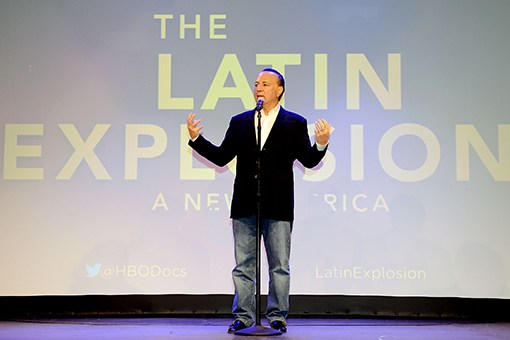
The chairman of Mottola Media Group and president of Sony Music U.S. Latin took center stage at Latin Music Week 2026 on (Oct. 19. The Latin Explosion: A New America Denise Truscello/Getty Images for HBO Latino Trending on Billboard From Ricky Martin’s Grammy breakthrough to the rise of música mexicana, Tommy Mottola and Alex Gallardo offered a candid look at how Latin music conquered the mainstream — and why its next evolution will depend on artists willing to break the mold. Explore See latest videos, charts and news Moderated by Billboard’s co-chief content officer Leila Cobo, The Rise of Latin Music Globally took place Monday (Oct. 19) at the Faena Theater in Faena Forum Miami Beach, Fla. Mottola, founder and chairman of Mottola Media Group and former chairman and CEO of Sony Music Entertainment and Gallardo, president of Sony Music U.S. Latin, traced Latin music’s transformation over nearly three decades — from the early crossover successes of Shakira and Ricky Martin to the digital era, which has made Spanish-language music more accessible worldwide. Mottola recalled that, in the late 1990s and early 2000s, Latin music remained a small niche within the U.S. market despite the global potential he saw in artists including Shakira, Ricky Martin, Marc Anthony and Jennifer Lopez. At the time, he said, the primary path to international success was to record in English or Spanglish and break through in the United States. One defining moment came when Mottola pushed for Ricky Martin to perform at the Grammys. When the ceremony initially resisted, Mottola said Sony threatened to withdraw its artists from the broadcast. The label ultimately got its way, and Martin performed “The Cup of Life,” helping introduce him to a broader U.S. audience. Mottola described those early crossover efforts as an attempt to transform “this amazing, wonderful music” and “these amazing stars” into global artists. The strategy helped fuel Latin music’s first major mainstream explosion in the United States. According to Gallardo, the rise of streaming, social media and reggaetón later changed Latin music’s position worldwide. He noted that Mexico, Brazil and U.S. Latin now rank among the biggest music markets globally — and that, measured by consumption, U.S. Latin would rank around No. 6 if it were counted as its own country. But with greater access comes a new challenge: standing out. “The door is open for Latin artists,” Gallardo said. “The challenge is more what Tommy was saying: Is the artist’s artistic proposition something truly original, unique, that is worth paying attention to — or is it the 10th copycat of something we’ve heard multiple times?” Mottola and Gallardo pointed to Rosalía’s genre-defying work, including the success of her classical-leaning album Lux, as an example of how a distinct artistic vision can become a compelling mass-market experience. “I think now is the time for artists to take those chances and to do those things,” Mottola said. “Breaking through is going to require change and breaking out of the mold.” Gallardo agreed: “It’s not about putting records like fast food one after the other. It’s more about taking a minute to think: What is the concept of this album? Let’s build the story, let’s build the narrative.” The executives emphasized storytelling and authenticity as essential tools for artists navigating an increasingly crowded marketplace. Mottola cited country artists including Ella Langley and Lainey Wilson, along with Drake and Steve Lacy, whose music connects through personal experiences and real-life narratives. They also noted that reggaetón no longer dominates the Latin music conversation alone. Música mexicana, tropical music and Afrobeats are all finding new audiences. Gallardo highlighted Argentine artist Milo J, who at 19 has connected younger listeners with the country’s traditional folklore. “No one thought that Mercedes Sosa could be back in the conversation,” he said, describing the unexpected resurgence of interest in folkloric music among younger listeners. The executives also discussed how technology has lowered the barriers to entry. Artists can now record in home studios, create visual content with smartphones and reach fans directly without relying exclusively on traditional gatekeepers. That direct connection is opening doors far beyond Latin America, Spain and the U.S. Gallardo cited Japan’s Fuji Rock Festival as an increasingly relevant market for Latin artists, noting that acts such as Trueno and Rauw Alejandro are already building connections there. He said: “What was almost impossible not so long ago — it was like another planet — is now almost a normal thing in your strategic plan.” Get weekly rundowns straight to your inbox Sign Up
From Ricky Martin to Milo J: Tommy Mottola & Alex Gallardo Explain How Latin Music Went From ‘Underdog’ to Global Powerhouse
Full Article
Original Source
Read the full article at Billboard →KhanList aggregates and links to publicly available news content. We do not host full articles from third-party sources. Always verify important information with original sources.