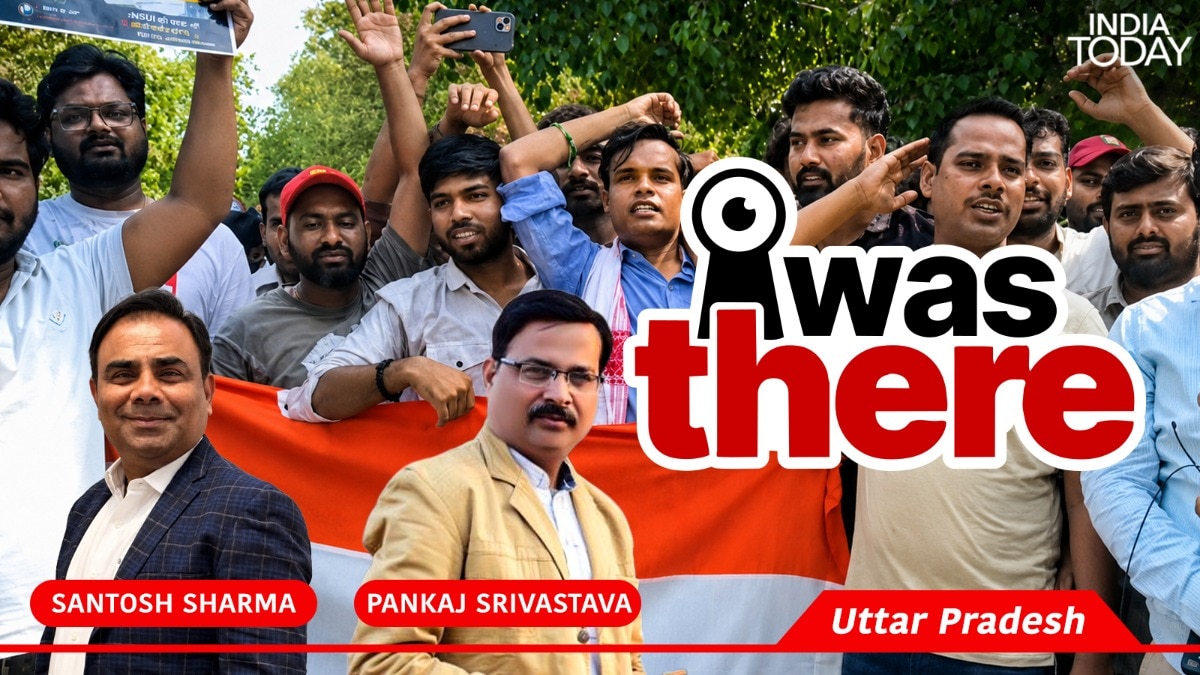
Student protests over the alleged NEET paper leak grew into a nationwide agitation that ended with Dharmendra Pradhan's resignation. Participants said the campaign showed how Gen Z could drive accountability through peaceful, tech-led mobilisation.Protesters said Gen Z deliberately moved away from conventional methods of protest.Lucknow,UPDATED: Jul 26, 2026 18:55 ISTWhat began as a protest against the alleged NEET paper leak evolved into one of the country's largest youth-led movements in recent years, culminating in the resignation of Union Education Minister Dharmendra Pradhan.For many students who participated in demonstrations across Delhi, Lucknow and Prayagraj, the movement proved that India's Gen Z—often dismissed as the "reel generation"—could organise, mobilise and sustain a nationwide campaign through creativity, technology and peaceful protest.The movement, spearheaded by the Cockroach Janta Party (CJP), gained momentum after the July 20 "Sansad Chalo" march in Delhi. Allegations of police excesses against protesters further intensified the agitation, triggering solidarity demonstrations across several cities.In Lucknow, protests were held from Lucknow University to Parivartan Chowk and the Eco Garden protest site. Student leader Himanshu Bajpai, who participated in the demonstrations, said the movement showcased a fearless generation unwilling to be intimidated. 'WE SALUTE GEN Z'"We belong to the millennial generation, but we salute Gen Z. Their creativity, energy and fearlessness were remarkable. They were not afraid of lathis, bullets or intimidation. If cannons had been placed before them, they still would not have stepped back," he said.According to Bajpai, the movement's biggest strength was its ability to counter political narratives through social media. He said memes, reels and slogans created by young protesters spread rapidly online, often reaching millions without relying on traditional media platforms. He also praised the discipline maintained throughout the agitation despite its massive scale."Thousands of young people gathered, yet there was no large-scale violence. More than 40 per cent of the protesters were women, and not a single incident of harassment was reported. That shows how sensitive this generation is towards gender equality, secularism and non-violence," he said.Another protester, Harshit Shukla from Lucknow, said Gen Z deliberately moved away from conventional methods of protest.'INSPIRED BY GANDHI'"We didn't burn effigies or target political personalities. We chose peaceful marches inspired by Mahatma Gandhi. People joined irrespective of caste, religion or political affiliation. Our creativity helped bring more young people into the movement," he said.For many participants, digital platforms became the movement's most powerful organising tool. Protesters said Instagram, Snapchat and short-form video platforms proved more effective than conventional political messaging, while several claimed that even internet restrictions failed to slow communication as young activists turned to alternative apps and offline sharing methods.Himanshu, a resident of Gonda who travelled to Delhi despite not appearing for NEET himself, said the movement united people beyond personal interest."I was there for my younger brother, who is preparing for the exam. Others came for their siblings or friends. At Jantar Mantar, strangers helped each other with food, water and cleaning. Everyone felt responsible for the movement," he said.EVERY PARTICIPANT BECAME COMMUNICATORKarunesh Dwivedi, another protester from Lucknow who joined the demonstrations at Jantar Mantar, said what impressed him most was the decentralised nature of the agitation."People were not just listening to Abhijeet Dipke from the stage. Every participant became a communicator in their own way. Some made videos, others sang songs, while many used posters and social media to spread the message. This generation isn't afraid to ask questions," he said.Students in Prayagraj echoed similar sentiments, describing the protest as a creative and largely peaceful movement driven by handwritten placards, humorous slogans and widespread student participation.They said Dharmendra Pradhan's resignation was seen as a significant victory and proof that sustained democratic mobilisation could force accountability at the highest level.For many participants, the movement's biggest achievement went beyond one resignation.They believe it established that public accountability can extend to the highest offices and that India's Gen Z has emerged as a powerful force capable of shaping national conversations through peaceful, technology-driven mobilisation.- EndsPublished By: Ritaban MisraPublished On: Jul 26, 2026 18:55 IST
From reels to resistance: Gen Z says creativity, not violence, won NEET protest
Full Article
Original Source
Read the full article at Indiatoday →KhanList aggregates and links to publicly available news content. We do not host full articles from third-party sources. Always verify important information with original sources.