
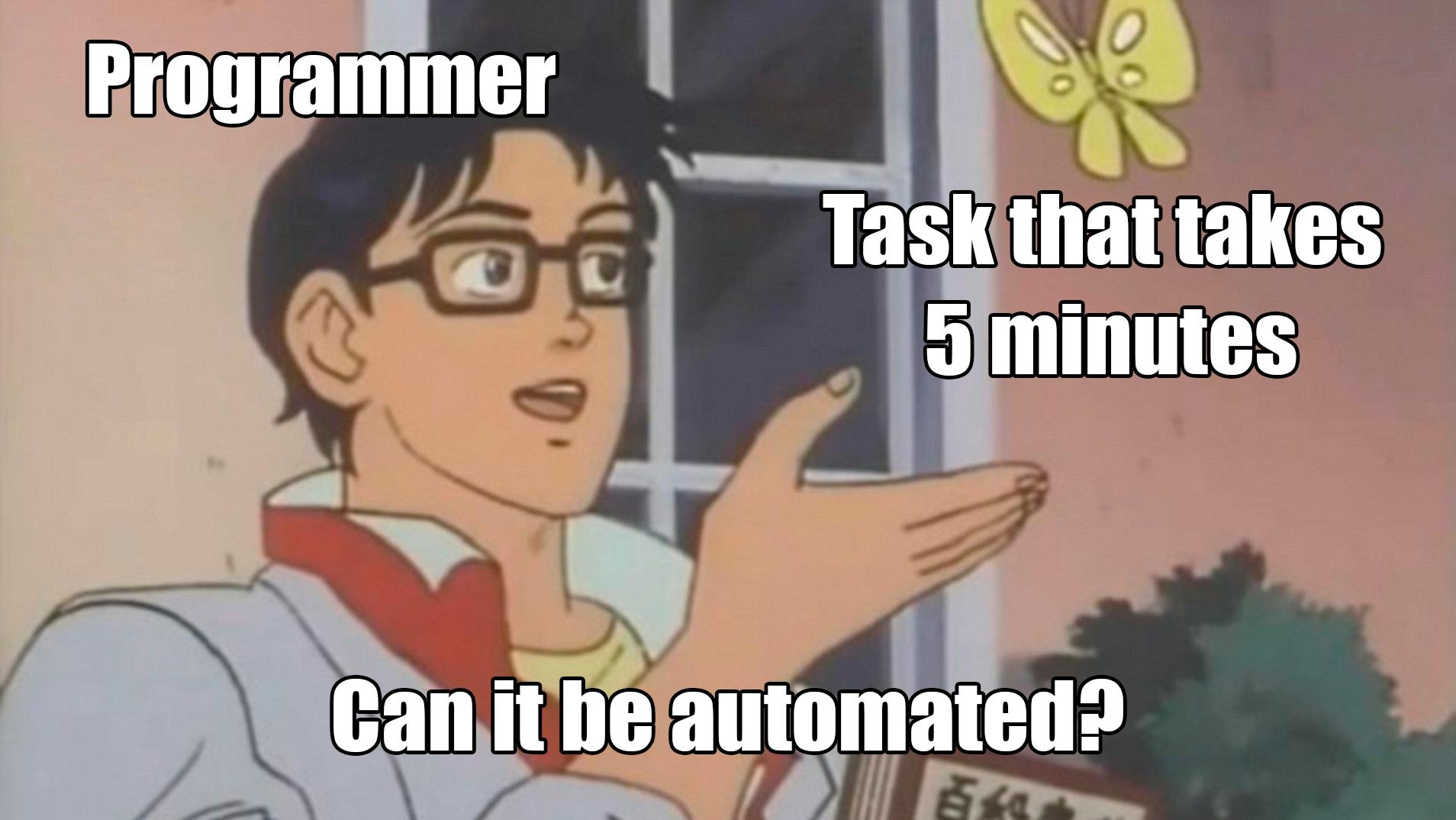
There is a moment in every bootstrapped developer’s life when a “clever, free hack” turns into a chaotic operational nightmare. For me, that moment hit right before Black Friday and Cyber Monday. Our lean, modular pipeline—drafting in Notion, cleaning up grammar via a ghostwriter, scraping links into CSVs, pushing assets to GitHub, and sending dirt-cheap emails via Amazon SES—was actually working. It worked so well, in fact, that we proved the concept to the business owners. Then COVID hit.Overnight, traditional advertising died. Physical events vanished. The only high-converting sales channel left that could reliably drive revenue was email newsletters.Suddenly, clients were knocking on our door, wanting to build their entire Q4 revenue strategy around Black Friday discount codes, flash sales, and aggressive communication campaigns. The good news? We had endless demand. The bad news? I realized I was completely cooked. You are reading the third article. If you want to start from the beginning - here is a list for you1) The $0 Email Engine: How I Used Notion, GitHub, Amazon SES to Outsmart Email Service Providers 2) Monolithic Campaigns: How Micro-Tasking Cures Email Burnout Chaos chaosThe Q4 Panic: When “Three to Four Newsletters a Week” Breaks Your Brain Sending one or two newsletters a month using manual developer scripts is fine. You run a quick terminal command, convert your Markdown, check your inline CSS, and go about your day. Sending three to four complex, asset-heavy sales campaigns every single week across multiple clients is a totally different sport. ┌───────────────────────────────────────────────────────────────────────────────┐ │ THE Q4 CONTENT TSUNAMI │ ├───────────────────────────────────────────────────────────────────────────────┤ │ [MON] Black Friday Teaser → Convert MD → Fix CSS → SES Send │ │ [WED] Cyber Monday Flash Sale → Convert MD → Fix CSS → SES Send │ │ [FRI] Weekend Extension Offer → Convert MD → Fix CSS → SES Send │ │ [SUN] Last Chance Discount Code → Convert MD → Fix CSS → SES Send │ │ │ │ RESULT: 80% of your week spent wrestling with raw HTML and terminal scripts. │ └───────────────────────────────────────────────────────────────────────────────┘ I was staring down a mountain of work that was physically impossible to maintain manually. I didn’t have the bandwidth to do it myself, and frankly, as a self-proclaimed lazy developer, I didn’t want to do it manually. So I fell back on the classic coder hubris: “We’re engineers. We’ll just write a simple CLI script that automates the whole thing for us.” If you’ve ever built software from scratch, you already know how this story goes:It was not that fucking simple. Chaos GIFs | TenorThe $500 Junior Dev and Version 1.0 I needed help building our custom Markdown-to-HTML converter script, but I’m a professional procrastinator who gets easily distracted. I needed a coding partner to keep me accountable and pull the weight. Enter my assistant: a young, highly capable college student who was hungry to learn and needed cash, but wasn’t quite ready for a full junior software developer role yet. I wasn’t being a cheap asshole. I paid him a fair hourly rate for his skill level—about $500 total out of pocket for the initial build. That figure didn’t include my own unpaid hours spent architecting the logic, reviewing code, and guiding him through edge cases. We sat down and started coding our first console tool: Version 1.0. It was supposed to be a simple CLI. You passed it a Markdown file, and it would: Parse the syntax. Inline the CSS tags. Sanitize the layout for Gmail and Outlook. Output an HTML payload ready for Amazon SES. And Version 1.0 was… terrible. It broke image margins inside mobile layouts. It mangled nested bullet lists. It generated messy inline CSS that triggered errors. It didn’t give us the clean, predictable output we needed to hit “send” with confidence. base64 images have been removed. Instead, use an URL or a file from your device The “Twisted Brain” Startup Origin Story Every tech journalist loves a cliché startup origin story: “A broke developer in a shitty position, backed into a corner by a crisis, uses their twisted brain to build a tool that solves their own pain.” Stripped of the Silicon Valley PR romance, that is exactly what happened.We were in a corner. The Q4 rush was crushing us. The raw DIY hack was too slow, and $400-per-month ESPs like Mailchimp or SendGrid were still overpriced bloatware that locked us into shitty editors. Version 1.0 failed, but it proved one crucial thing: The gap between raw Markdown files and dirt-cheap Amazon SES infrastructure wasn’t a template problem. It was a workflow-platform problem. We didn’t need another clunky drag-and-drop editor. We needed a frictionless engine that took raw, modular text and automatically compiled it into production-ready, email-safe HTML—without requiring us to manage CLI commands or write custom Python scripts every Tuesday night. The Birth of Lazy Email That broken $500 script became the foundation for what we’re building today. We took the lessons from Version 1.0, fixed the parser logic, automated the asset handling, and built a bridge between low-cost technical infrastructure and effortless management: Lazy Email. Here is what our complete evolutionary journey looks like: Stage The Setup The Bottleneck The Cost Stage 1: Monolithic ESPs Mailchimp / SendGrid UI Slow editors, bad UX, high lock-in $400+/month Stage 2: The DIY Dev Hack Notion + Git + Raw SES Manual CLI scripts, copy-and-paste exhaustion $0/month — high labor. Utility rates — $0.10 per 1,000 emails Stage 3: Lazy Email “partially automated” Markdown-to-HTML + SES None — frictionless, modular, instant Depends how to count it The Final Lesson for Lean Teams If you take anything away from this three-part series, let it be this: Stop accepting the false choice between overpriced SaaS bloat and painful manual hacks. You don’t need to hand $500 a month to an ESP just to send basic HTML to your audience. But you also shouldn’t waste your nights running raw terminal scripts or hacking together fragile parsers just to save a buck. Embrace micro-tasks. Leverage cheap, raw infrastructure(like Amazon SES). Outsource the parts of the job you hate. And when your manual hacks start showing their limits, automate them, productize them, and keep your workflow as simple as it was always meant to be. At some point, you just gotta let go; delegation just makes more sense. What made the difference wasn’t simply fixing a few bugs. It was realizing that our original plan—“just automate the easy stuff”—was the kind of sentence developers say right before losing an entire weekend to a missing semicolon. We changed the way we thought about the product.The goal was never to recreate Mailchimp with a cheaper price tag, a slightly different shade of blue, and yet another editor nobody asked for. Automation : r/ProgrammerHumorThe goal was to eliminate the repetitive work between writing an email and sending it. Every unnecessary click, manual conversion, formatting issue, and asset-management task became a candidate for automation.If a task was boring, repetitive, and technically required, it was probably our problem now. That meant designing LLazyEmail around the way lean teams actually work. Content could remain modular and human-readable instead of being trapped inside a visual editor that fights back every time you press Enter.Developers could keep using familiar tools like Markdown, Git, and Amazon SES, while nontechnical users could benefit from the same infrastructure without touching a terminal—or accidentally deploying something to production. Automate it!The system needed to preserve flexibility without turning every campaign into a small engineering project with its own roadmap, sprint planning, and emotional-support Slack channel. More importantly, we learned that productization isn’t about pretending complexity doesn’t exist. It’s about dealing with that complexity somewhere users don’t have to see it. Email compatibility, inline CSS, image paths, formatting edge cases, and delivery infrastructure still matter.A lot! They just shouldn’t demand attention every time someone wants to send a newsletter. That became the core promise of Lazy Email: keep the workflow simple on the surface, handle the difficult work underneath, and spare everyone from debugging a mysterious Outlook rendering issue at 11:47 p.m. on a Friday.
From Raw HTML Dumps to a CLI: How We Built LLazyEmail
Full Article
Original Source
Read the full article at Hackernoon →KhanList aggregates and links to publicly available news content. We do not host full articles from third-party sources. Always verify important information with original sources.