
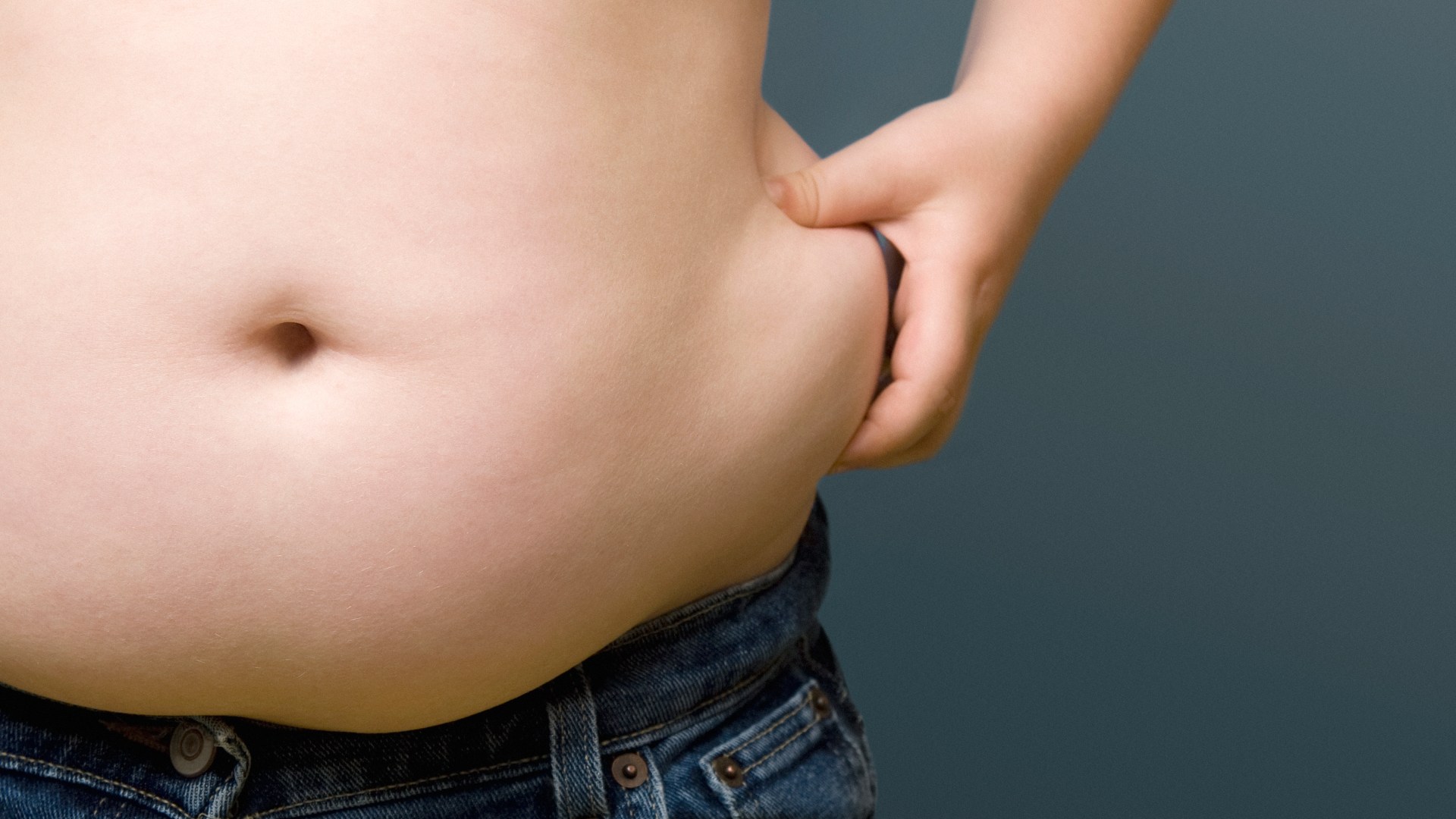
YOU’VE ditched UPFs, cut back on booze and slashed your calorie intake – but if the belly fat won’t budge, there might be more to it than your diet. “There are two types of body fat,” says Zoe Griffiths, dietician and vice-president of behavioural medicine at Numan. “Subcutaneous fat sits just under the skin – the kind you can pinch. Visceral fat sits deeper in the abdomen, wrapped around the liver, pancreas and intestines, and is closely linked to cardiovascular disease and diabetes. A rising waist circumference usually reflects increasing visceral fat.” Here’s what may be behind your belly – and how to tackle it. . . Sign up for the Health newsletter Thank you! POOR POSTURE Hours at your desk without a break can compress your abs and force the stomach to protrude Credit: Getty “CERTAIN positions give the illusion of a big belly – if you stand with your back arched and bottom sticking out, that lengthens the abdominals and makes the tummy look more rounded,” says Helen O’Leary, physiotherapist and clinical director at Complete Pilates. Hours at your desk without a break can round shoulders and weaken the muscles keeping you upright, compressing your abs and forcing the stomach to protrude. BEAT IT: Set alarms to break up periods of sitting. “At your desk, place hands on your hips and slowly let your pelvis roll back to a slumped position, then forward so that your back is arched,” says Helen. Find a middle ground, with a slight arch to your lower back and your head and ribcage directly over your pelvis. Try these easy stretches, too: Most read in Health BOOK OPENINGS: Lie on your side with your knees at 90 degrees and extend your arms straight in front, palms together. Raise the top arm in an arc over you, like opening a book. “Pause while you’re rotated and take some deep, big breaths into your rib cage,” Helen says. THREAD THE NEEDLE: Starting on all-fours, lift your right arm to the ceiling and follow it with your gaze, before bringing it down and threading under your left arm. Rest your right shoulder and cheek on the mat, before bringing your arm up to the ceiling. Repeat on the other side. CAT COW: On all-fours, arch your spine like a cat before dropping your belly down and tilting your head and tailbone up. Repeat a few times. SMOKE SCREEN Research has found that smokers tend to have more dangerous visceral tummy fat Credit: Getty NICOTINE may dampen appetite, but smoking isn’t a slimming hack. Smokers tend to have lower body weights than non-smokers, but studies show that they also have more of the dangerous visceral tummy fat.* “Evidence of this is still unclear when it comes to vaping, though,” adds Zoe. BEAT IT: Nicotine-replacement patches and gum or prescribed medications reduce the intensity of withdrawal. “Everyone has specific situations when they are more likely to smoke,” says Rosanne Joseph-Anthony, nurse practitioner lead at Healthium Clinics. “Replace the habit with something safer, such as chewing gum or keeping your hands occupied.” The NHS offers a free eight-step Personal Quit Plan – visit Nhs.uk/service-search/other-health-services/stop-smoking-support-services. HIGH CORTISOL Yoga, meditation, reading or a phone-free walk can help beat chronic stress which can cause ‘cortisol belly’ Credit: Getty A SINGLE work deadline or hectic week won’t suddenly give you a fat belly, but chronic stress could have an effect. Ever heard of “cortisol belly”? Elevated levels of the stress hormone can make your body add to its visceral fat stores.** “Cortisol increases our appetite, often for foods high in calories, fat and sugar,” adds Zoe. BEAT IT: Yoga, meditation, reading or a phone-free walk can help, but Helen also recommends getting out what’s in your head. “Jot down a list of tasks or concerns – if it’s on paper, it’s not going around in your head,” she explains. “From here, make a priority list – write down three things that are most important to tackle today, and the rest can wait. “If you feel you’re getting stressed, scan your body for any tension.” Are you clenching your jaw or tensing your shoulders? “Slow your breathing. As you breathe out, soften any areas of tension that you have noticed.” Try doing this for five to 10 breaths. GUT INSTINCT Having more bad than good bacteria can weaken your gut lining, allowing harmful substances to enter your bloodstream Credit: Getty IT makes sense that your gut, which sits inside your belly, could be part of the belly-fat puzzle. “Your gut is home to trillions of micro-organisms, known as the gut microbiome,” says Zoe. “Having more bad than good bacteria can weaken your gut lining, allowing harmful substances to enter your bloodstream, triggering low-grade inflammation. This can interfere with how your body handles sugar and insulin, a hormone that regulates blood sugar. Over time, this interference makes your body more likely to store fat around the belly.” Gut bacteria help control hunger hormones, too. An unbalanced gut might mean you feel less satisfied after eating and experience more cravings for sugar and unhealthy food. BEAT IT: Fibre, which feeds good bacteria, can help reset your gut and regulate appetite. “Aim for 25-30g a day from different fruits, vegetables, legumes and wholegrains,” says Zoe. Apps such as MyFitnessPal (free on iOS and Android) can help track your fibre. But the easiest swaps are white bread and pasta for brown or whole grain. Sprinkle seeds on your porridge and lunch, add beans to your soups or salads and snack on mixed nuts. “And cut back on ultra processed foods (UPFs), refined sugar and fried foods,” says Zoe. If something is in a packet that has a long list of ingredients, it’s likely to be a UPF. A daily spoonful of fermented food, such as kefir, sauerkraut, kimchi or miso, can also help to introduce good bacteria to your gut. LOSING SLEEP Waking up at a similar time each day helps set your body clock Credit: Getty BURNING the candle at both ends can nudge up your tummy fat. Research shows higher rates of obesity in people who get less than seven hours’ kip a night, plus sleep deprivation can also drive up snacking and cravings.*** “Skimping on sleep changes how your body handles hunger, stress and fat. Poor sleep drives up ghrelin, your hunger hormone, while reducing leptin, the signal that tells you you’re full, so you eat more,” says James Wilson, AKA The Sleep Geek. “Sleep loss also means your insulin sensitivity drops, so your body is less efficient at using glucose (sugar) for energy and more likely to store it as fat.” BEAT IT: “Stop waking your brain up right before bed by doing jobs like walking the dog, sorting food for the next day or filling the dishwasher. Instead, do the chores and put your pyjamas on an hour before,” says James. “And don’t forget, good sleep starts in the morning. Waking up at a similar time each day helps set your body clock and tells your brain when to feel sleepy later.” BELLY-BUSTING EXERCISES Pounding the treadmill to fight the flab can do more harm than good. “You’re just adding more fuel to the fire, stressing out your body and driving up cortisol,” says Will Duru, PT and founder of fitness app 12Reps. “Over time, it can slow your metabolism and make it harder to shift fat,” he says. Building muscle with strength training will help burn more calories even when resting. Compound movements, such as squats, deadlifts, lunges, push-ups and pull-ups, work lots of muscles at once, so you get more bang for your buck. As for your tummy muscles, focus on core training rather than just abs. “Dynamic movements, such as planks, shoulder taps and bear crawls, strengthen core muscles to give you a firmer and leaner look,” says Will. For cardio, go low-impact – think walking and swimming. Sources: *Plos One **Neuroscience & Biobehavioral Reviews ***Journal Of The American College Of Cardiology Comment now
From ‘posture pouches’ to smoking – 5 hidden causes of belly fat aside from diet and simple tips to trim your tummy
Full Article
Original Source
Read the full article at Thesun →KhanList aggregates and links to publicly available news content. We do not host full articles from third-party sources. Always verify important information with original sources.