
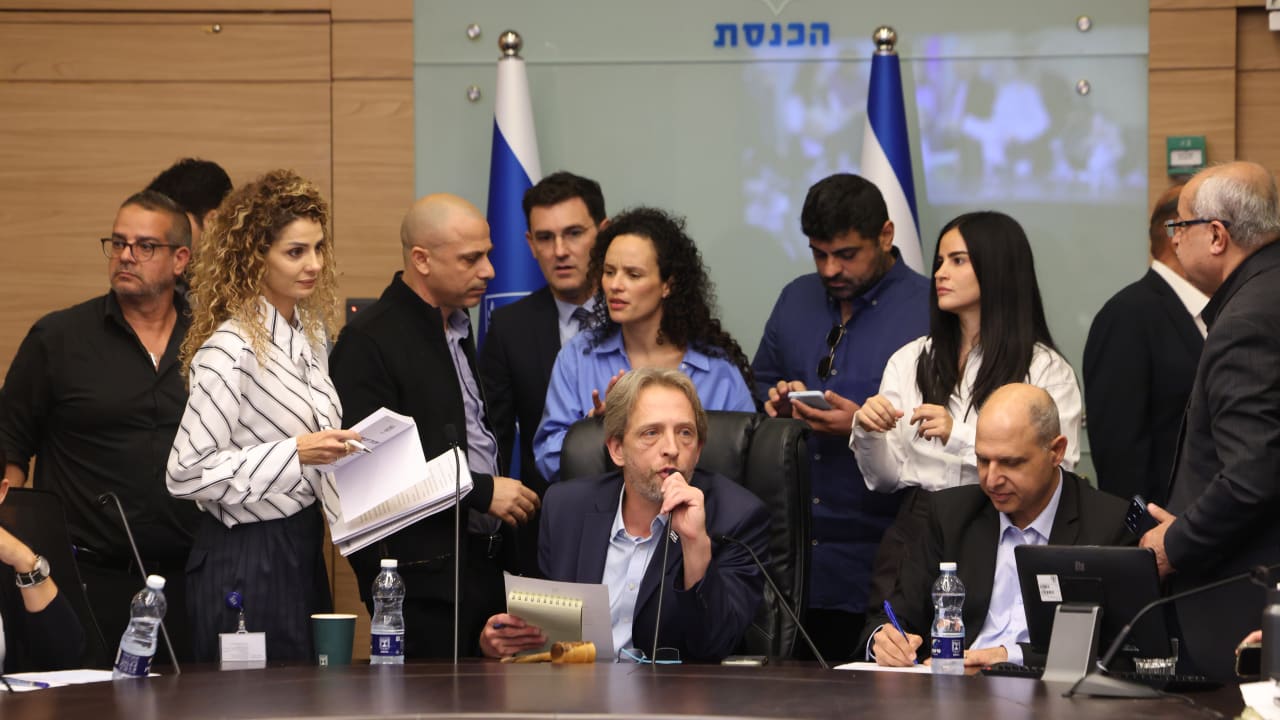
NOVEMBER 27, 2026 17:00“From Winning Power to Taking Responsibility” was the title of a conference I attended in early 2023. The conservative journal HaShiloach hosted the conference to explore how the Right should use the majority it had won at the ballot box. After a full term under a “fully right-wing” government, the answer is plain. Not like this.Many of the goals the Right set for itself were legitimate. It was the method that failed. Governing cannot mean trampling the professional civil service or zealously hounding and silencing those who hold opposing views. A government can and should find another way to advance its agenda and its ideology.Take one recurring feature of debates in the plenum and in committee since this Knesset was sworn in. Many right-wing columnists are guilty of it too. In everyday Hebrew, we call it bachyanut, or whining. What are they whining about? For one thing, we are actually getting things done. Within a week of the swearing in, we set up a special committee to repeal the Communications Law. Their first complaint was that “the whole system is on your side,” from the legal advisers all the way to the media.We hear their second complaint in Knesset debates and from commentators across the media. “Whatever the media and public discourse let you do, they never let us do. Proof: We wanted a compromise on the draft, and everyone jumped down our throats. But when you talk about compromise, everyone is ready to listen…”Likud MK Tally Gotliv is seen attending the Knesset's Foreign Affairs and Defense Committee, in Jerusalem, November 16, 2026 (credit: MARC ISRAEL SELLEM/THE JERUSALEM POST)Combining power and legitimacy in politicsHenry Kissinger, America’s legendary secretary of state, once observed that politics is a combination of power and legitimacy. The last coalition and its special-ops agents in the Knesset forgot this. The judicial reforms, the media laws, and the draft laws all failed because of political and professional negligence. Some never advanced. Those that did were struck down in court or stopped some other way. These were measures built on power without professional or substantive legitimacy. Good legislation requires a majority, but it also requires debate.Our sages taught, “Just as a knife is sharpened only against another blade, so a Torah scholar is sharpened only by his fellow.” In recent years, the reforms that came before the Knesset faced no real challenge. The process was a mere formality. In debates with the opposition, nobody listened, not a word of the text changed, and no one was genuinely willing to engage.Worse still, the coalition had become an echo chamber. Its members held the range of views one would expect, yet we heard only a single voice. We could sense their fear that the partisan right-wing media would attack them if they stepped out of line. There was no substantive debate within the coalition about the reforms. David Bitan, the only one to voice a different view on the media law, was attacked and pushed aside.So how can Gadi Eisenkot’s change coalition talk about compromise on the draft law or halt the Communications Law within a week? The “whining Right” will keep repeating that “they are allowed what we are not.” The difference lies in how we do the work. Moving things forward responsibly takes political pragmatism and a readiness to compromise. Above all, it takes a willingness to work with civil servants and professional staff instead of attacking every official who thinks differently.Fixing what went wrong in the KnessetAt this early stage, we are in no rush to impose new policies. We are moving swiftly to repeal measures that have no majority in the Knesset, were carried out negligently, and produced bad results. First we stop. Then we fix what went wrong, responsibly.What is it like? Picture a man who sets out to build his dream house. He already has a design in mind. When the engineer tells him the design needs adjustments, the man calls him a “leftist.” When the contractor tells him part of the plan must change to stay on budget or on schedule, the man accuses him of trying to thwart his wishes. In the end, the house goes up crooked and falls apart at the first push. The man blames everyone but himself. Today, we are issuing a stop-work order on that shoddy construction, a moment before the house collapses.I believe in a conservative outlook rooted in the history and culture that nourished the political system in which I serve. Change should come slowly and carefully, through the constant friction between competing views. The last government’s failures went beyond its values and positions. It was negligent in the way it practiced politics. There was no listening, no moderation, and no willingness to seek partnerships.The time has come to demand a different kind of politics from the Right and Left alike. That does not mean erasing our disagreements, including those about the direction we should take. It means a political culture built on responsibility, partnership, and pragmatism.In our polarized and stormy world, this is the difference between politics that serves the public and politics that harms it. Between playing the victim and taking responsibility. Between doing and talking. In the study halls, they called it the culture of machloket, or principled disagreement.We Jews invented it. It's just that in the last coalition, they forgot what it means to be Jewish.The writer is chairman of the Yashar faction in the 26th Knesset and heads the Knesset Arrangements Committee.Follow us on Google
From playing the victim to taking responsibility: The lesson Israel's Right must learn - opinion
Full Article
Original Source
Read the full article at Jpost →KhanList aggregates and links to publicly available news content. We do not host full articles from third-party sources. Always verify important information with original sources.