
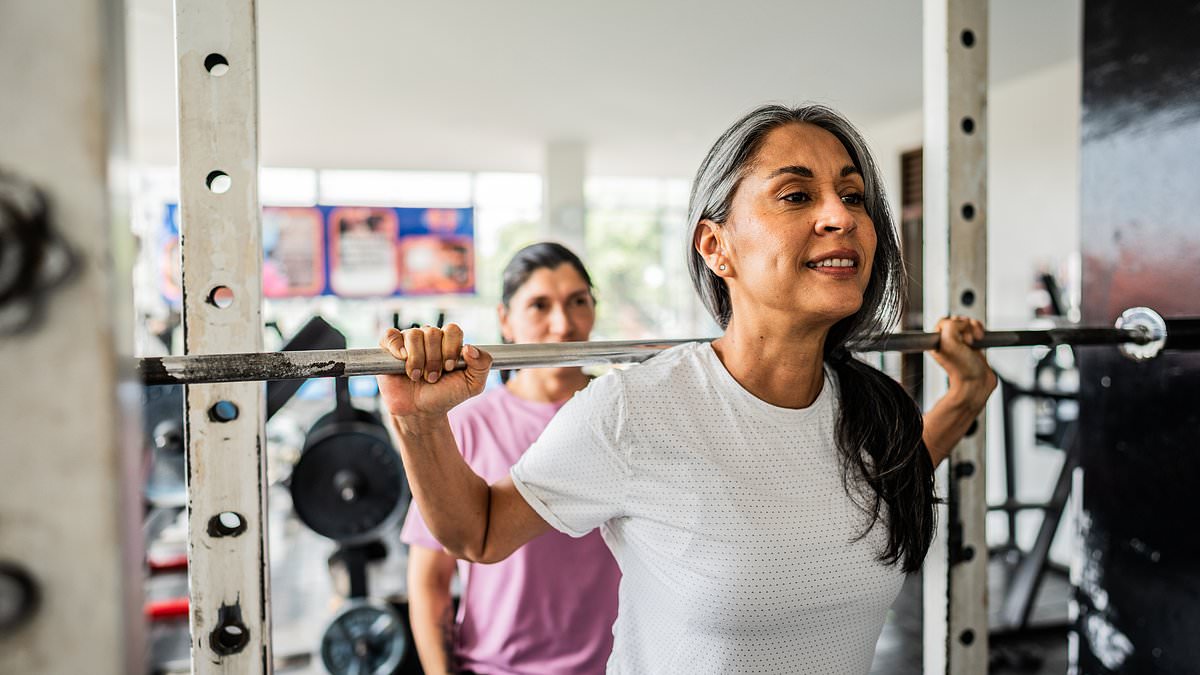
Once considered a secret weapon for hardcore bodybuilders scooping neon powders into protein shakes, creatine has officially gone mainstream – and it is now women who are driving the astronomical surge in demand.Analytics platform SmartScout published a dedicated report – Women Are Fuelling Creatine's Biggest Year in Three Decades – showing that female-focused search terms such as ‘creatine for women’ are rising by more than 300 per cent year-on-year. And wellness industry figures show that women now account for nearly half of all new creatine buyers, transforming what was once a gym bro staple into midlife women’s ultimate daily essential.So, what is behind this shift, and is the hype actually backed by science?What is creatine - and do we need it?Despite its reputation as a synthetic chemical, creatine is entirely natural. As experts explain, it plays a vital role in keeping every cell in our body powered up. Figures show that women now account for nearly half of all creatine buyers.Kirsten Humphries, nutritional therapist at Bare Biology, says: ‘In simple terms, creatine is a compound made in the body from amino acids.‘The body can make some creatine itself, but the rest needs to come through food or supplements. Foods that are naturally higher in creatine include red meat and fish (and other meats), but it can be hard to achieve gram-level doses of creatine from food alone. The common daily supplemental dose used for creatine in healthy adults is around 3-5 grams per day, and to get this amount, you usually need to eat a lot of meat! Many people aren’t doing this.'For those worried about animal products or heavy gym supplements, there is reassuring news. Humphries says: 'Contrary to what many people think, creatine as a supplement doesn’t contain any animal products and is completely vegan and vegetarian-friendly, and actually, I’d encourage vegans and vegetarians to consider adding a creatine supplement to their routines since they will be getting very little from their current diet. This advice applies to both men and women, but regardless of diet, creatine can offer many benefits for women and especially help us to protect our health as we age.'How does creatine super-charge energy and muscle?Put simply, creatine helps recharge our ATP – our body’s main energy molecule.Humphries says: ‘It recharges ATP mainly within the muscles, but in other areas of the body as well. Around 95% of creatine is stored in the muscle, some as free creatine, some stored as phosphocreatine. When our ATP is broken down to release energy, it changes to ADP, and when short, quick bursts of energy are needed, phosphocreatine can donate a phosphate group to ADP, allowing it to become ATP again.‘This means the energy is being recycled, and it can allow you to train harder - think lifting stronger for longer, and maybe even faster recovery too. This is why you’ll often hear that creatine helps with muscle growth, because when the muscles perform and recover faster, it can help us to grow and maintain muscle more easily over time.’ According to Humphries, creatine can help you to train for longer.NHS gastroenterologist and GP Dr Alan Desmond, says that while creatine’s best-established role is in helping muscles rapidly regenerate energy during exercise, there is also ‘good evidence that it can help preserve or increase muscle mass when combined with resistance exercise’.He says: ‘That may be particularly relevant for women as they get older. From midlife onwards, maintaining muscle mass and strength becomes increasingly important for metabolic health, bone health, mobility and maintaining independence. Creatine, alongside adequate protein intake and regular resistance training, can be a useful part of that picture.‘There is also growing interest in potential benefits for cognition, memory and healthy ageing. I would describe that evidence as promising, although it is not yet as strong or consistent as the evidence for muscle strength and exercise performance.’Many experts welcome the increase in research into creatine, specifically that which investigates its benefits for women. Creatine can help to support cognition, memory and healthy ageing.Nutritionist Emma Bardwell says: ‘Creatine was woefully underrated for the longest time – not enough women were using it. But this nutrient can be a game-changer in perimenopause and menopause. I take it daily and when I forget for a day or two, it has an effect on my stamina. When I lift weights I definitely struggle more with the last few reps if I haven’t been taking regular creatine.'Ms Bardwell says that supplement magic only happens when combined with physical effort. 'Just knocking back creatine is not going to keep you in strength-giving shape,’ she says. ‘It’s the combination of resistance exercise and creatine that will get you significantly enhanced results.'It must be said that not every medical expert is riding the creatine train. Dr Xand van Tulleken, for instance, recently told The Times 'We do seem to benefit in terms of sporting performance from eating more creatine, but it doesn’t work for absolutely everyone.' Why perimenopausal and midlife women might need creatine mostThe hormonal fluctuations of midlife can cause havoc with women's muscle mass, metabolism, and mental sharpness. Oestrogen decline accelerates natural muscle loss (sarcopenia), leaving women prone to weight gain, joint aches, and fatigue.Humphries says: 'We’ve heard a lot in the last couple of years about creatine for women, and for good reason. Midlife women can experience lots of changes in their physical and mental health due to shifting hormones as the body transitions to perimenopause, menopause and beyond. During these years, many women experience changes like accelerated muscle loss, brain fog, low mood or anxiety, weight or metabolism changes, body composition changes, and memory impairment as their body is adjusting to the changing and eventually falling hormone levels, especially oestrogen.‘During these years it becomes incredibly important to protect our health, particularly our muscle. The ageing process causes us to lose muscle much quicker already; then add on perimenopause, and things can become much trickier to navigate. This is where creatine can potentially be incredibly useful.’ Creatine can support women in midlife with their physical and mental health.It has also been suggested that creatine could help as a pick-me-up for midlife women. So when mid-morning fatigue strikes, creatine could offer a clean, jitter-free lift.Bardwell says: 'If you suffer from a mid-morning energy dip, a creatine-spiked smoothie could wake you up better than a coffee, without any caffeine side effects.‘Creatine is fine to put in hot drinks, including coffee, but just make sure you drink fairly soon to get most benefits. Creatine degrades over time, whether in hot or cold water.'Busting the myths: Weight gain, kidneys, bloating and hair lossDespite decades of gold-standard clinical safety data, a few persistent urban myths have left some women hesitant to try it.Water retentionHumphries says: ‘Creatine has the ability to move water across gradients in the body, which can cause some level of water retention. This is one reason why the muscles may look fuller while someone is supplementing creatine. This can possibly cause some weight gain, but it is usually very minimal and can eventually go away.‘The important thing to note is that this is not fat gain, just water, it is minimal, and you can lose it again.’Kidney damageDr Desmond says: ‘One common misconception is that creatine damages the kidneys. In healthy people, research has not shown recommended doses of creatine to impair kidney function.‘Creatine can, however, increase blood creatinine levels slightly because creatinine is a breakdown product of creatine, so this can occasionally complicate the interpretation of routine kidney blood tests. Anyone with established kidney disease should discuss supplementation with their doctor first.’Hair lossHumphries says: ‘In one study, creatine was given to rugby players and their level of DHT increased, an androgenic hormone that can potentially cause things like hair loss. In this study, the rugby players had temporarily elevated DHT levels following higher-dose creatine supplementation, but this has not been replicated since, and creatine hasn’t been shown in other studies to cause hair loss.'Tummy troubles'Another thing worth mentioning is bloating, as this comes up a lot. Creatine can cause some GI symptoms, particularly when you first start taking it and especially if you’re taking higher doses, or if you already have a sensitive stomach. This can sometimes cause symptoms like bloating, nausea or diarrhoea. Starting with high doses of creatine can cause stomach troubles.‘Taking a micronised powder might help to reduce these side effects in some people. My best advice is if you’re worried about it, start slowly and gradually build your dose up over time. Just like in practice when we try to get people to increase their water intake, some level of discomfort might be experienced at first, but this usually subsides within a couple of weeks.’Humphries recommends starting with a 2.5-gram dose or even lower, then increasing the dose slowly.And Bardwell adds a note of caution for those with specific health conditions: 'Be cautious and discuss creatine with your clinician if you have endometriosis or pre-existing kidney conditions before starting supplementation,' she says.
From muscle-bound gym bros to midlife women: Why searches for creatine are up 300% as females drive massive surge for the supplement - but is it worth the hype?
Full Article
Original Source
Read the full article at Dailymail →KhanList aggregates and links to publicly available news content. We do not host full articles from third-party sources. Always verify important information with original sources.