
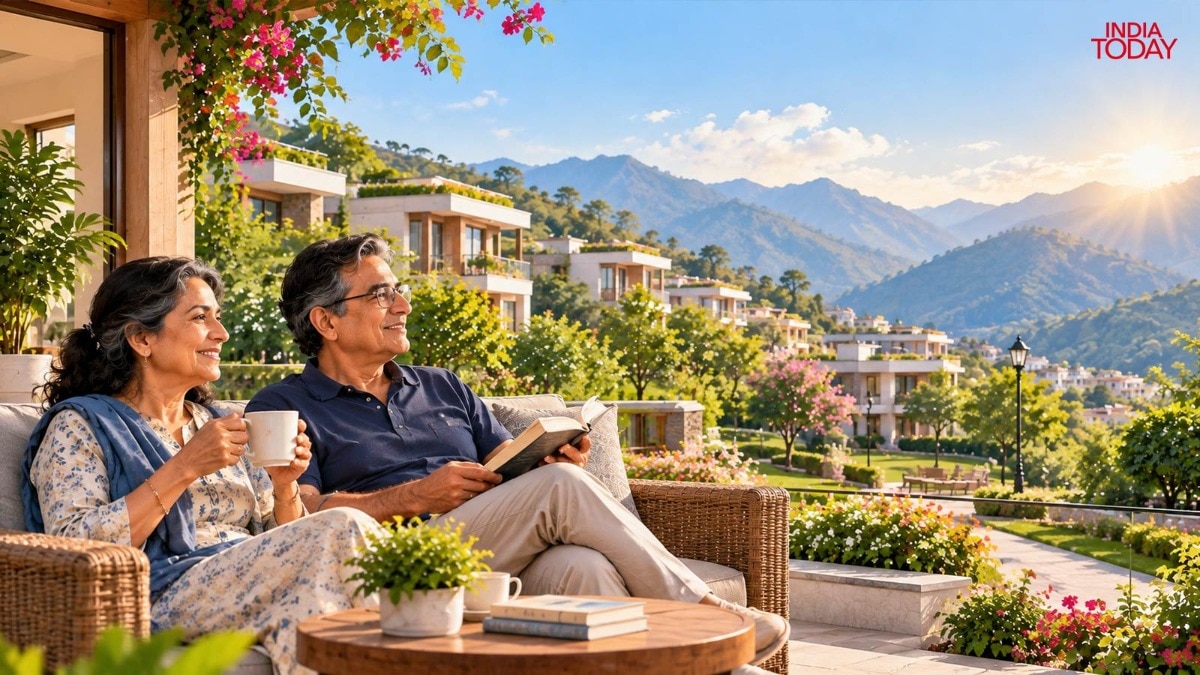
When Rajesh Mehta (name changed), 64, retired from a government insurance company in Delhi-NCR, he and his wife, Shweta, faced one big question: where would they spend the next two or three decades of their lives?With both their daughters married and settled in the US, the couple began reassessing their priorities. Rising maintenance costs, traffic congestion and pollution made them wonder whether staying in Delhi-NCR made sense after retirement.They began exploring smaller cities that offered decent healthcare facilities, a relatively relaxed pace of life and proximity to relatives. Bhopal gradually emerged as a suitable choice, offering the possibility of a more comfortable lifestyle without stretching their retirement budget.For Pratap Sharma, a businessman who spent years building his life in Mumbai, retirement brought a different realisation. With both his sons married and settled, Sharma and his wife decided it was time to prioritise their own peace of mind. They moved to Rishikesh, where relatives lived, drawn by the prospect of a quieter, less expensive life away from Mumbai's hustle. Their choices reflect a growing question among India's retirees: must the city where one builds a career also be the place where one spends retirement?WHEN THE BIG CITY LOSES ITS APPEALFor decades, India's metros have drawn people with the promise of jobs, better infrastructure and greater opportunities. But retirement can change the equation. Without the daily demands of a job or the need to remain close to an office, some retirees begin to look at their surroundings differently. Traffic, pollution and expensive housing may become less appealing, while proximity to family, healthcare, open spaces and familiar communities takes on greater importance.For couples such as Rajesh and Shweta, the attraction of a smaller city lies in the possibility of balancing everyday convenience with a more relaxed lifestyle. For Sharma and his wife, Rishikesh offers the additional comfort of having relatives nearby.The financial calculation matters, too. A lower housing cost can free up money for travel, healthcare and leisure. But retirees must also consider maintenance charges, medical expenses, transport and the cost of visiting children who live elsewhere.A smaller city may offer a more manageable lifestyle, but the right choice ultimately depends on whether it can support a retiree's needs today and as they grow older.THE NEXT RETIREMENT HOTSPOTS MAY LIE BEYOND THE METROSThis shift in priorities is also drawing attention to India's senior-living real estate market.According to a report by proptech firm Square Yards, India's senior housing market is estimated at $4.31 billion in 2026 and is projected to reach $11.43 billion by 2031.Titled ‘Expanding Horizons: The Next Growth Markets for Senior Living in India’, the report identifies 15 priority cities that could shape the next phase of senior housing. The assessment considers factors such as healthcare access, connectivity, affordability, climate and social infrastructure.While Bengaluru, Hyderabad, Pune and Chennai remain important senior-living markets, cities such as Coimbatore, Vadodara, Nashik, Kochi and Mysuru are gaining ground.The report also identifies spiritual centres such as Ayodhya, Varanasi, Haridwar and Tirupati as emerging retirement and second-home destinations.Tier-II cities offer the potential combination of relatively affordable housing, improving healthcare infrastructure and a more manageable pace of life. Spiritual hubs, meanwhile, can appeal to retirees seeking cultural familiarity, community and the opportunity to make religious or spiritual pursuits part of their everyday routine.The common thread is the search for a place that fits the life retirees want to lead, rather than the life they needed to lead while working.A HOME IS NO LONGER JUST ABOUT FOUR WALLSChoosing a retirement destination involves more than comparing property prices or looking for a quieter neighbourhood.Access to hospitals, specialist doctors, pharmacies, reliable transport and emergency services can become increasingly important with age. Retirees also need to consider whether they can manage everyday tasks independently and find social activities that help them remain engaged.For couples whose children live abroad or in other cities, proximity to relatives and the availability of local support can be particularly valuable.These considerations are shaping the evolution of senior living, which is increasingly bringing together residential real estate, healthcare, hospitality and wellness.According to the report, projects that offer only age-friendly apartments may struggle to meet the expectations of an increasingly discerning senior population. Future communities will need to support mobility, preventive healthcare, social engagement and day-to-day independence, while giving families confidence that care will be accessible when required.“India is observing the emergence of a multi-billion-dollar asset class driven by a generation of seniors, seeking not only assistance but also autonomy, specialised wellness and a high quality of life,” said Tanuj Shori, Founder and CEO of Square Yards.The future of senior housing, he said, would depend not just on the number of homes being built but also on how effectively developments respond to care needs, accessibility and social connectivity.SPIRITUAL HUBS OFFER MORE THAN A CHANGE OF ADDRESSFor those drawn to places such as Rishikesh, Haridwar or Varanasi, retirement can also be an opportunity to organise daily life around faith, tradition and community.Living near a spiritual centre can make religious visits and community participation part of an everyday routine rather than occasional outings. The presence of relatives, established social networks and familiar cultural practices can make the transition easier for some retirees.But the appeal of a spiritual destination must be weighed against practical realities. Popular pilgrimage centres can experience heavy traffic and large crowds during festivals, while healthcare access and reliable transport may vary across neighbourhoods.A spiritual setting may shape the emotional appeal of retirement, but practical infrastructure will determine whether it works over the long term. The same applies to smaller cities: a quieter environment cannot compensate for inadequate healthcare or a lack of social support.WELLNESS COULD BECOME THE NEXT BIG SELLING POINTAs India's senior-living market expands, wellness-led amenities could become a key differentiator for developers.The report says that communities offering preventive healthcare, physiotherapy, fitness programmes, nutritious dining, mental wellness and opportunities for social engagement could gain an advantage as older homebuyers increasingly prioritise healthy ageing and independence.For residents, such facilities can make daily life easier and help them remain active. For developers, they offer an opportunity to build trust and create service-led revenue beyond the sale of a home.However, the value of these amenities will depend on the quality and reliability of the services offered. A landscaped garden or fitness centre may improve a property's appeal, but trained staff, transparent service charges, emergency response systems and dependable medical access are likely to matter more over the long term.“Senior living is increasingly about value, not just location. Many people are willing to move to smaller centres for wellness-led communities with rich amenities, better care and a more comfortable lifestyle that fits their budget,” said Sunita Mishra, Vice President – Research and Insights at Square Yards.THE REAL COST OF STARTING OVERMoving away from a metro can bring financial and lifestyle benefits, but it also involves trade-offs. Retirees may have to leave behind long-standing friendships, familiar doctors and established routines. Building a new social circle takes time, and a quieter city can sometimes feel isolating, especially when children and grandchildren live far away.There are financial considerations, too. Housing costs are only one part of the retirement budget. Medical insurance, out-of-pocket healthcare expenses, maintenance, domestic help and travel to visit family can all affect how comfortably retirees live.For those considering a move, spending a few months in a prospective city before buying a property may help them understand its climate, neighbourhoods, healthcare facilities and actual cost of living. Those exploring organised senior living should also compare purchase prices with recurring charges for meals, housekeeping, maintenance and care services.Ultimately, the success of a retirement move depends on whether a city can offer more than an attractive property or a promise of peace.For Rajesh and Shweta, Bhopal offers the prospect of a slower life with relatives nearby and essential services within reach. For Sharma and his wife, Rishikesh represents an opportunity to step away from Mumbai's pace and focus on their own well-being after years of working and raising a family.As India's senior housing market grows, the destinations that attract retirees may not simply be those with cheaper homes or quieter streets. They will be the places that allow people to age with dignity, maintain their independence and remain connected to the people and activities that give their lives meaning.- Ends
From Mumbai to Rishikesh: Why retirees are choosing Tier-2 cities and spiritual hubs
Full Article
Original Source
Read the full article at Indiatoday →KhanList aggregates and links to publicly available news content. We do not host full articles from third-party sources. Always verify important information with original sources.