
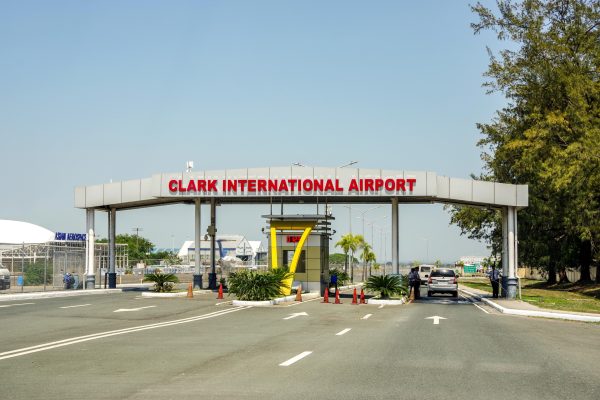
New Clark City in the Philippines is in the news for being the site of the planned industrial hub of the Luzon Economic Corridor under the United States-led Pax Silica coalition. It is part of the Clark special economic zone and also covers the municipalities of Capas and Bamban in the province of Tarlac. The history of this place can help us better understand the political narratives in favor of and opposed to Pax Silica. As the colonial ruler of the Philippines in the first half of the 20th century, the U.S. established an air base in Angeles in the province of Pampanga in the central part of Luzon, the country’s biggest island. After the end of World War II, the Philippines became an independent republic but the U.S. maintained the Clark base in Pampanga. It soon became the largest overseas U.S. military camp and a crucial hub during the Cold War era. In 1991, Clark was turned over to the Philippine government after the Senate rejection of the U.S. bases treaty. It was converted into a commercial area and designated a special economic zone to attract investments. Today, Clark is a strategic business center since it is only less than a two-hour drive from the capital region of Metro Manila. Its international airport is already one of the country’s busiest aviation terminals. Meanwhile, Capas is outside of Clark but it used to host Camp O’Donnell, an American military reservation. Thousands of prisoners during World War II died in a “death march” from Mariveles in Bataan to Capas. The communist-led New People’s Army was also established in this rural municipality in 1969. Parts of Capas were incorporated into the New Clark City, which was originally envisioned as a government center and alternative capital to decongest Metro Manila. Sports facilities were built here when the country hosted the Southeast Asian Games in 2019. The stadium cauldron was reported to be overpriced, which implicated key allies of former President Rodrigo Duterte. The pandemic affected the development of New Clark City and there has been no substantial discussion about the earlier plan to build a new capital in the area. It generated attention again when it was named as a possible location of the Luzon Economic Corridor, a trilateral initiative unveiled in 2024 between the Philippines, the U.S., and Japan. This was confirmed last April after the Philippines officially joined the Pax Silica coalition. In several social media posts, U.S. Undersecretary of State Jacob Helberg stated that the hub will be a “forward deployed industrial base” aimed at securing vital supply-chain inputs for American companies and its allies. “Four thousand acres. Roughly one-third the size of Manhattan – the equivalent of everything from Times Square south to the very tip of the island,” Helberg added, referring to the land “gifted” by the Philippine government for the Pax Silica project. After this, concerns were raised about the project’s potential grave impact on energy and water resources in the provinces of Pampanga and Tarlac. Farmers and indigenous peoples said their communities have been threatened with eviction to give way for the rise of the industrial hub. In response, authorities said data centers will not be a component of the Pax Silica site, although these facilities will still rise in other parts of Luzon. They also assured local communities that consultations will be conducted, even if they initially denied that there were residents in the project site. The Philippine government also assured the public that the country’s laws will prevail and no immunity will be granted to foreign investors in the hub. Nevertheless, concerns persist about the role of Pax Silica in supporting the military operations of the U.S. in the country and in the Asia-Pacific. What is clear is that it is seen as a counterpart to the China-led World Artificial Intelligence Cooperation Organization. Negotiations are ongoing and expected to continue for the next two years. A framework deal could be signed next month during the summit of the Association of Southeast Asian Nations, and it could be the highlight of U.S. President Donald Trump’s visit to Manila. Pax Silica is more than just a real estate transaction since it is touted as the next big opportunity for the Philippines to promote industrial development through mineral processing and technology transfer. The history of Clark and Capas is a reminder that local political dynamics can get entangled with regional and global geopolitical issues. The Pax Silica hub will rise on a land that hosted foreign bases, military operations that led to war atrocities, and protests that represented the Filipino people’s assertion of sovereignty. As the Philippines under the government of Ferdinand Marcos Jr rushes forward with this bold initiative, the challenge is to address the criticism that this is another unfair deal that favors the country’s former colonizers rather than a development blueprint that prioritizes the national interest.
From Military Base to Pax Silica: Clark and Capas in Philippine History
Full Article
Original Source
Read the full article at Thediplomat →KhanList aggregates and links to publicly available news content. We do not host full articles from third-party sources. Always verify important information with original sources.