
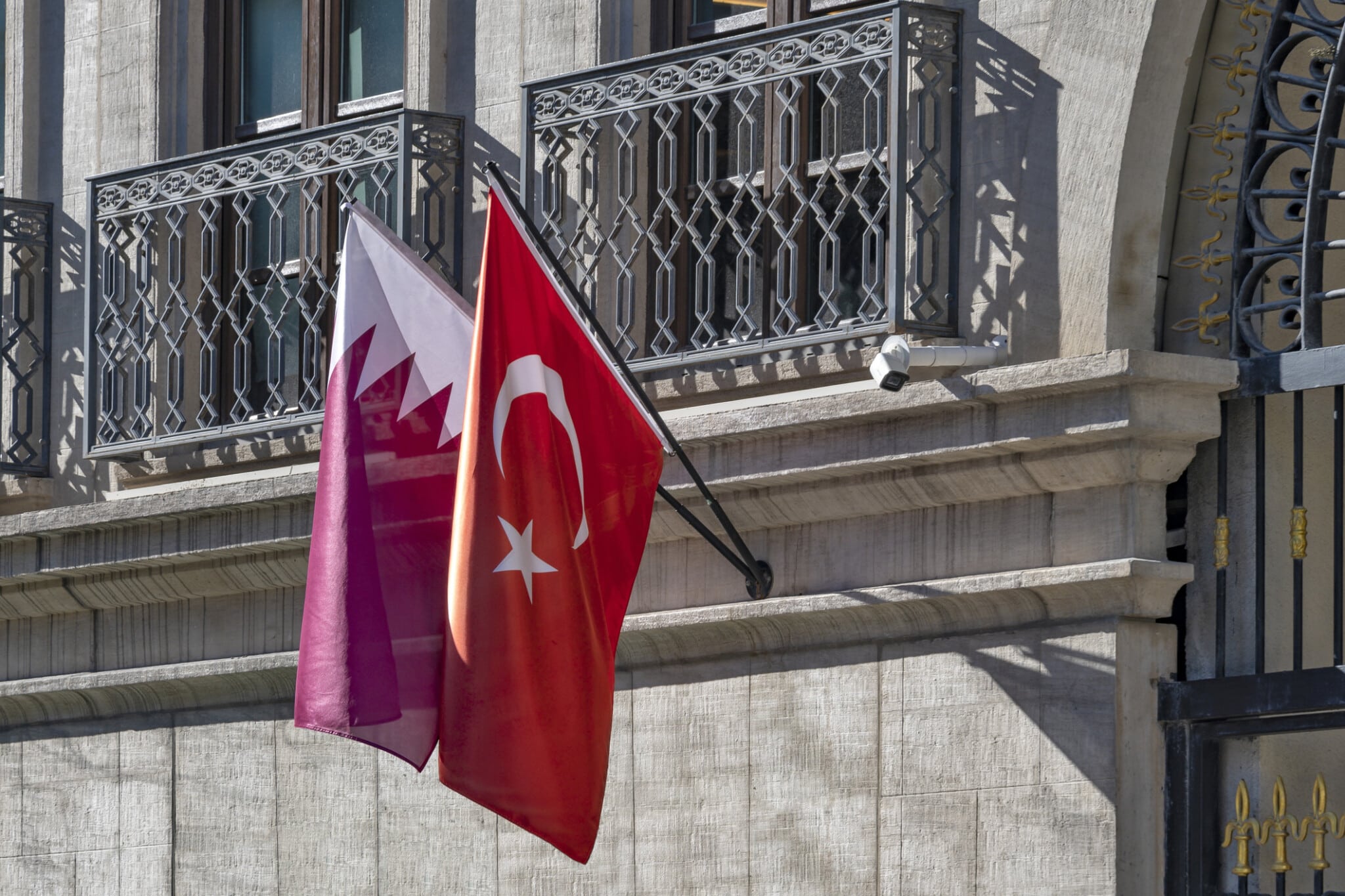
In an ongoing bid to diversify outside of NATO, Turkey signed a mutual defense agreement with Qatar on November 13. The pair inked the accord after concluding bilateral talks that included four additional deals covering trade, education, consumer protection, and diplomatic cooperation. The defense pact’s text has not yet been released. However, Ankara and Doha published a joint readout explaining their “aim of strengthening collective defense and promoting regional security and stability” and presenting a “unified stance in confronting any external armed attack targeting either party or both of them.” That sentiment builds on Turkey and Qatar’s existing defense partnership, which includes basing arrangements, defense-industrial cooperation, and joint exercises. The agreement also adds momentum to Turkey’s recent efforts to promote regional alignment structures that exclude the United States. Turkey’s Military Buildup Abroad Lays Groundwork for New Alliances Turkey established Tariq bin Ziyad base in Qatar in 2015 and inaugurated Khalid bin Walid base in Qatar in 2019. The latter is home to a Combined Joint Force Command and up to 5,000 Turkish troops. Turkey’s largest overseas installation is Camp Turksom in Somalia, which opened in 2017. Turkey deployed American-made F-16 fighter jets to Somalia in early 2026 and is reportedly constructing a space and ballistic missile facility north of Mogadishu. As Turkey continues to expand its footprint in Africa, Ankara sent a senior naval delegation to Port Sudan “to assess military shipbuilding and repair facilities,” according to a news report. Turkey also maintains a robust military presence in Iraq and Syria, which Turkish Defense Minister Yasar Guler indicated in October will be sustained indefinitely. As Iran’s regional axis is degraded, Turkey has begun to consolidate a coalition of like-minded countries in the region. The mutual defense pact with Qatar is only one example. Turkey signed a similar agreement with Saudi Arabia and Pakistan in August, committing the trio “to strengthening their collective security.” Turkey’s parliament ratified the so-called Mecca Pact earlier this month. The second pact with Qatar could be more potent given the deeper non-defense cooperation that already exists between Ankara and Doha. The Mecca agreement was followed by the Badr Memorandum of Understanding (MOU) that Turkey, Pakistan, Qatar, and Indonesia signed in October. The Badr MOU aims to “facilitate cooperation and integration” between its four signatories in manufacturing, research and development, and technical training. Both agreements indicate Turkish ambitions to wrest regional leadership from the United States. Washington Should Request Transparency on New Agreements The U.S. State Department should press Turkey to disclose the substance of its defense agreement with Qatar, as well as the Badr MOU, to determine whether their provisions conflict with Turkey’s treaty commitments to the transatlantic alliance. Article 8 of the NATO treaty provides that member states undertake “not to enter into any international engagement in conflict with” the treaty. The United States and NATO therefore have the right to know whether the commitments Turkey makes outside of the alliance could expose NATO to conflicts contrary to its interests or create obligations that conflict with the treaty’s collective defense Article 5 clause. Natalie Ecanow is a senior research analyst at the Foundation for Defense of Democracies (FDD). Sinan Ciddi is a senior fellow at FDD. For more analysis from Natalie, Sinan, and FDD, please subscribe HERE. Follow FDD on X @FDD. Follow Natalie on X @NatalieEcanow. Follow Sinan on X @SinanCiddi. FDD is a Washington, DC-based, nonpartisan research institute focusing on foreign policy and national security.
From Mecca to Istanbul: Turkey Builds a Defense Network Without America
Full Article
Original Source
Read the full article at Fdd →KhanList aggregates and links to publicly available news content. We do not host full articles from third-party sources. Always verify important information with original sources.