
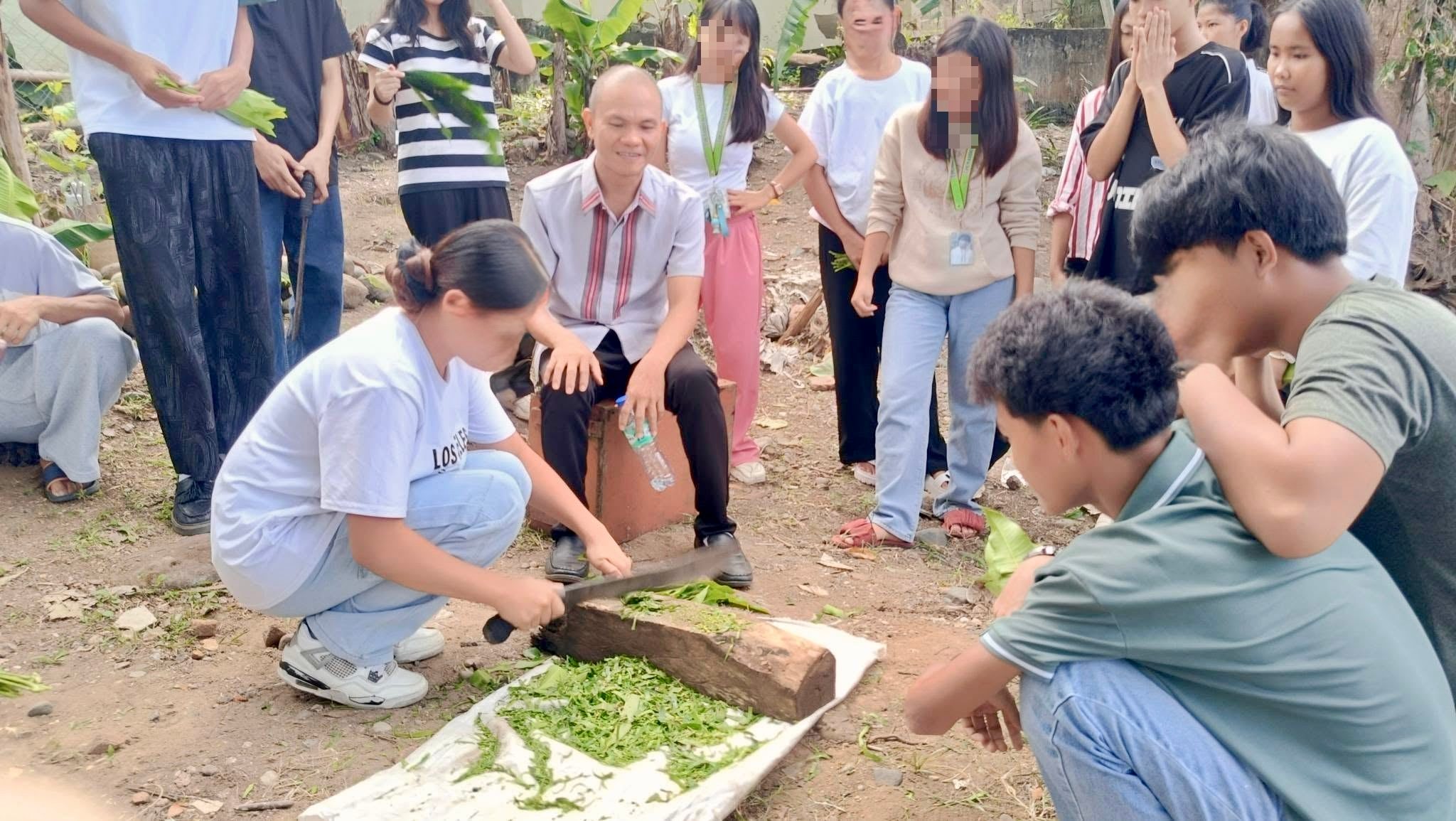
Peñarrubia Integrated School has introduced a specialized curriculum called Indigenous Knowledge Systems and Practices (IKSP), which includes a Natural Dyeing subject aimed at preserving local indigenous knowledge. The curriculum was developed through community research and collaboration, involving teachers and local government support, and focuses on hands-on learning experiences for students using plant materials for dyeing. Future stages of the curriculum will expand to include Loom Weaving and Indigenous Embroidery, emphasizing the importance of community engagement and the cultural significance of the practices being taught. This is AI-generated. Read the article for full context. Report any errors. BAGUIO CITY, Philippines – Students at Peñarrubia Integrated School learn chemistry from leaves, culture from thread, and indigenous history with their own hands. They gather plant materials, chop and weigh them, extract their color, and watch plain fibers take on shades of beige, brown, and rust. This is not an extracurricular activity. Natural Dyeing is now part of senior high school. The subject is the first offering under Peñarrubia Integrated School’s specialized Indigenous Knowledge Systems and Practices curriculum (IKSP) developed to help document, teach, and sustain local knowledge that educators feared was slowly fading from everyday use. Students tend plants that can serve as sources of natural dyes, part of a curriculum that teaches them to recognize and work with materials found in their environment. All photos courtesy of Peñarrubia Integrated School The first batch of 28 Grade 11 learners took Natural Dyeing during the second semester of the 2025-2026 school year. Sherwin Zapatero, master teacher III, senior high school coordinator, and focal person for specialized subjects in DepEd Abra, said the curriculum grew from the initiative of Adelaida Bogayao, education program supervisor and Indigenous Peoples Education focal person of the Schools Division Office of Abra. “Many indigenous traditions and practices were steadily fading from everyday life,” Zapatero said, explaining why Bogayao pushed for IKSP to be integrated into the senior high school curriculum. The aim, he said, was “to help preserve and pass on this cultural heritage to younger generations.” Peñarrubia Integrated School was chosen as the pilot site because it already had an established senior high school program. Before the lessons reached students, however, teachers and other personnel first went back to the community. Four research teams were formed to document natural dye sources, traditional dyeing processes, weaving patterns and designs, and indigenous embroidery. The teams included teaching and non-teaching personnel from Peñarrubia Integrated School and the Schools Division Office of Abra. Zapatero said the research and curriculum development were carried out through trainings, workshops, and collaborative sessions funded under DepEd’s Indigenous Peoples Education Program. “The findings from these community-based studies became the cornerstone of the curriculum,” he said. Teachers then translated the documented knowledge into learning competencies, lessons, and instructional materials aligned with DepEd standards. According to Zapatero, the curriculum went through technical review, validation, and quality assurance before it was approved by the DepEd Cordillera Administrative Region on January 3, 2025. Zapatero worked with then school principal Pepito Trinidad and his fellow senior high school teachers in preparing the documents needed for implementation, including the feasibility study, strategic plan, and implementation framework. The teachers also helped translate the research into classroom-ready lessons and materials, while Zapatero developed the curriculum framework and coordinated the submission and review process. Teacher Sherwin Zapatero shows students dyed fibers during a Natural Dyeing class at Peñarrubia Integrated School in Abra. The municipal government later joined the effort. Zapatero said the Sangguniang Bayan, under then mayor Jane Cecilia and then vice mayor Geraldine Balbuena, authorized a memorandum of agreement between the municipality and DepEd Abra through Peñarrubia Integrated School. Under the agreement, the municipality committed support for an LGU-funded teacher, as well as tools, equipment, and materials needed for the hands-on electives. Zapatero said the total commitment amounted to P288,940, including three years of salary for the designated teacher. The support has continued under Balbuena, now the municipal mayor. For a subject built around making things by hand, that support matters. Students cannot learn dyeing, weaving, and embroidery from lectures alone. Zapatero underwent specialized training in natural dyeing through the Department of Science and Technology Philippine Textile Research Institute in partnership with the University of Abra. That training allows him to teach both the cultural and scientific sides of the process. Students learn which plant materials can produce color and how these are prepared. They also observe how extraction, measurement, and treatment affect the final shade. Skeins of fiber show different shades produced during the students’ natural dyeing activities. The colors vary depending on the plant material and the dyeing process used. In class and during outdoor learning sessions, plant materials are sorted, cut, weighed, and processed before being used on fibers. Finished skeins show the results. Some come out pale and earthy. Others turn warmer shades of brown and rust. Something growing nearby becomes pigment. Pigment becomes thread. Thread will eventually become textile. The process also gives students a practical way of seeing how indigenous knowledge and science meet. They are not only told that certain plants can produce dye. They test them, compare results, and work with the materials themselves. The next stage of the curriculum will move from dyeing to textile making. Loom Weaving and Indigenous Embroidery are scheduled for implementation in the third term of the 2026-2027 school year for Grade 12 learners who previously completed Natural Dyeing in Grade 11. “This progression allows students to deepen their understanding of indigenous craftsmanship while developing practical skills that contribute to the preservation and continued practice of Abra’s rich cultural traditions,” Zapatero said. Students first learn where color comes from, then how that color becomes part of something woven or embroidered. Bringing indigenous knowledge into formal education also comes with responsibility. The designs and practices being taught are not simply classroom materials. They carry histories, meanings, and identities rooted in communities. The knowledge did not begin in school. It came from people who practiced it and passed it on long before it became part of a curriculum. That makes continued engagement with the community important as the program grows. Current school principal Maria Lorena Bisares is overseeing the continued implementation and development of the specialized curriculum. For the 28 students in the first batch, the lessons are practical. They learn which plants can produce color, how fibers respond to treatment, and how those fibers can eventually become woven or embroidered pieces. But they are also learning something harder to measure. The knowledge behind those processes came from communities that practiced and passed them on across generations. Peñarrubia Integrated School is now trying to make sure another generation gets the chance to learn them. – Rappler.com
From leaves to loom, Abra brings indigenous knowledge into classrooms
Full Article
Original Source
Read the full article at Rappler →KhanList aggregates and links to publicly available news content. We do not host full articles from third-party sources. Always verify important information with original sources.