
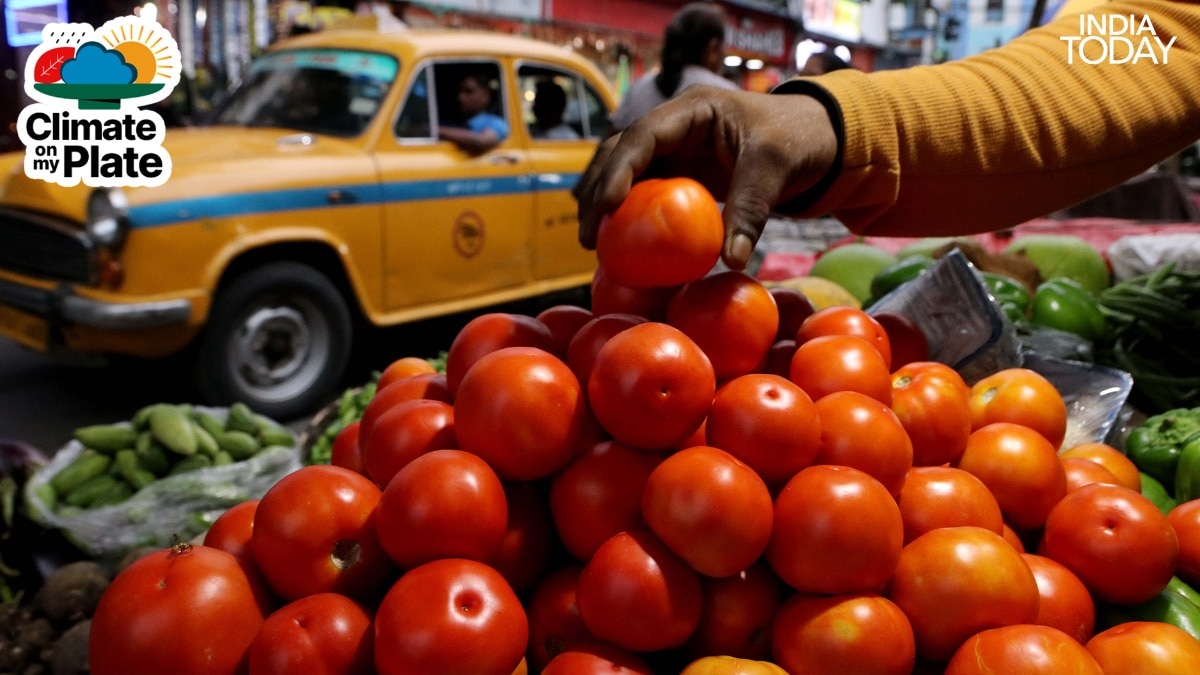
On this week's Climate On My Plate, India Today Science explores how, for a crop this sensitive, the problem is not just hotter weather but extreme weather arriving at the wrong moment.A vendor arranges tomatoes for sale in West Bengal. (Photo: Getty)The tomato is one of the most ordinary things in an Indian kitchen. It goes into curries, chutneys, soups and salads, and is often taken for granted, until its price suddenly shoots up.But behind the familiar red fruit is a crop increasingly caught between weather extremes. Rising temperatures, erratic rainfall and water stress are making an already sensitive crop harder to grow in several parts of India. A bunch of freshly harvested tomatoes are seen in a basket. (Photo: Getty) The problem is no longer confined to the planet getting warmer, but is now to do with the fact that tomatoes need the right conditions at particular stages of their growth.And that is becoming harder as extreme weather arrives at exactly the wrong time. WHEN HEAT STRIKES AT THE WRONG TIMETomatoes are particularly vulnerable to high temperatures during flowering and fruit formation.Heat can affect pollen viability and flower development, reducing the number of fruits that eventually develop. Farmers arrange freshly harvested tomatoes in diffetent bags. (Photo: PTI) Research from ICAR-Indian Institute of Vegetable Research has found that several floral and fruit traits are adversely affected under prolonged high-temperature conditions.In one field study, tomato lines exposed to an average daytime temperature of 38.4°C showed clear effects on flower development and yield-related traits.More recent research from India has reinforced the concern. A farmer holds pieces of tomatoes to examine damage. (Photo: Getty) A 2026 study involving 76 tomato genotypes grown under summer conditions in Punjab found that temperatures above 35°C can be detrimental to tomato production and affect both vegetative and reproductive traits.That is a significant factor in a warming climate because a heatwave is not just a number on a weather chart for a tomato farmer.If extreme heat coincides with flowering, the damage can translate directly into fewer fruits.TOO MUCH RAIN IS A PROBLEM TOOHeat is only one side of the problem. Women in a village sift and process tomatoes for sale. (Photo: Getty) Tomatoes also struggle when fields remain excessively wet. Heavy or untimely rainfall can damage plants, increase disease pressure and disrupt harvesting.In Mizoram, ICAR has reported that heavy rainfall and periodic temperature conditions constrain open-field tomato cultivation during the pre-kharif and kharif seasons.Fruit yields can fall by around 70% under these conditions, while protected cultivation has produced substantially higher cumulative yields.This is what makes climate change such a complicated problem for the tomato. A heap of discarded tomatoes are seen in Karnataka. (Photo: Getty) The threat is not necessarily one extreme event but a worrying combination of heat, intense rain, excess moisture and water stress arriving at different stages of the crop.A 2025 study modelling tomato cultivation in Central India under future climate scenarios found that rising temperatures could accelerate flowering and fruiting while contributing to declining yields.The researchers also found that changing rainfall patterns could alter production across different parts of the region.BEING PUSHED AROUND BY THE WEATHERIndia's tomato farmers have long dealt with seasonal changes and temperature limits. A farmer harvests tomatoes from his farm on a hot day in Agra, Uttar Pradesh. (Photo: PTI) In parts of the plains, high summer temperatures already make cultivation difficult, pushing production towards other regions and seasons.Climate change does not replace those existing challenges but can add another layer of stress to them.A 2025 study examining heat stress in different tomato genotypes found significant reductions in yield, root traits and photosynthesis under high-temperature conditions.Some genotypes, however, performed better than others, highlighting why developing heat-tolerant varieties is becoming increasingly important.Scientists are already looking in that direction. A farmer is seen spraying insecticide on tomato crops. (Photo: PTI) A study published in August 2026, involving researchers from ICAR-Indian Institute of Vegetable Research, identified tomato genotypes with traits that could help breeders develop more heat-tolerant varieties.WHAT WILL HAPPEN TO TOMATOES ON YOUR PLATE?When weather damages a crop, the effect does not necessarily stop at the farm.Tomatoes are highly perishable, and production is spread across different regions and seasons. A weather-related disruption in a major growing area can reduce supplies and put pressure on prices.But this is where the climate story needs some caution. A pile of tomatoes is seen being arranged by a vendor for sale. (Photo: Getty) Not every tomato price spike is caused by climate change.Production cycles, crop acreage, pests and diseases, transportation, storage and market conditions can all influence prices.What climate change can do is add another source of uncertainty to an already sensitive crop.And that may be the biggest change coming to the tomato on your plate.The fruit is unlikely to simply disappear from Indian kitchens.Instead, climate stress could make it harder to grow in some seasons, more vulnerable to sudden supply disruptions and more unpredictable in price and availability.The humble tomato may still look exactly the same on the plate, but the climate behind it is changing.#ClimateOnMyPlate- EndsPublished On: Sep 2, 2026 08:00 IST
From ketchup to chaos: India's tomatoes are having a climatic meltdown
Full Article
Original Source
Read the full article at Indiatoday →KhanList aggregates and links to publicly available news content. We do not host full articles from third-party sources. Always verify important information with original sources.