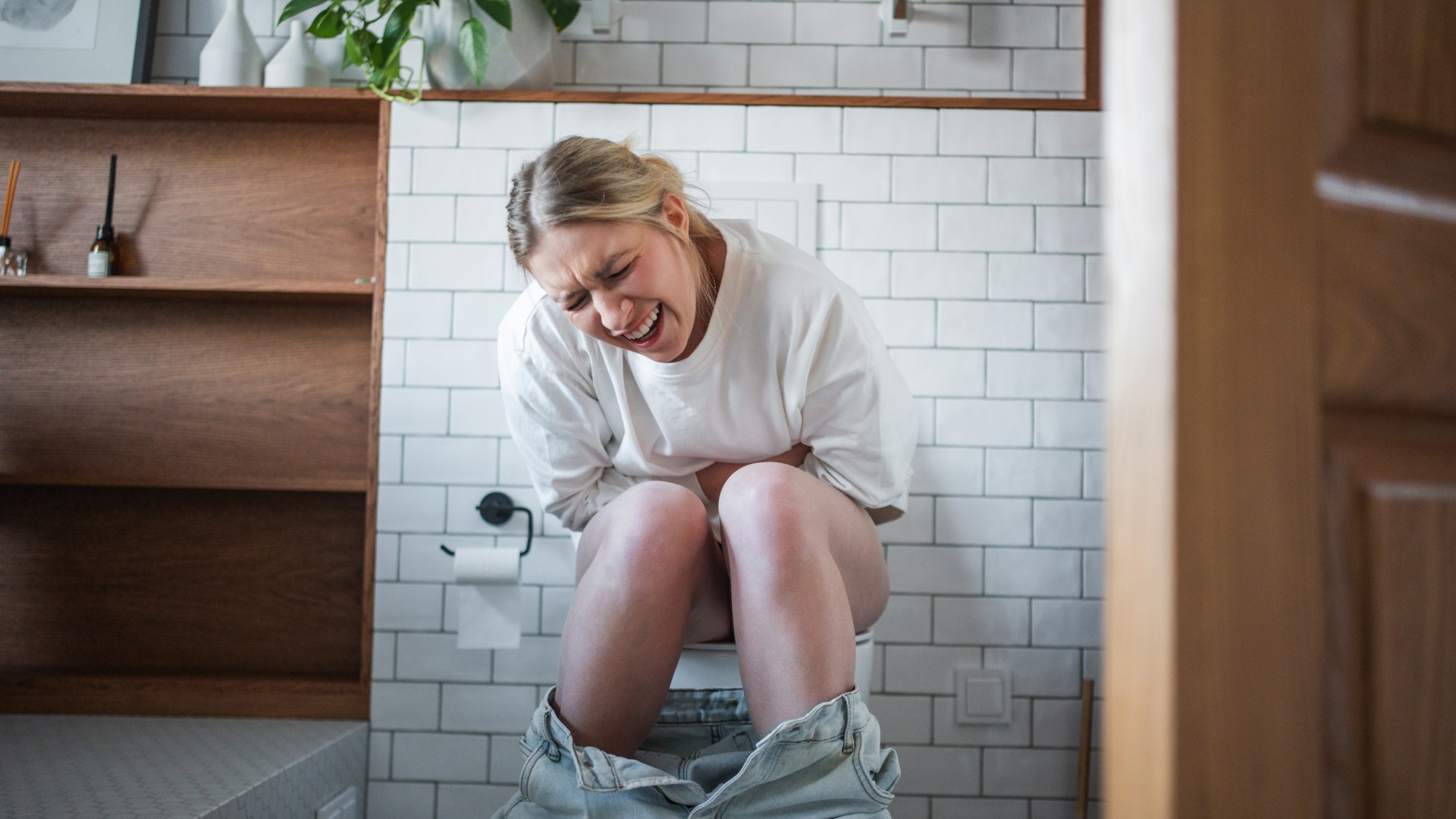
WE all do it, several times a day… but how much thought do you really give to popping to the loo? Chances are, not a lot. But it turns out, it’s pretty easy to slip into dangerous territory when it comes to toilet habits – risking piles, horror organ prolapse and nasty infections. You might be making more toilet mistakes than you think – risking piles, constipation and infections Credit: Getty Dr Vijay Nayar warns straining to pee could lead to problems down the line Credit: Handout More than 50 per cent of Brits spend between 30 minutes and an hour in the bathroom each day and a quarter spend more than two hours a week on the toilet, according to research by Wholesale Domestic Bathrooms. But, many of us are likely making some cardinal bathroom sins. Namely, when you’re in a rush and need to empty your bladder in record time, you might find yourself pushing hard to get urine out as quickly as possible. Dr Vijay Nayar from Healthium Clinics, says straining to pass urine could lead to health problems down the line. “Many people do this out of habit, but what is worth knowing is that the bladder works best when we let it do its job, rather than trying to help it along. “Normal urination is a co-ordinated reflex. “The bladder contracts, the pelvic floor relaxes, and urine passes without effort. “When someone strains, they are introducing abdominal pressure into a process that does not need it. “Rather than improving emptying, this can disrupt the coordination between the bladder and pelvic floor, leaving more urine behind than if they had simply waited,” explains Dr Nayar. Done occasionally, this is unlikely to cause lasting problems; however: “If it’s a regular habit, over time it can affect how the pelvic floor muscles function, and residual urine in the bladder increases the risk of urinary tract infections, particularly in women,” says Dr Nayar. Your pelvic floor muscles sit at the base of your pelvis and support your bladder, bowel and uterus (in women), while helping to control urination and bowel movements. “In some patients, repeated straining also contributes to pelvic organ prolapse, and we sometimes see associated problems such as haemorrhoids or a pattern where the bladder has essentially been trained to rely on effort rather than its own activity,” adds Dr Nayar. Rather than force wee out, he suggests sitting comfortably, giving yourself a moment, and letting your body relax. “There should be no pushing, and no urgency to finish quickly. “If the sensation of incomplete emptying persists, wait a short while and try once more, but without effort. In most cases, this is enough.” As well as pushing out your pee, there are several other mistakes you might be making in the bathroom… 1. Straining for a number two If you’re straining to poop, this could mean you need to add more fibre to your diet Credit: Getty Pushing hard when you poo? According to Mr Pasha Nisar, a colorectal surgeon at New Victoria Hospital in London, normal number twos should feel comfortable and occur without too much pressure. “It should also be completed within a matter of minutes,” he adds. Although you will, of course, have to push a little, when you start to strain, it can become a problem. “Straining is usually an indicator that the stool is too hard or perhaps the pelvic floor is not relaxing appropriately during evacuation,” says Mr Nisar. It could also be a sign of constipation, which affects one in seven UK adults, confirms NHS data. A lack of fibre, minimal movement, and not drinking enough water, are common causes of constipation. It is also common in pregnancy due to hormonal changes in the body. If you are straining to poo, don’t ignore it. “Straining can increase force in the anal canal and can result in haemorrhoids. “These can occur due to engorgement of veins around the anal canal which then cause pain, prolapse, swelling and bleeding,” warns Mr Nisar. As well as moving regularly, look to eat 30g of fibre per day, increasing fibre gradually to avoid uncomfortable bloating. Tuck into fruits, vegetables, wholegrains, beans, nuts, and seeds. Fibre needs water to help it be digested; aim to drink two litres a day. 2. Wiping back to front Watch what direction you’re wiping in – as it could land you with nasty infections Credit: Getty When you’ve finished your business, are you wiping from the back to the front, or from the front to the back? If you go for the former, you could end up in murky waters. A study published in the journal Cureus asked 294 people (141 males and 153 females) which direction they wipe after going to the toilet. Only 44 per cent of women wiped from front to back, and a small 23 per cent of men also wiped this way. “It is generally regarded as more hygienic to wipe front to back, particularly for females, in order to avoid wiping towards the vagina and urethra area,” says Mr Nisar. “Since stools contain bacteria, wiping it forwards can increase the bacteria in the perineum, the area of skin between the genitals and the anus, which in turn can lead to increased risk of bacterial infections.” These infections include bacterial vaginosis, which affects as many as one in three women at some point in their lifetime, according to the NHS, and urinary tract infections (UTIs). The easiest way to avoid this is to wipe from front to back. 3. Poor loo posture A toilet stool or ‘squatty potty’ can help improve your loo posture Credit: Getty Are you slouched on the loo flicking through social media? You might be doing yourself a disservice. In fact, a comfy number two requires some adjustments. Mr Nisar says: “Keeping feet elevated on a stool or ‘squatty potty’ can help open and straighten the anorectal angle. “This allows for a wider opening through which stool can pass.” A study in the Journal of Clinical Gastroenterology studied the bowel movements of 52 healthy adults across four weeks. For the first two weeks, participants used the toilet as normal, and for the second two weeks they were given a footstool to raise their feet into more of a squatting position. Everyone in the study recorded their bowel movements. The study found that in more of a squatting position, people were 3.6 times more likely to feel as though they’d emptied their bowels, and 95 per cent less likely to strain. “The angle is controlled by the puborectalis muscle which is more relaxed in a squatting position,” confirms Mr Nisar. An easy way to keep your feet elevated is to use a simple folding step stool, that can be bought on Amazon for as little as £5.99. 4. Flushing with the lid open There are lids on toilets for a reason – leaving them up when you flush can release a ‘plume’ of germs Credit: Getty Before you flush, close the loo lid to reduce what experts call the dreaded ‘toilet plume’. “From a hygiene point of view, flushing with the lid down reduces droplets of water and particles shooting up into the air. “These may carry bacteria and viruses from the bowl and settle on nearby surfaces like your sink, toothbrush, towels or even your skin,” warns Dr Nayar. Research in the journal Aerosol and Air Quality Research found that closing the lid helped to reduce spread across the room by about 90 per cent; however, people and items closer to the toilet had a higher exposure to germs, likely because particles were redirected or escaped differently. Closing the lid doesn’t eliminate the spread of all germs, so it’s still wise to either place a cap on your toothbrush or tuck it away in a cupboard, away from the toilet. 5. Holding it in Don’t hold it in too long when you get the urge to go Credit: Getty Need to go, but can’t? It’s not always possible to go for a poo when the urge kicks in. You might be in a meeting, on the commute, or dropping the kids off at school. But if it is possible to go, then you must go. “When the urge comes, it’s a sign that your body is telling you it’s time to go,” says Dr Nisar. “Regularly delaying stool evacuation can result in constipation, difficulty with hard stools, loss of sensation to evacuate, and even pelvic floor problems as they may fail to relax appropriately.” Faecal impaction is another potential problem; this is a build- up of poo that becomes too hard and large to push out, which can cause bloating and pain. Instead of having smooth, easy to pass stools, you may experience infrequent ‘pellet poos’ or ‘rabbit poos’. Your ‘poo window’ usually lasts up to about 20 minutes, and if you don’t go, it might be harder to get it out later in the day, so don’t ignore the urge and listen to your poo signals.
From ‘just in case pees’ to strain pain…6 dangerous loo mistakes & the cheap gadget we all need to cure constipation
Full Article
Original Source
Read the full article at Thesun →KhanList aggregates and links to publicly available news content. We do not host full articles from third-party sources. Always verify important information with original sources.