
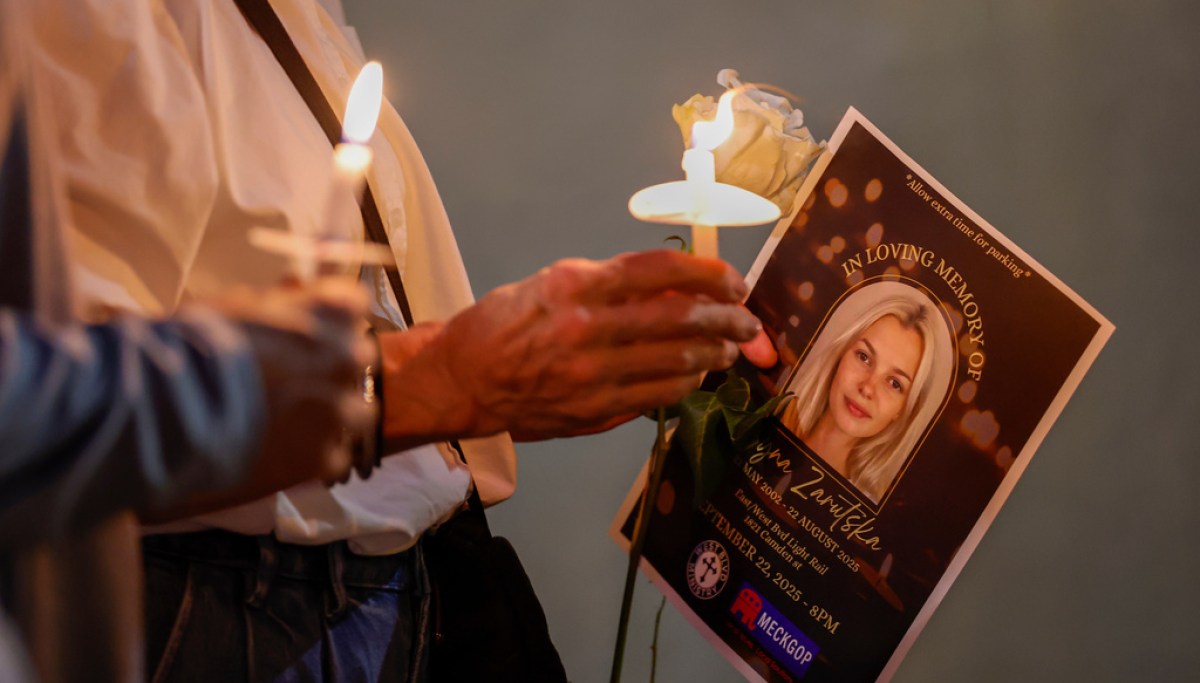
Gotham City is famously depicted in comics and movies as one of the most dangerous and crime-ridden fictional cities. Despite falling crime nationally, parts of America have become mini-Gothams with repeated violent crimes committed by people with addiction and mental illness. The difference is that even Gotham City has Arkham Asylum, where violent people suffering from mental illness are sent.Crime has fallen across America, but the continued attacks in America’s transit and public spaces are particularly worrisome. They are completely unprovoked, they target vulnerable people (the elderly, women, commuters), and they are almost universally committed by a very small, highly concentrated demographic: chronic repeat offenders with severe, unmanaged mental illness or addiction.It seems like every week we see a new violent attack. This week a woman with a history of mental health problems — but no criminal record — stabbed 32-year-old Erin Piacenti in Times Square. The attacker wielded two large knives and charged at police, who tried to stop her with a Taser. When the Taser did not stop her, the police had no choice but to open fire. Last week Jonathan Hamby, with 30 arrests and on probation for a knife crime, killed 29-year-old Ramon Harris on an Atlanta train platform. Hamby’s rap sheet reads like a glaring indictment of our broken justice and behavioral health systems. His history includes battery, aggravated assault, criminal trespass, and a documented history of mental illness. Most infuriatingly, at the time he allegedly murdered Harris, Hamby was a convicted felon walking the streets on active probation for a prior aggravated assault with a knife. This was not an unpredictable tragedy; it was the guaranteed outcome of a system that stubbornly refuses to protect the public from dangerous, mentally ill repeat offenders.This is an ongoing public safety epidemic with real victims:Iryna Zarutska (Charlotte, North Carolina — August 2025): Zarutska was a 23-year-old Ukrainian refugee who had fled the war to build a safer life in the United States. She was randomly stabbed from behind and killed while sitting on a Lynx Blue Line train. The attacker, 34-year-old Decarlos Brown Jr., had a long criminal record, known to have schizophrenia, and had prior institutionalization. In January of that same year, he had been arrested after erratic behavior but was released without bail by a judge. The tragedy sparked national outrage and led to “Iryna’s Law” in North Carolina to restrict cashless bail.Margaret Swan (Atlanta, Georgia — May 2026): A 66-year-old great-grandmother was stabbed 18 to 20 times in the neck and chest in a completely unprovoked attack while riding an Atlanta MARTA train. The suspect, 25-year-old homeless man John Elijah Matthews, simply walked up to her, pulled out a knife, and killed her. He had already been banned from the transit system prior to the attack.Penn Station slashing spree (New York City — June 2026): During the evening commute, 51-year-old Hector Deleon went on a random stabbing and slashing spree inside the NJ Transit concourse at Penn Station, leaving five people bloodied. Deleon had at least seven prior arrests. Crucially, he was on active probation for a 2022 case where he slashed another man in the neck, and his release conditions included mandated mental health treatment that clearly failed to protect the public.Seventeen-year-old victim shot (Atlanta, Georgia — June 2026): Just days after the Margaret Swan stabbing, Anthony Tyrone Gresham, a 42-year-old felon with multiple prior convictions, opened fire at MARTA’s Midtown station in Atlanta, wounding a 17-year-old before fleeing and sparking a multiday manhunt.The necessity of intervention The Great American Recovery Initiative is a historic development intended to add behavioral health and addiction treatment capacity, while making our streets safer.The argument for stronger intervention, including involuntary commitment where necessary, is rooted in both compassion and common sense. The Great American Recovery Initiative, alongside efforts to expand assisted outpatient treatment and community-based behavioral healthcare, represents a comprehensive approach. Paired with President Donald Trump’s July 2025 executive order on “Ending Crime and Disorder on America’s Streets,” this initiative recognizes a fundamental truth: We cannot address the addiction and mental health crises without first securing public safety. It acknowledges that while community-based care is the goal, there is a crucial role for institutional care and mandated treatment for those who are a danger to themselves or others.The argument for stronger intervention is rooted in both true compassion and basic common sense. When an individual with severe, untreated mental illness or a long history of violent crime poses a risk to themselves or others, the state has an absolute obligation to intervene. Leaving a violently unstable individual on the street to fend for themselves is not a victory for civil liberties; it is a dereliction of duty that has far too often ended in bloodshed.It is true that America has neglected its behavioral health infrastructure for half a century. The Great American Recovery Initiative is working to address this by expanding community-based care and institutional capacity, because a lack of beds is not a suitable public safety solution.FLOCK SAFETY CALLED ITS CRITICS ‘TERRORISTS.’ NOW IT WANTS TO BE YOUR PRIVACY SAVIORWhile we rebuild those necessary facilities, we can no longer allow the perfect to be the enemy of the good. When an individual poses a clear and present danger, they must be removed from our streets immediately, even if a state-of-the-art psychiatric bed is currently unavailable. Public safety cannot be held hostage by infrastructure delays. If a repeat offender with a history of violence is roaming a train platform, the justice system must utilize secure detention to protect the community until proper treatment is secured.We must empower judges and law enforcement to keep these dangerous individuals out of our parks and transit hubs. By blending enforcement with intervention and investment, we will help potential victims and those suffering from severe behavioral health problems.John Koufos is a former criminal trial attorney and is now a consultant advising the private and public sectors on technology, healthcare, and justice issues. John has tried complex organized cases, worked with the Trump administration on the First Step Act, and regularly assists law enforcement leaders around the country to advance smart on crime policies. Follow John on X @JGKoufos or at www.cottagefour.com.
From Iryna Zarutska to Times Square: It’s time our Gotham had its own Arkham
Full Article
Original Source
Read the full article at Washingtonexaminer →KhanList aggregates and links to publicly available news content. We do not host full articles from third-party sources. Always verify important information with original sources.