
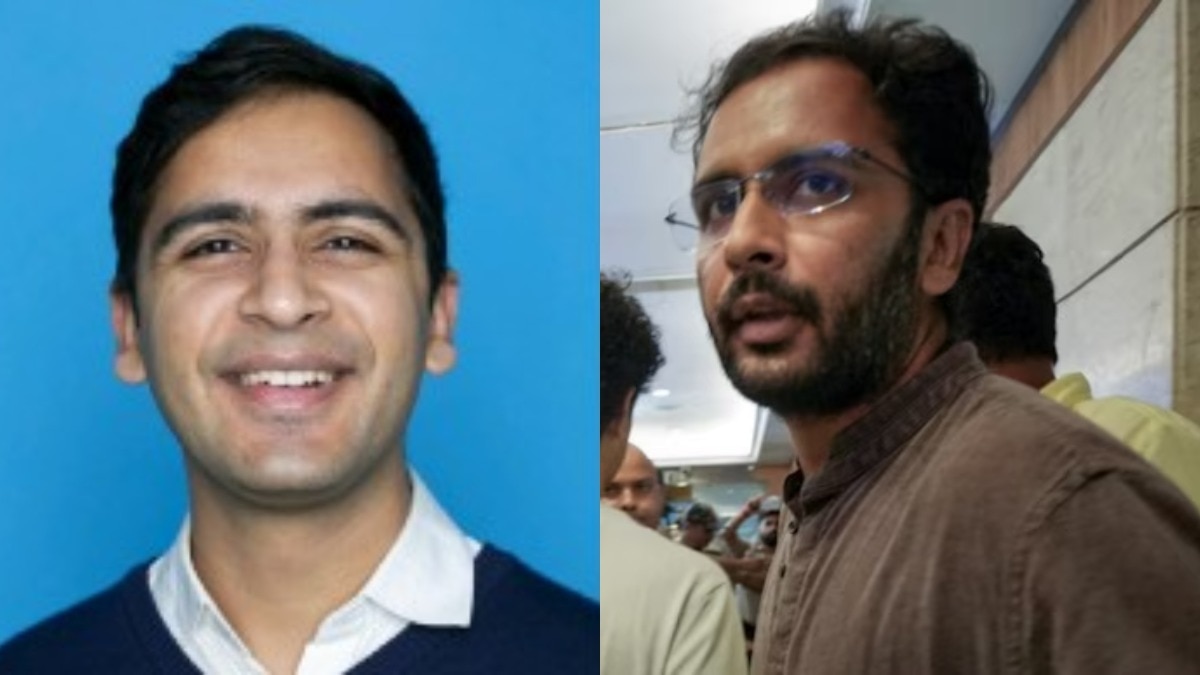
“He gave me a very, very tough time for three days and three nights in a row,” recalls former IIT Kanpur director Professor Indranil Manna, who led one of India’s premier educational institutions for several years.In an exclusive conversation with India Today, Professor Manna recalled how Ashutosh Ranka, top leader of the Cockroach Janta Party (CJP) and an IIT Kanpur alumnus, put the institute’s administration under pressure during a protest following the death of a student on campus.Reflecting on the episode, which took place around 2016-17, Manna spoke about his experience of handling student protests at a time when demonstrations at India’s premier institutions have once again drawn attention.His recollections come amid recent student protests at IIT Bombay following the death of second-year student Sahil Wakode, who was reportedly accused of cheating by Professor Doola. A similar incident at IIT Delhi, where an MSc student died by suicide, has also raised questions about the handling of grievances at top institutions.Against this backdrop, Manna, who headed IIT Kanpur for several years, told India Today how institute directors and administrations can navigate such situations.WHAT WAS THE MATTER? The protest followed the death of a student who had complained of back pain after returning from the cricket field. According to Manna’s account, the student was taken to the institute’s health centre, given a painkiller and sent back to the hostel.His condition subsequently deteriorated, and he began making his way back to the health centre where he died.Professor Manna recalled, “I was in Delhi, away from the institute, when I heard that some 2,000 students had gathered at Henson. The students protested continuously that night and for another night and two days.”Ashutosh Ranka, who was then president of the Students’ Gymkhana at IIT Kanpur, brought a large number of students to the director’s office to protest.“Ashutosh Ranka was the kind of president at IIT Kanpur who was responsible for putting me under pressure,” Manna said, describing the pressure he faced during the agitation.Prof Manna also highlighted that he, despite the pressure, did not bend in front of students but did make the righteous choice.Later, the MHRD formed a committee led by an AIIMS doctor to investigate the incident. Manna said the doctor noted that the student’s ECG indicated a chance of survival and praised the health-centre staff for conducting the test.Within ten days, Ranka and around ten other students returned to apologise after the committee examined the matter, Manna recalled.HOW SHOULD INSTITUTES DEAL WITH PROTESTS?“You should know how to deal with them,” Manna said, reflecting on the possibility of protests in educational institutions.He argued that administrations must distinguish between listening to students’ grievances and accepting every demand made during agitation.Sympathy for students, he suggested, need not mean that an institute must concede to every demand, particularly where compensation is sought before the facts have been established.He himself did not terminate the professor, as he told India Today, despite the demands made by the protesting students led by CJP's Ranka, who back then was a President of Gymkhana club at IIT Kanpur.Manna also emphasised the need for institutional heads to stand by faculty members when they believe they are performing their duties correctly.Referring to the controversy surrounding Professor Doola at IIT Bombay, he said directors must have the courage to defend a faculty member when the circumstances warrant it.From IIT Delhi and IIT Bombay to other campuses where protests have raised questions about student welfare and institutional accountability, the challenge remains one of balancing the grievances of students with the responsibilities of those who govern the institutions.FROM IIT KANPUR TO PUBLIC POLICYAshutosh Ranka, an IIT kanpur alumnus, studied Materials Engineering at the Indian Institute of Technology Kanpur, where he was enrolled from 2013 to 2017. During his time there, he served as president of the Students’ Gymkhana from March 2016 to March 2017 and was also a member of the institute’s Dramatics Club.After graduating, Ranka worked as a consultant at McKinsey & Company in Mumbai from August 2017 to May 2019. He subsequently became an associate fellow at the Delhi Legislative Assembly, serving from September 2019 to July 2020, and worked as a consultant with Gavi, the Vaccine Alliance, from May 2021 to July 2022.He returned to McKinsey as a senior associate from September 2022 to September 2024, before taking up a part-time independent consulting role with Gavi in October 2024.His LinkedIn profile also lists a Master of Public Administration from the London School of Economics and Political Science (LSE), completed between 2020 and 2022.He joined Global Health Visions as a senior associate in August 2025.Ranka’s student leadership at IIT Kanpur preceded his later public-facing work. His experience as Gymkhana president placed him in direct engagement with the institute’s administration, as Manna’s recollection illustrates.- Ends
From IIT Kanpur to Jantar Mantar: CJP's Ashutosh Ranka had done it before
Full Article
Original Source
Read the full article at Indiatoday →KhanList aggregates and links to publicly available news content. We do not host full articles from third-party sources. Always verify important information with original sources.