
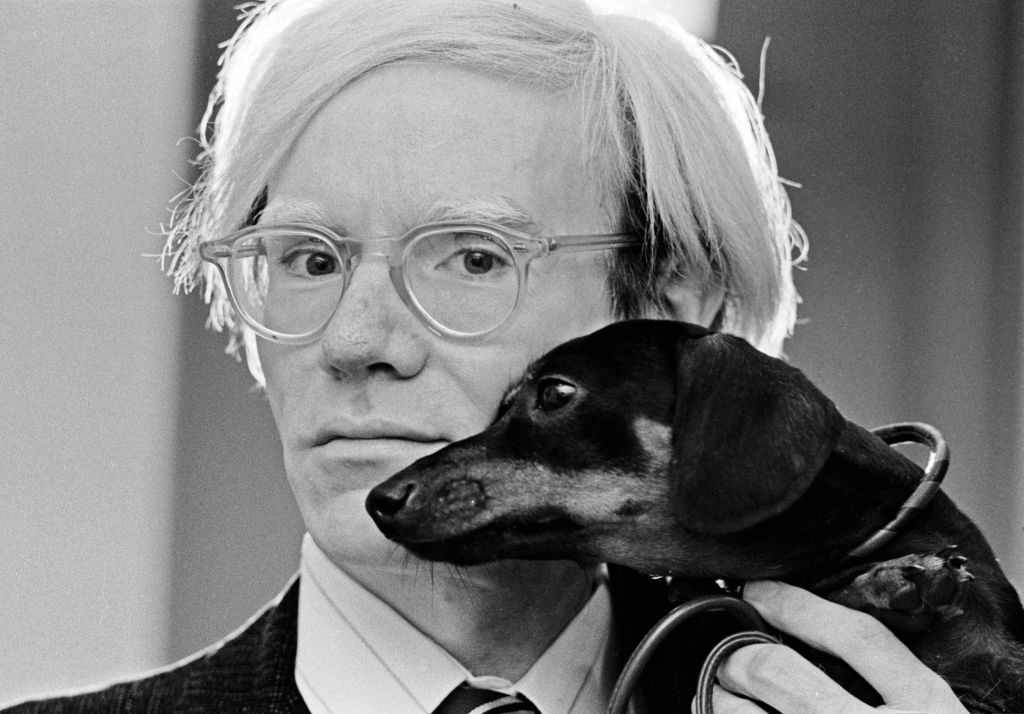
A new exhibition in Germany traces how the low-slung breed captured the imaginations of artistic heavyweights like Pablo Picasso, Andy Warhol and David Hockney. The museum even lets well-behaved pups tour the galleries November 3, 2026 9:31 a.m. Andy Warhol poses with his beloved dachshund Archie in November 1973. Jack Mitchell / Getty Images With their elongated spines and floppy ears, dachshunds have spent centuries burrowing into human hearts—and onto artists’ canvases. Now, a German art museum is turning the spotlight on this iconic breed as a muse and an enduring cultural emblem. On Saturday, the Kunsthalle Bremen opened “The Dachshund: An Icon Off the Leash,” an ambitious exhibition tracing the four-legged creature’s many footprints through art history. Spanning roughly 120 historic and contemporary works, the showcase is believed to be the world’s first exhibition dedicated exclusively to the dachshund in art. “There are many artists who owned dachshunds, who were inspired by the dachshund, loved the dachshund,” museum director Christoph Grunenberg tells Daniel Niemann of the Associated Press (AP). “It was like a muse, and there is an incredible wealth of representation of the dachshund in very different styles by significant artists.” The exhibition gathers pieces by an all-star roster of admirers, including Pablo Picasso, Andy Warhol, David Hockney, Otto Dix and Max Liebermann. “It’s striking how often the dachshund has served as a muse, model and studio accomplice for them,” Annett Reckert, the exhibition’s curator, tells DW’s Elizabeth Grenier. A photo by David Douglas Duncan of Pablo Picasso and Lump Harry Ransom Center, The University of Texas at Austin; Pablo Picasso: Succession Picasso / VG Bild-Kunst, Bonn 2026 Among the show’s highlights are Picasso’s works inspired by Lump, a dachshund who belonged to American photojournalist David Douglas Duncan and lived with Picasso for six years. Picasso inserted the diminutive hound into his famed series of paintings reinterpreting Diego Velázquez’s 17th-century masterpiece Las Meninas, swapping out Velázquez’s solemn Spanish Mastiff for Lump. Hockney painted his two beloved pet dachshunds in 1995, after a series of personal losses. “They’re like little people to me,” he said. “The subject wasn’t dogs but my love of the little creatures.” Originally bred in Germany more than 300 years ago to hunt badgers, deriving their name from the German “Dachs” (badger) and “Hund” (dog), dachshunds gradually moved from subterranean hunting tunnels to aristocratic drawing rooms and bourgeois urban flats. Otto Dix, Dackel, 1920 VG Bild-Kunst, Bonn 2026 During the World Wars, the dog became a symbol of Germany, prompting American pet owners to patriotically rebrand their dogs as “liberty hounds” to dodge anti-German backlash. But in the post-war years, the dachshund’s genial, slightly absurd silhouette helped reshape Germany’s global image: The pastel-striped dachshund Waldi became the official mascot of the 1972 Munich Olympic Games, chosen to embody a colorful, democratic and open West Germany. The exhibition does not merely examine the breed from human eyes. It caters directly to four-legged visitors as well. On Thursdays and Saturdays, the museum opens three of its eight exhibition galleries to dachshunds and other pint-sized dogs for sniffing and viewing sessions. To ensure everyone’s safety and comfort, canine gallery-goers must have a maximum shoulder height of about one foot, reserve a designated online time slot and check in at a specialized “Dachshund Lounge” before touring the halls, per a statement.In the first gallery, contemporary artist Thorsten Brinkmann establishes a playful atmosphere with Toxie Love, an installation featuring a vibrant menagerie of stuffed toys and historical memorabilia borrowed from the Dachshund Museum in Regensburg, Germany. “We want to take the dog seriously as a personality and the dog can walk around, can interact, will be able to watch videos, look, smell—and of course that’s what the dog really is interested in,” Grunenberg tells the AP. “The Dachshund: An Icon Off the Leash” is on view at the Kunsthalle Bremen until March 28, 2027. You Might Also Like Get the latest stories in your inbox every weekday. More about: Animals Art Art History Artists Baby Animals Dogs Exhibitions Germany Museums Pablo Picasso Painters
From Hunting Hounds to Modernist Muses, Dachshunds Have Done It All. See the World's First Art Exhibition Dedicated Exclusively to the Sausage Dog
Full Article
Original Source
Read the full article at Smithsonianmag →KhanList aggregates and links to publicly available news content. We do not host full articles from third-party sources. Always verify important information with original sources.