
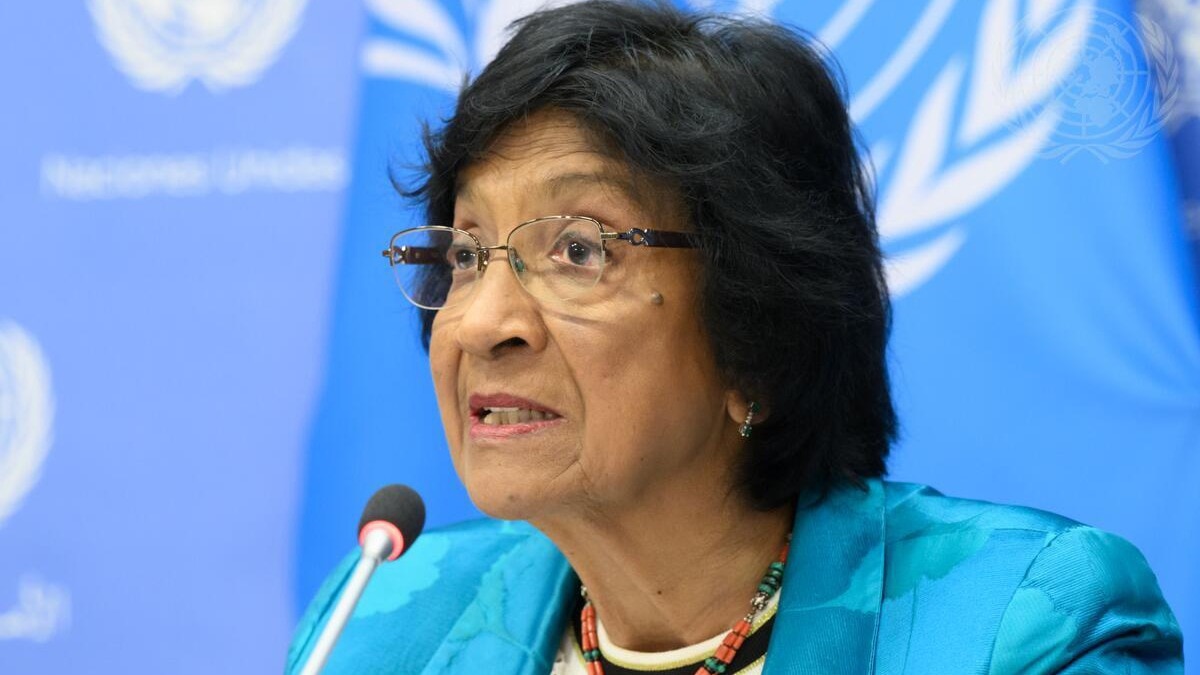
Navi Pillay, daughter of a bus driver from South Africa, has won the 2026 Nobel Peace Prize for her work promoting peace and international law. From studying law at the University of Natal to earning a doctorate at Harvard and leading the UN human rights office, her career offers lessons in education and perseverance.Navi Pillay, daughter of a bus driver from South Africa, has won the 2026 Nobel Peace Prize for her work promoting peace and international law. (Photo: X/@NobelPrize/UN)New Delhi,Oct 9, 2026 16:45 ISTWhen Navi Pillay chose education over a more comfortable life, she had a bigger goal in mind than building a successful career. The daughter of a bus driver from a Tamil family in Durban, South Africa, she went on to become a lawyer, a judge and the United Nations' top human rights official. On October 9, 2026, she won the Nobel Peace Prize for her work promoting peace and international law.Her journey is a lesson in how education, professional courage and a commitment to justice can take a person from modest beginnings to the highest levels of international law.FROM A LAW DEGREE TO HER OWN PRACTICEBorn on September 23, 1941, Navanethem Pillay grew up under apartheid, a system of racial segregation that denied Black South Africans equal rights and opportunities.She studied at the University of Natal, earning a BA in 1963 and an LLB in 1965. In 1967, she became the first woman to establish a law practice in Natal province, now part of KwaZulu-Natal. As a lawyer, Pillay defended anti-apartheid activists and challenged the mistreatment of political prisoners. Her work included exposing torture and fighting for prisoners' legal rights.She later pursued postgraduate studies at Harvard Law School, earning an LLM in 1982 and a Doctor of Juridical Science degree in 1988. (Photo: X/@NobelPrize) THE CAREER MILESTONES THAT TOOK HER GLOBALIn 1995, Pillay became the first Black woman appointed to South Africa's High Court. The same year, she joined the International Criminal Tribunal for Rwanda, later serving as its president from 1999 to 2003.Her work at the tribunal helped establish that rape could constitute an act of genocide under international law, marking a major development in the prosecution of sexual violence during conflict.She subsequently served as a judge at the International Criminal Court from 2003 to 2008.In 2008, Pillay took charge as the United Nations High Commissioner for Human Rights, a position she held until 2014. The role placed her at the centre of international efforts to protect human rights and hold governments accountable.WHAT HER JOURNEY TELLS US ABOUT CAREERSPillay's career was built through several stages: legal education, courtroom practice, judicial service and international leadership. Each role expanded the scope of her work, from defending individuals under apartheid to helping shape international criminal law.Her 2026 Nobel Peace Prize recognises her efforts to promote peace and international law. For students and aspiring lawyers, her journey shows how specialised knowledge, persistence and a clear professional purpose can open doors far beyond the first job.- Ends
From Harvard Law to the UN: How Navi Pillay built a career that made history
Full Article
Original Source
Read the full article at Indiatoday →KhanList aggregates and links to publicly available news content. We do not host full articles from third-party sources. Always verify important information with original sources.