
‘Krishna nee begane baro...’ Few devotional songs evoke a sense of warmth and tenderness quite like this timeless Dasara pada by Vyasaraya. Set in Yamuna Kalyani, this devaranama is often presented in the latter half of music concerts. It is also a favourite among Bharatanatyam dancers. For dancers, the song opens up an entire world of creative possibilities, taking them through Krishna’s playful childhood to the moment when he reveals the universe within his little mouth to his astonished mother Yashoda.Krishna appears in different forms and moods in the devaranamas of the Haridasas. He is the mischievous child who steals butter, the charming Gopala of Brindavan, the divine protector and the supreme being to whom the devotees turn to with love and complete surrender.The Haridasa movement enriched Kannada devotional llietrature with a vast and enduring body of compositions known as devaranamas. The followers of Madhvacharya spread their beliefs through songs that made profound spiritual concepts accessible to people. Vishnu and his various forms, such as Krishna, Keshava, Rama and Venkateshwara were the central focus of these keerthanas, though there were also songs dedicated to other deities.Sripadaraja is often regarded as the father of the Haridasa tradition. He helped shape the movement by expressing complex philosophical ideas in simple Kannada. His disciple Vyasaraya gave further impetus to it, while Purandaradasa and Kanakadasa carried its message to a wider audience through their compositions. Together, Vadiraja, Sriadaraja and Vyasaraya are known as the Yati Trayaru, the three saint-scholars of this tradition. Hampi, with its Vittala temple on the banks of the Tungabhadra, is closely connected with the Haridasa tradition. | Photo Credit: Special Arrangement The Haridasas belonged to the regions that are now part of Karnataka. The movement flourished during the Vijayanagara Empire. Hampi, with its Vittala temple on the banks of the Tungabhadra, is closely connected with this tradition. Purandaradasa is believed to have sung songs at a mandapa near the temple. Vittala, whether in Pandharpur or in Hampi, embodied the divine for the Haridasas and many composers used Vittala as their ankita or mudra of their compositions.Purandaradasa, who used the mudra ‘Purandara Vittala’ occupies a special place among the Haridasas. His padas on Krishna occupy a prominent place in the Carnatic repertoire. ‘Jagadodharana,’ a portrayal of baby Krishna of Doddamalluru, remains one of the most beloved devaranamas. ‘Narayana ninna namada,’ usually sung in Suddha Dhanyasi, offers immense scope for musical elaboration, especially in the charanam lines, ‘Krishna krishna endu.’ ‘Tharakka bindige,’ often sung in Tilang, holds a profound spiritual message behind its seemingly simple lyrics. There are many other devaranamas by Purandaradasa that are often heard in concerts. Among them are ‘Mella mellane bandane’ in Mohanam, ‘Kunidado krishna’ in Hamsanandi, ‘Kandena udupi krishnana’ in Behag and ‘Yaare rangana yaare krishnana kareya bandavaru’ in Hindolam. Keerthanas such as ‘Odi barayya’ in Bhairavi and ‘Pogadirelo ranga’ in Sankarabharanam often feature as main pieces in kutcheris. There are also many beautiful padas that are not heard much in concerts, such as ‘Hannu thaa benne thaa’ and ‘Thoogidale rangana yashode’ in Nilambari that bring the world of Yashoda and her little Krishna alive.If Purandaradasa’s Krishna appears in familiar forms, Kanakadasa’s compositions reflect a personal bond with the deity, particularly Udupi Krishna. It is said that he was denied entry into the temple. So, he stood outside and pleaded ‘Bagilanu teredu seveyanu kodu Hariye’ (Open the door, O! Hari and let me see you.) According to legend, Krishna turned towards him and offered him darshan through a small opening in the temple wall. The Kanakana Kindi (Kanakadasa’s window), through which devotees continue to view Udupi Krishna stands as a reminder of that moment. Before becoming a Haridasa, Kanakadasa was a warrior, which lends a distinct voice to his works. He used ‘Kagineleya adikeshava’ or simply ‘Adikeshava’ as the signature in his compositions. Among Kanakadasa’s best-known compositions are the ragamalikas ‘Baro krishnayya’ and ‘Yadavaraya brindavanavanadolu’, both of are widely performed.The world of Dasara padas goes beyond these two great names. Padas such as ‘Baro namma manege Gopalakrishna’ by Sreepada Rajaru set in Vasantha, ‘Bega baro bega baro neela megha varna’ by Vadiraja in Maand, ‘Ranga banda brindavanadalininda’ by Vyasaraya in Brindavana Saranga and ‘Sada enna hrudayadalli’ by Vijaya Vittaladasa in Behag continue to be sung in concerts.‘Kandu dhanyanade udupi krishna’ in Behag by Kamalesha Vittala Dasaru has been popularised by stalwarts such as D.K. Pattammal and K.V. Narayanaswamy. Another well-known composition on Krishna is ‘Chandadinda banda node’ by Vasudeva Vittala, which is often rendered in a folk style as a bhajan. M.L. Vasanthakumari played a pioneering role in bringing Dasara padas to the Carnatic concert stage. | Photo Credit: The Hindu Archives The musical journey of these compositions owes much to musicians who carried them to wider audiences. M.L. Vasanthakumari played a pioneering role in bringing Dasara padas to the Carnatic concert stage. Artistes from Karnataka, including Vidyabhushana, M.S. Sheela, R.K. Padmanabha, Puttur Narasimha Nayak and Neela Ramgopal are among the many musicians who made these a staple at their concerts. These padas found their way into Hindustani music too. The legendary Bhimsen Joshi stands out for including pieces such as ‘Yadava nee baa’ and ‘Neenyako ninna hangyako’ in his repertoire.The Haridasa tradition also includes ugabhogas, which are free-flowing, lyrical expressions that are not structured into the conventional pallavi, anupallavi and charanam format. They are rendered similarly to a virutham and often precede a devaranama. ‘Aaneyu karedare’, a popular ugabhoga, is often sung in Sivaranjani, while ‘Ninnantha swami enaguntu ninagilla’ is frequently heard as a ragamalika.M.L. Vasanthakumari would often sing the ugabhoga ‘Tamburi meettidava’ before ‘Narayana ninna namada’ in Suddha Dhanyasi. The duo Radha-Jayalakshmi sang the ugabhoga ‘Elutha govindage’ as a prelude to the same devaranama, although it is also presented as an independent piece. Young musicians today are also exploring ugabhogas by setting them to different ragas and featuring them in new musical contexts.Perhaps that is why Krishna lives on in the keertanas of the Haridasas. He is never confined to a single image. He crawls as a child, dances in Brindavan, enchants the gopis and reveals his divinity, yet remains close enough for a devotee to call out to him with love and longing: ‘Krishna nee begane baro’.’
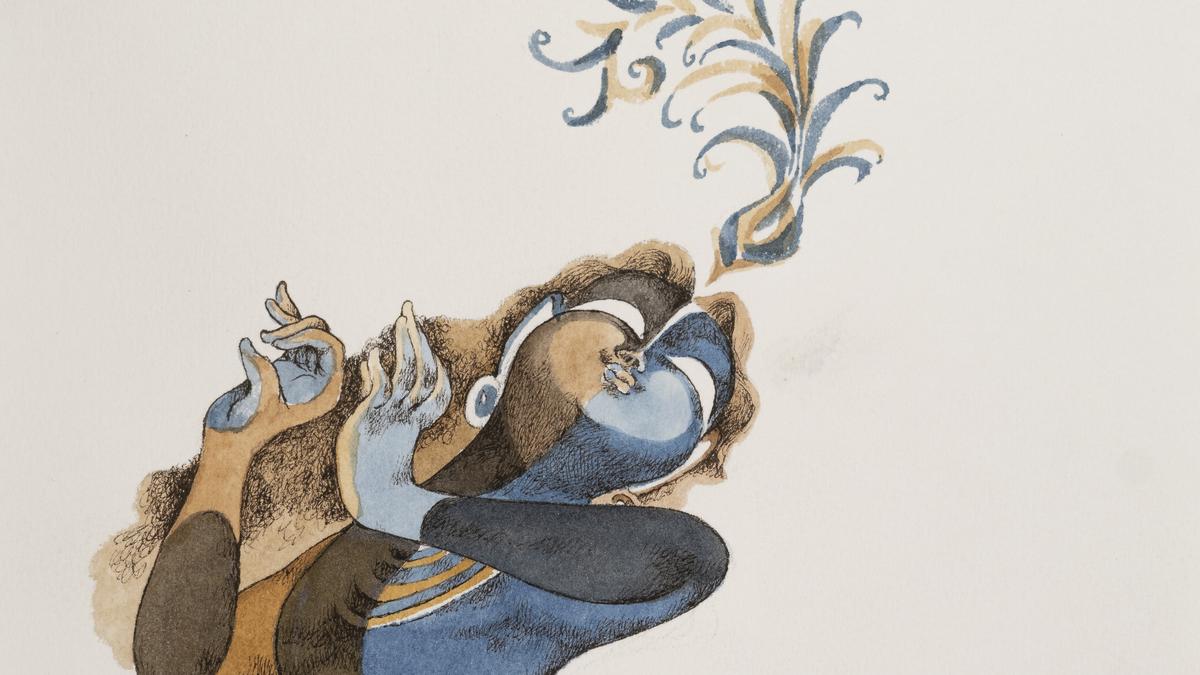
From child to divinity: How Dasara padas portrayed Krishna’s many forms
Full Article
Original Source
Read the full article at Thehindu →KhanList aggregates and links to publicly available news content. We do not host full articles from third-party sources. Always verify important information with original sources.