
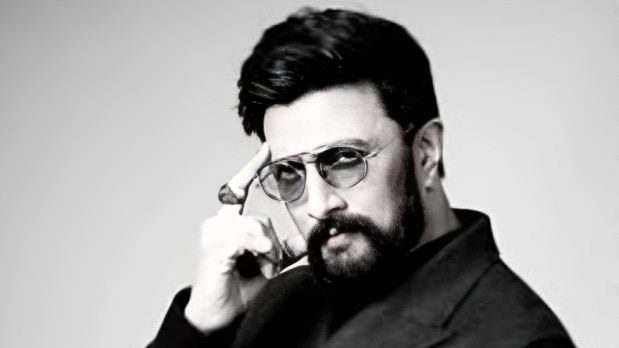
Nearly three decades into his journey in cinema, Kichcha Sudeep is a star who has built his stature on his own terms. But his beginnings were far from glamorous. Early in his career, Sudeep was labelled an “iron leg” — a term used to describe an actor believed to bring bad luck to a film, with projects being shelved or failing after he came on board.Sudeep, however, refused to let that label define him. Fifteen years into his career, since it started with the film Thayavva (1997), he had transformed himself into one of the most formidable forces at the Karnataka box office. Even before the term “pan-Indian star” gained the currency it has today, he had begun making his presence felt beyond Sandalwood.Today, Kichcha Sudeep is a brand and a superstar in his own right, with a career built on a mix of commercial success, memorable performances and a willingness to venture beyond Kannada cinema. But that stature was not achieved overnight. These seven films from the first 15 years of his career chart Sudeep’s transformation from an “iron leg” into a bona fide Kannada superstar and laid the groundwork for his rise beyond Sandalwood.We all know him as Kichcha Sudeep today. But how did Sudeep Sanjeev become Kichcha to audiences across Karnataka? The answer lies in Huchcha. Huchcha (2001)Directed by Om Prakash Rao, Huchcha was a remake of the Tamil romantic tragedy Sethu, which starred Vikram in the lead. The film gave Sudeep his first major commercial breakthrough and, more importantly, gave him the name that would eventually become synonymous with his identity as a star.In the film, Sudeep played Kichcha, a character whose intense love story and tragic journey struck a chord with audiences. The name stayed with him long after the film left theatres, eventually becoming the on-screen moniker by which millions would come to know him. Huchcha was the turning point Sudeep needed. After being dismissed early in his career as an “iron leg”, the film announced that he had the potential to command a theatre on his own. It also established the intense, physical and emotionally charged screen presence that would become a defining part of his early career. A poster of Kichcha Sudeep's Huchcha (Photo: IMDb) Sudeep followed Huchcha with a string of commercial entertainers, including Vaalee, Nandhi, Kiccha, Ranga SSLC and several others. He also ventured into more performance-oriented territory with Swathi Muthu, a remake of Kamal Haasan’s Swathi Mutyam, which earned him considerable appreciation for his performance.But the next film occupied a very different space in Sudeep’s filmography. It became the address fans returned to for one of his most endearing performances to date.No 73, Shanthi Nivasa (2007)If Huchcha showed audiences the star Sudeep could become and My Autograph revealed the filmmaker in him, No 73, Shanthi Nivasa showed just how much he wanted to explore beyond the commercial template.The film saw him play Raghu, a cook who enters a dysfunctional household and gradually brings the family together. A remake of the Hindi classic Bawarchi, the film relied on humour, emotion and human relationships rather than action or star power.Contemporary reviews praised precisely this quality, with critics noting that Sudeep had made a clean family entertainer without giving in to the commercial compulsions of a major star. It became one of Sudeep’s most endearing performances and remains a favourite among his fans.And perhaps that is why the film has endured so fondly among his fans. No 73, Shanthi Nivasa wasn’t Sudeep trying to prove that he could be the biggest star in the room. It was Sudeep proving that he didn’t always need to be. A still from the film No 73, Shanthi Nivasa (Photo: IMDb) Sudeep briefly returned to his action avatar with an extended cameo in Nagathihalli Chandrasekhar’s Mathad Mathad Mallige and PN Sathya’s Gooli. However, he soon returned to his softer side, fully embracing his romantic avatar with Mussanje Maathu.Mussanje Maathu (2008)This film saw Sudeep briefly step away from the action-heavy image he had built and get into a more vulnerable romantic avatar. Directed by debutant Mahesh, the 2008 film cast him as Pradeep, a popular radio jockey who listens to the problems of his callers and gives them hope, only to find himself struggling when love enters his own life.Starring opposite Ramya, Sudeep delivered a restrained performance that was widely praised, while the film’s emotional storytelling and memorable music struck a chord with audiences. The success of Mussanje Maathu also reaffirmed Sudeep’s versatility, proving that his appeal extended well beyond the action-hero image. A poster of Kichcha Sudeep's Mussanje Maathu (Photo: IMDb) Later, Kichcha Sudeep made his Bollywood debut with Ram Gopal Varma’s horror film Phoonk. However, it was his performance in his second Hindi film, standing tall opposite one of India’s biggest stars, that earned this film a place on the list.Rann (2010)In Rann, Sudeep played Jai Malik, the ambitious son of media baron Vijay Harshvardhan Malik, played by Amitabh Bachchan. The role gave Sudeep a substantial part in a Hindi film packed with established names, and he held his own alongside Bachchan and Paresh Rawal.Contemporary reviews praised his intensity, with India Today itself noting that he was among the film’s strongest performers.For Sudeep, Rann was an important step towards national recognition. He wasn’t simply a Kannada star making a cameo in Bollywood; he was an actor capable of commanding attention in an ensemble alongside some of Hindi cinema’s biggest names. A poster of Kichcha Sudeep and Amitabh Bachchan's Rann (Photo: IMDb) 2010 was a big year for Sudeep. Following Rann and the acclaim he received for the RGV film, he had a string of releases, including Just Maath Maathalli, Phoonk 2, Mr Theertha and Kichcha Huchcha. However, the next film left a lasting impression and remains a personal favourite.Veera Parampare (2010)Directed by S Narayan, Veera Parampare paired Sudeep with veteran Kannada superstar Ambareesh. Sudeep played Teja, a young man whose father dies while protecting village leader Varade Gowda, played by Ambareesh. Teja then takes it upon himself to protect Gowda and his family from those trying to seize their land.The film gave Sudeep everything that had made him a formidable commercial star — action, emotion and punchy dialogues — but it was his relationship with Ambareesh that gave the film its heart. The two shared great on-screen chemistry, and the film remains a favourite among fans simply for this reason: absolute entertainment! A poster of Kichcha Sudeep and Ambareesh's Veera Parampare (Photo: IMDb) Another 2010 release makes it to the list, although technically, it was a two-part film. Released within two months of each other, Rakta Charitra and Rakta Charitra 2 work best when viewed as one complete story.Rakta Charitra (2010)For Sudeep, the two-part saga was another important step outside Kannada cinema. While his role was limited in the first part, Rakta Charitra 2 gave him a more substantial part as DCP Mohan Prasad, the police officer tasked with tracking down Suriya. However, irrespective of his screen time in the films, Sudeep’s character and performance made a big impact.Coming soon after Rann, Rakta Charitra reinforced that Sudeep was no longer just a Kannada star. He was steadily building a presence across industries.Arguably, Sudeep’s most noted role outside the Kannada industry, calling it his strongest performance wouldn’t be a stretch. Sudeep could hold his own opposite the biggest of stars to the smallest of insects — and, in the context of this next film, quite literally.Eega (2012)SS Rajamouli’s Eega gave Sudeep one of the most unusual roles of his career. He played a wealthy, arrogant businessman who becomes obsessed with Bindu and kills Nani after discovering that she loves him. Nani is then reincarnated as a housefly and sets out to take revenge on Sudeep.The brilliance of Sudeep’s performance lay in the fact that he had to react to a character that did not physically exist on set. Yet, he made the villain intimidating, charismatic and completely unpredictable. Critics widely singled him out, with The Indian Express calling the scene in which he kills Nani one of the best performances of his career.Eega travelled across languages and festivals, while Sudeep’s performance earned him several accolades, including the Nandi Award for Best Villain and the Filmfare Award for Best Supporting Actor – Telugu. Looking back at these 15 years, Sudeep’s journey was never about following a single formula. From the intense heartbreak of Huchcha to the warmth of No 73, Shanthi Nivasa, the romance of Mussanje Maathu, the commercial swagger of Veera Parampare and the national recognition that came with Rann, Rakta Charitra and Eega, each film added another layer to his identity. By 2012, Sudeep was no longer the actor who had once been dismissed as an “iron leg”. He had become a formidable Kannada superstar who could seamlessly cross industries and hold his own among some of Indian cinema’s biggest names.The pan-Indian label may have become fashionable much later, but Sudeep had already begun living that reality.- EndsPublished By: Sanjay Ponnappa CSPublished On: Sep 2, 2026 12:34 IST
From being branded 'iron leg' to ruling Sandalwood: 7 films that made Kichcha Sudeep
Full Article
Original Source
Read the full article at Indiatoday →KhanList aggregates and links to publicly available news content. We do not host full articles from third-party sources. Always verify important information with original sources.