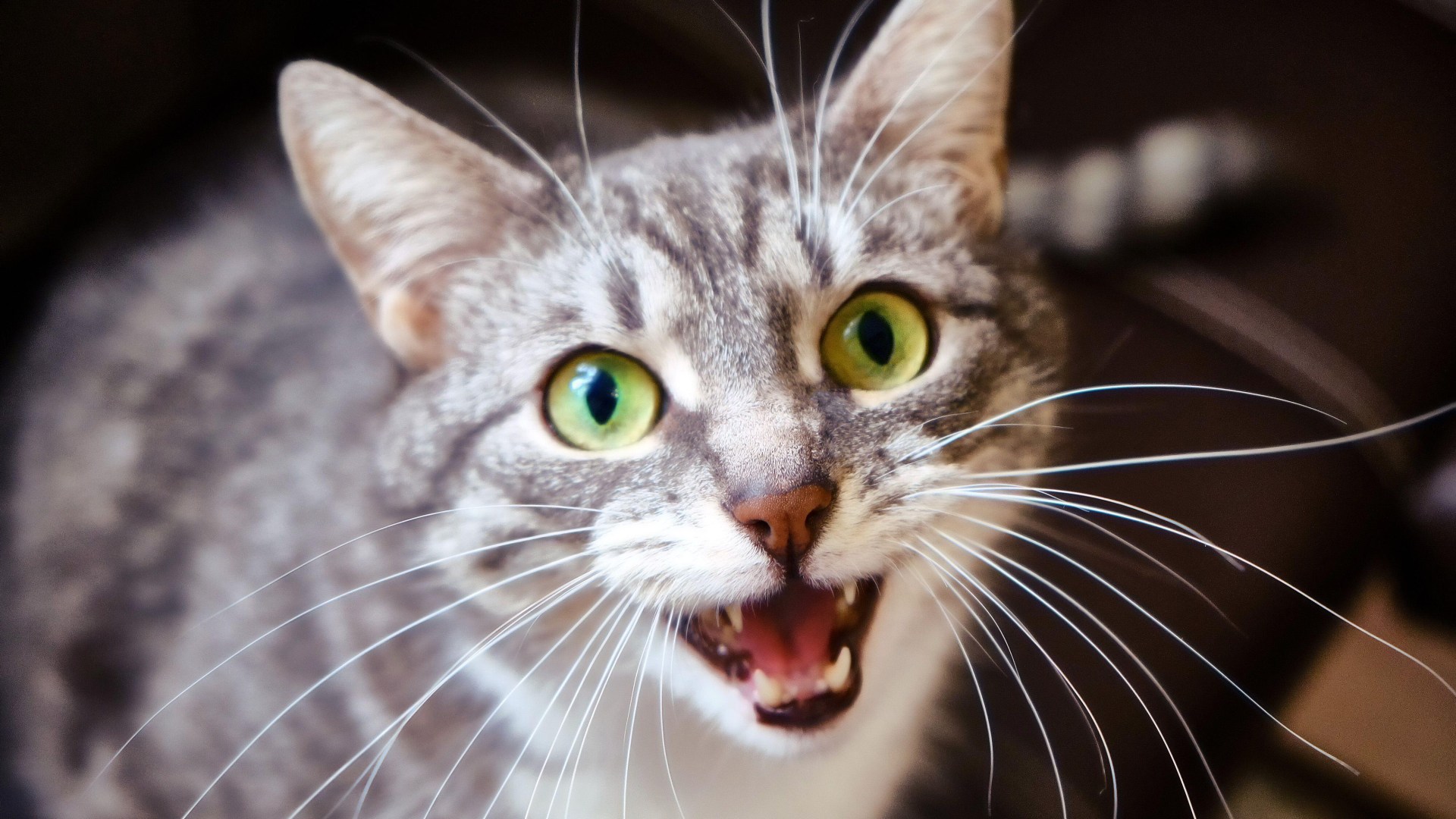
HE is on a mission to help our pets . . . and is here to answer YOUR questions. Sean, who is the head vet at tailored pet food firm tails.com, has helped with owners’ queries for ten years. He says: “If your pet is acting funny or is under the weather, or you want to know about nutrition or exercise, just ask. I can help keep pets happy and healthy.” Sean McCormack, head vet at tails.com, promises he can ‘help keep pets happy and healthy’ Cloud the cat does not like the be handled and this is causing worry for her owners Credit: Alamy Q) OUR 14-year-old domestic shorthair cat, Cloud, is a rescue pet who had a bad start in life and doesn’t like to be handled. We are due to move house later this year and I am really concerned about transporting her. Sign up for the Money newsletter Thank you! To get her into the carrier, we have to “trick” her with treats. Once inside, she goes crazy and yowls. It’s very distressing to witness and I worry she’s going to hurt herself. Getting her to a vet to discuss a sedative for anxiety would be an issue as we couldn’t guarantee being able to catch her for an appointment. If I called the clinic, could they prescribe something without seeing her? She’s otherwise healthy, not on any meds, active, playful, generally happy and weighs around 4kg. VICKY BRUERTON, High Wycombe Most read in Money Sean says: Cloud sounds lucky to have found such a patient owner. Many cats with difficult starts find confinement very stressful, so I’d start preparing for your move now. Leave the carrier out permanently with soft bedding, treats and meals inside so it becomes part of the furniture rather than something scary. Pheromone sprays can help, too. Your vet may be able to prescribe anti-anxiety medication in advance. But we would prefer to have examined her recently and know her medical history, so it’s worth having that conversation sooner rather than later. If, for example, she had an undiagnosed heart problem or similar medical issue, it could make sedative medications dangerous. Planning ahead will make all the difference. Q) I HAVE read that canaries commonly get overweight due to seed mixes. I give a combination of pellets, seeds and greens. How do I know if my pair, Meg and Mog, are too plump? LIZ JOHNSON, Penzance, Cornwall Sean says: Seed mixes are delicious to birds, like crisps and cake to us, so it’s great Meg and Mog already eat pellets and fresh greens. You shouldn’t judge a bird’s weight just by looking through the feathers. Instead, your vet can show you how to gently feel the breastbone. Ideally, it should be easy to feel, but not razor sharp or buried beneath fat. Plenty of flying space is just as important as diet. A complete and balanced canary pellet diet will stop selective feeding, ensuring they don’t just eat their favourite, often high-fat ingredients. MY little terrier George seems to have endless energy and will walk for miles. He’s one year old. I always take plenty of water on hikes. What’s the longest a little dog should walk? EM HUGHES, Northampton Sean says: Terriers (my fave) are wonderfully enthusiastic little athletes and, aged one, George is probably just reaching full adult fitness. There isn’t a magic mileage as every dog is different. Build distances gradually and watch for excessive panting, slowing down, sore paws or stiffness the following day. Take regular breaks, plenty of water and avoid the hottest part of the day. Your vet can advise on how much exercise is sensible. WHENEVER I do online yoga, my cat Nutmeg lies on the mat. Why does that happen? LIZ HUGHES, Basingstoke Sean says: Cats seem drawn to yoga mats. Nutmeg is likely attracted by a mix of warmth, routine and your calm focus. Some cats just enjoy being involved in whatever their human is doing. Never mind downward dog, this is the downward cat! STAR OF THE WEEK Wabana is a trained doggy lifeguard and her owner describes her as ‘one in a million’ Credit: Supplied WABANA is now a trained doggy lifeguard – despite initially struggling to swim. Owner and retired maritime project manager Catherine Stovin says: “Although she’s always loved being in the water, at first she would only do doggy paddle and struggled. “It took a year to settle into her Newfoundland stroke, which is a bit like a polar bear swimming. Now she’s a water baby.” Catherine, 59, of Farnham, Surrey, added: “She has trained as a lifesaver and passed the top level of Newfoundland Club lifesaving qualifications.” The pooch, 11, also comforts sick kids at the boarding school where Catherine’s hubby, Steven Davey, works – by giving them a cuddle.“She’s one in a million,” Catherine said. WIN: Five £50 vouchers for Fish4Dogs FIVE lucky Paws and Claws readers will each win a £50 online voucher to spend at Fish4Dogs. Its grain-free and hypoallergenic fish treats include award-winning Sea Jerky Whoppers, salmon sticks and new white fish sausage slices. For a chance to win, send an email headed FISH4DOGS to sundaypets@the-sun.co.uk by August 30. See fish4dogs.com. T&CS apply. HOW KITTIES GET KIDS UP TO SCRATCH Living with felines plays a powerful role in children’s emotional development Credit: Getty CATS are quietly teaching children life skills – from respecting boundaries to understanding that “no” isn’t always verbalised, Paws and Claws can reveal. Living with felines plays a powerful role in children’s emotional development, reinforcing lessons in empathy, responsibility and self-control. A new survey revealed 95 per cent of 1,000 cat owners polled said their pets have helped their child to understand respect and boundaries. Daniel Warren-Cummings of Cats Protection, which carried out the survey, said: “Unlike dogs, felines communicate in subtle ways. “Children who grow up with cats learn to read those signals – whether it’s a swishing tail or a cat walking away – and adjust their behaviour accordingly. These are valuable skills.” Eighty per cent of parents say their child changes their behaviour in response to their cat’s signals, while 62 per cent say interacting with felines makes children more observant. Psychologist Jo Hemmings said: “Cats are teaching children life’s most important social skills.” See education.cats.org.uk and the charity’s YouTube channel. Comment now
From an anxious cat to a plump canary – your pet queries answered
Full Article
Original Source
Read the full article at Thesun →KhanList aggregates and links to publicly available news content. We do not host full articles from third-party sources. Always verify important information with original sources.