
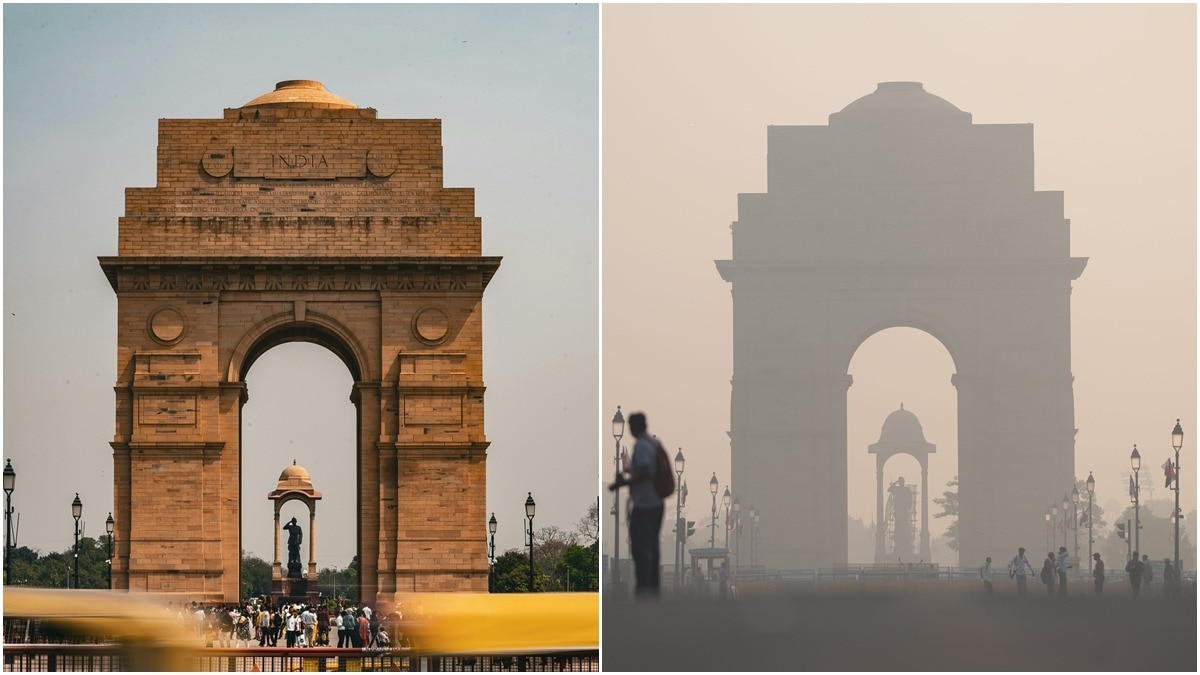
Delhi's air has deteriorated significantly in just four days, with pollution levels climbing from relatively cleaner conditions on October 30 to dangerously high levels on November 3, just days before Diwali.Delhi's average Air Quality Index (AQI) rose from 124 on October 30 to 393 on November 2. By 11:31 am on November 3, the city's AQI had climbed further to 464, making the capital's air, according to AQI.in data.What's particularly concerning is the pace at which the air has grown toxic in the last 96 hours, with the coming days expected to only add to the haze. A thick layer of smog shrouds Akshardham Temple amid worsening air pollution in New Delhi. (Photo: PTI) After briefly breathing cleaner air following late October's rainfall, Delhi is now witnessing another intense pollution spell, with neighbouring cities across the National Capital Region (NCR) also reporting a steep rise in AQI. FROM 124 TO NEARLY 400 AQIAQI.in's readings show just how quickly pollution has built up. An infographic illustrates the rise in AQI in the last 96 hours. On October 30, Delhi's average AQI was 124, with the day's lowest reading at 45 and the highest at 280. A day later, by October 31, the average had climbed to 256. The deterioration accelerated over the weekend as Delhi's average AQI reached 369 on November 1 and rose further to 393 on November 2. The maximum reading that day nearly touched 500, missing the feat by a mere point at 499.The trend seems to be going strong, with the latest reading of 432 at 12:01 am on November 3, illustrating how the pollution spell is continuing, with little sign of immediate relief. A graph illustrating Delhi's AQI in the last 24 hours. (Photo: AQI.in) WHY DID POLLUTION WORSEN?The brief improvement on October 30 followed rainfall and strong winds associated with a western disturbance and weather systems linked to Cyclone Arnab.Rain washes some pollutants out of the atmosphere, while stronger winds help disperse them.But that relief was temporary. As the weather turned drier, pollution from vehicles, industries, construction, road dust and waste burning began accumulating again. Rain clouds cover the skyline over Delhi. (Photo: PTI)Â An important factor behind this build-up is poor atmospheric ventilation, or the ability of the air to disperse pollution.When winds weaken and the height up to which air can mix becomes lower, pollutants get trapped closer to the ground instead of spreading out.The India Meteorological Department and the Ministry of Earth Sciences' IITM air quality forecasts track these conditions because they play a major role in determining how quickly pollution accumulates.Weak winds, particularly during the night and early morning, can make the situation worse. Smog engulfs Kartavya Path as people take a stroll amid low visibility. (Photo: PTI) Adding to the problem were the reported farm fires in Punjab and Pakistan that are expected to continue spewing smoke towards the national capital and its neighbours.WHY ARE THE COMING DAYS CRUCIAL?Delhi is entering the annual post-monsoon pollution season, when falling temperatures and changing weather conditions can make it harder for pollutants to disperse. People are seen bursting crackers causing plumes of smoke. (Photo: PTI) The Commission for Air Quality Management (CAQM) has invoked Stage II of the Graded Response Action Plan (GRAP) across NCR as air quality worsens. Forecasts indicate that Delhi could remain in the 'Very Poor' category in the coming days.With Diwali approaching, firecracker emissions coupled with winter weather conditions could further aggravate an already worrying situation.- Ends
From 124 to over 400 in just 96 hours: What's behind Delhi's steep AQI climb?
Full Article
Original Source
Read the full article at Indiatoday →KhanList aggregates and links to publicly available news content. We do not host full articles from third-party sources. Always verify important information with original sources.