
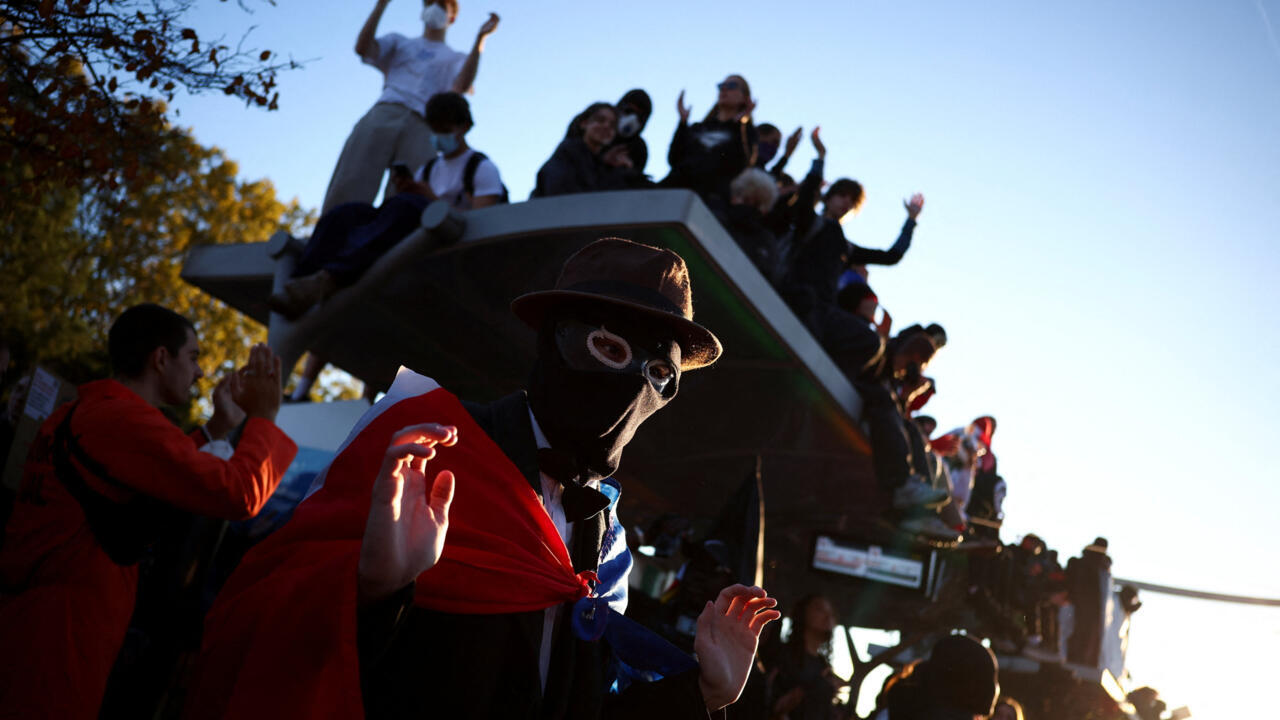
A group of major trade unions have called for nationwide strikes and demonstrations on Thursday, adding to the pressure already initiated by high school and university students. The day of action in favour of more purchasing power will, for the first time since September, bring together private sector employees, civil servants and retirees. Spearheaded by high school students angry over poor conditions and lack of resources, the protests have fuelled a nationwide movement against the high cost of living, soaring prices and inadequate public services, drawing hundreds of thousands of people onto the streets over the past three weekends. French authorities are expecting a large turnout of between 500,000 and 700,000 demonstrators across France on Thursday, excluding the Paris region, according to an intelligence memo revealed by RTL radio. "The day is classified as high-risk," the document states, "with widespread violence against law enforcement and damage to public buildings anticipated." Several major trade unions have joined forces and are calling on public and private sector employees nationwide to strike and demonstrate together. Among their demands outlined in a 7-point plan, they are calling for better wages and a better distribution of wealth. The CGT union said some 244 demonstrations had been planned across the country. "We want two things: wage increases everywhere ... and a revision of the government's draft budget which, as it stands, is catastrophic for the country," CGT General Secretary Sophie Binet told France 2 television on Monday. "It will be a great day of convergence with private sector employees who will be present, civil servants, retirees, and young people," she said. Maintain pressure In a bid to calm anger, the government this week highlighted a drop in diesel prices in 6,000 of the 10,000 French service stations following the release of strategic stocks. The CFDT union General Secretary Marylise Léon expressed frustration on Wednesday at the delay in getting police authorisation for Thursday's march through Paris. She also said it was "unacceptable" to ban marches in city centres, which occurred on 24 and 31 October. This decision was made following the violent clashes and looting that took place during protests on 17 and 18 October. France reports 1,314 arrests after protests as police defend security operation The SNCF rail service said it expects disrupted service on most of its regional and Île-de-France lines on Thursday, and a slightly disrupted service for TGV high-speed trains. The Ministry of National Education said around 17 percent of primary school teachers would be on strike. The Yellow Vest movement said it will participate in Thursday's strike and blockades and intends to maintain pressure until Saturday, the day of "Act IV" of the movement. Health sector on edge Faced with planned budget cuts the joint union of Social Security employees also called on staff to strike. In an open letter sent to French news agency AFP on Tuesday, the public agency said it had been "weakened by budgetary choices" that were having a direct effect on French citizens and their health cover. The joint union group also pointed to the growing difficulties faced by public hospitals. Diane, a nursing assistant in a retirement home west of Paris, told RFI she had already prepared the slogan for her placard for Thursday's march to bring attention to the "suffering of both us and our elders," she says. Her job involves helping residents with all their daily needs from getting up, washing, dressing, meals, and going to bed. French public sector workers strike over pay freeze ahead of 2027 budget Diane explains that when a colleague is absent, they are not replaced, so, her workload is multiplied. "I can find myself with maybe four, or even five residents to assist with meals." "In our facilities, we aren't given the necessary tools to better support our elderly," she says, pointing to the lack of time for her to properly listen, stimulate and engage with patients. Marie-France, a nurse in a nursing home near Paris, is responsible for 36 patients all by herself. "35 years ago, there was more staff. Before, we had the time to spend with our patients, to talk with them," she says, adding "I'm becoming inhuman in some way. In fact, I'm robotic and I'm doing robotic work." Europe-wide anger Meanwhile, anger over the similar issues has been felt elsewhere in Europe. On Tuesday, housing rights groups, unions and other activists from seven European countries called for "coordinated demonstrations across Europe" against the rising cost of living later this month. After spontaneous protests in several European nations, representatives from rights groups and unions from France, Britain, Belgium, Spain, Italy, Portugal and Greece at a meeting in Paris urged rallies from Friday 20 November through the weekend. ‘Generational rage’ drives young Europeans to fight to be heard "The organisations denounce the runaway rise in the cost of living, with housing out of reach and basic food and transport increasingly unaffordable, and warn of a return of austerity linked to the demands of public-debt creditors and the arms race," they said in a joint statement. French participants included the USL high school student association that has been involved in school strikes since September. Also present were the CGT labour union and Yellow Vest movement that have joined students in cost-of-living protests over the past three weekends. (with newswires)
French unions join forces for nationwide strike as protests intensify
Full Article
Original Source
Read the full article at Rfi →KhanList aggregates and links to publicly available news content. We do not host full articles from third-party sources. Always verify important information with original sources.