
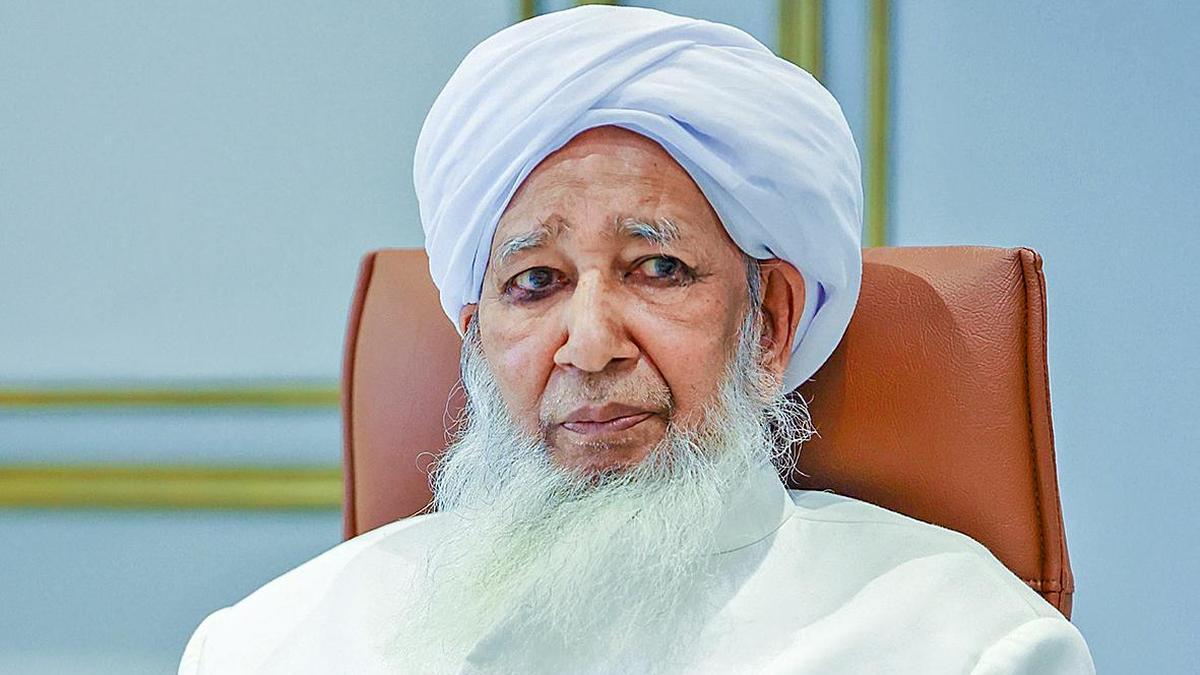
Sunni leader Kanthapuram A. P. Aboobacker Musliyar (file) | Photo Credit: The Hindu Fathima Farha, a 23-year-old student from Malappuram, is among the lakhs of Gen Z girls in Keralam closely watching the ongoing debate over women’s autonomy after Sunni leader Kanthapuram A. P. Aboobacker Musliyar sparked widespread controversy by stating that women should remain confined to their homes and claiming that their entry into the public sphere would cause “great destruction”.“I honestly do not agree with the statement. Women have the right to decide what they want to do with their lives. If a woman wants to stay at home, that is her choice. But saying that all women should be like that is unfair. Times have changed, and women are studying, working, and doing so many things today,” she says.For newly-wed K. C. Aliya Praveen, an MA student at the Central University of Kerala from Kozhikode, the issue is largely a matter of personal choice. “In my understanding, what the Musliyar said was directed at Islamic believers. From a religious point of view, his statement may have been intended to protect women. But as individuals, people have their own choices. One should be free to decide whether to stay at home or pursue one’s dreams. We cannot force anyone,” she feels.Sharp divideWhile many are taking a firm stance against the remarks of the cleric, their perspective also highlights the sharp divide among young women in Keralam. While progressive youth condemn the statement as regressive and patriarchal, traditionalists argue they were misconstrued or intended to protect community values.“I do not think staying at home is the problem. The problem is telling women that they have to stay at home. A woman should be free to decide what works for her. It is her basic freedom as an individual in society,” says Amritha S., a graduate student from Kottayam.However, the responses among Gen Z women have also raised fundamental questions about gender equality and the changing role of women in society.Raziya Fathima, a student from Thrissur, says society has changed considerably. Unlike previous generations, women today are getting educated and becoming financially independent, she adds.“Girls today are growing up with dreams of getting an education, having a career and being independent. I have my own ambitions, and being a Muslim does not mean I have to give them up. There are Muslim women working in different fields and making their own choices”, she says.For many women, the central question is not whether a woman should work or stay at home, but whether she should have the freedom to make that choice for herself.”Many of us do not understand why a woman’s place has to be decided for her. Let women choose their own place”, says Fathimath Swaliha, a student from Kannur.“Why should the freedom of women be defined by others? Why should they be limited to the four walls of their home? She has her own dreams and ambitions. Just because she is a woman, nobody can stop her from living her own life. As a citizen of the nation, she has every right to choose her own path as an individual”, says Anusree Prakash, a postgraduate student from Pala.According to Riya Fathima from Ernakulam, traditions can be respected, but they should not come at the cost of individual freedom. “We can respect tradition and still question anything that limits a woman’s freedom as an independent citizen, regardless of religion, ” she says.(The writer is an intern with The Hindu) Published - September 03, 2026 03:51 pm IST
Freedom or tradition? How Gen Z girls in Keralam are responding to Kanthapuram’s controversial remarks on women
Full Article
Original Source
Read the full article at Thehindu →KhanList aggregates and links to publicly available news content. We do not host full articles from third-party sources. Always verify important information with original sources.