
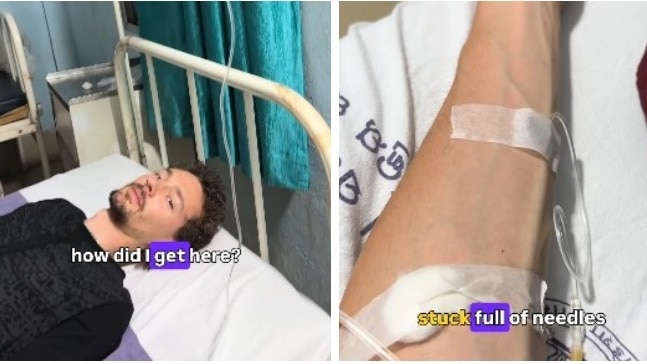
An American tourist's experience at a rural government hospital in Odisha has sparked a wider conversation about India's public healthcare system, medical tourism and how healthcare access works for visitors from abroad.An American tourist receives free treatment at a rural Odisha government hospital, prompting a closer look at India's public healthcare system and growing medical tourism sector. (Image: @mikenoonvisuals/Instagram)An American tourist's unexpected hospital visit in Odisha has put India's public healthcare system in the spotlight. American filmmaker Mike fell ill while travelling through the state and was admitted to a rural government hospital after vomiting repeatedly for around 12 hours. He said he received intravenous fluids, anti-nausea medicine and two injections, but was surprised when he was not charged for the treatment. Mike said similar care in the US could have cost him a couple of thousand dollars.His experience is not, strictly speaking, healthcare tourism, he was travelling for tourism and sought treatment after falling ill, but it offers an interesting entry point into how India's government healthcare system works and why India is increasingly promoting itself as a medical tourism destination.WHAT HAPPENED TO THE AMERICAN TOURIST?Mike said he was only five days into his India trip when he became unwell while travelling through Odisha. He had been vomiting roughly every 15 minutes for about 12 hours before being hospitalised.He also made it clear that he did not believe he had food poisoning. According to Mike, he had simply eaten too much of the local food because he enjoyed it. At the rural government hospital, he received IV fluids, anti-nausea medication and injections. His biggest surprise came afterwards: he said he was not charged for the treatment.Mike compared the experience with healthcare in the US, saying an IV bag, anti-nausea medication and injections could potentially cost a couple of thousand dollars there. That is his personal comparison, rather than a formal comparison of treatment costs between the two countries.WHY WAS HIS TREATMENT FREE? Odisha has a broad government-funded healthcare system. The state's Gopabandhu Jana Arogya Yojana says the government bears the full cost of health services delivered at state government healthcare facilities, including government medical colleges, for all persons, irrespective of income, status or residence. This includes medicines, diagnostics, inpatient care and other listed services.That means the fact that Mike was a foreign visitor does not automatically make his experience unusual. However, the exact services covered and the way charges are handled can depend on the facility and treatment.Odisha also provides free medicines to registered patients at government hospitals through its Niramaya programme.A DIFFERENT SIDE OF INDIA'S HEALTHCARE SYSTEMThat distinction matters. India's healthcare system includes expensive private hospitals, specialist centres, insurance-backed treatment and a large public network where many services are government-funded.For Mike, the surprise came from the latter.His story does not prove that healthcare is universally free in India or that every foreign visitor will receive every form of treatment at no cost. What it does show is that a foreign tourist who suddenly needed medical attention in rural Odisha could access a government hospital and, in his case, leave without the kind of bill he expected from the US.For a traveller, that may have been an unexpected part of the India experience. For the wider healthcare conversation, it is a reminder that public healthcare and medical tourism are two very different sides of India's health system.- EndsPublished By: vaishnavi parasharPublished On: Aug 18, 2026 10:47 IST
Free care in Odisha surprises American tourist: How India's healthcare tourism works
Full Article
Original Source
Read the full article at Indiatoday →KhanList aggregates and links to publicly available news content. We do not host full articles from third-party sources. Always verify important information with original sources.