
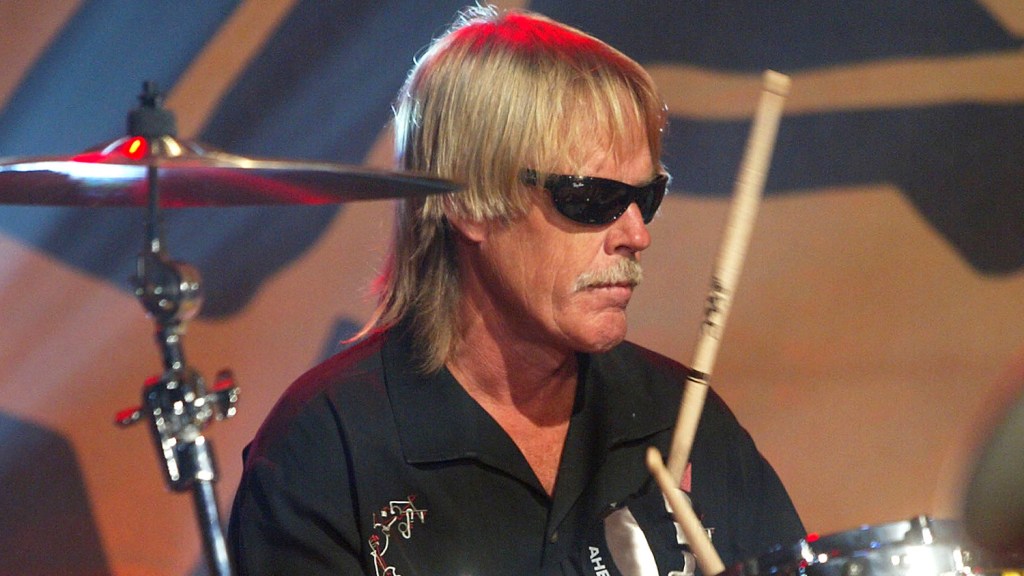
Frank Beard, who drummed with ZZ Top for nearly six decades, playing on such classics as “La Grange,” “Tush,” “Sharp Dressed Man” and “Legs,” died Monday. He was 77. The band’s longtime rep Bob Merlis confirmed to our sister publication Rolling Stone that Beard died at his ranch in Richmond, Texas, while in hospice care. He did not provide a cause of death, but the Rock & Roll Hall of Famer was forced to leave ZZ Top’s current tour in March due to an unspecified “health issue.” He had returned to play some shows, but the trio canceled its planned Hollywood Bowl concert this month as Beard’s health worsened. The group canceled its respective Tuesday and Wednesday concerts in Utah and Colorado but was planning to resume the tour with a pair of weekend shows in Austin. The boogie-blues trio ZZ Top was formed in 1969 in Houston, featuring Beard alongside singer-guitarist Billy Gibbons and bassist Dusty Hill. They went on to become one of rock’s best-loved bands, with their massive success driven by signature videos that MTV played in heavy rotation — and Hill and Gibbons’ trademark beards. They were among the bands with the longest-tenured original lineup until Hill died in 2021 at 72. ZZ Top has released 15 studio albums during its career — including half live/half-studio album Fandango! — selling more than 25 million records in the U.S. alone, per the RIAA. Seven of their LPs, including two hits compilations, are platinum or multiplatinum, with four others going gold. The group was featured in the 2019 documentary ZZ Top: That Little Ol’ Band from Texas, which scored a Grammy nom for Best Music Film. Beard was born on June 11, 1949, in Frankston, Texas, and he and Gibbons played in various local groups including a notorious imposter version of English band The Zombies. The pair were playing with Moving Sidewalks — scoring a local smash with “99th Floor,” which was No. 1 in Houston for more than a month — before hooking up with Hill in late 1969. ZZ Top signed with London Records, but its 1973 debut album failed to chart. The band’s 1972 follow-up Rio Grande Mud nearly made Billboard’s Top 100, however. The group’s next LP, 1973’s Tres Hombres, broke them in the U.S. on the success of single “La Grange,” which featured Gibbons’ signature “Haw-haw-haw-haws.” It also featured the run-together openers “Waitin’ for the Bus” and “Jesus Just Left Chicago,” which many classic rock stations air back-to-back. The band toured hard during the ’70s, playing ever-larger halls as their rep as a killer live act spread. ZZ Top went even more mainstream in 1975 with Fandango!, which also made the U.S. Top 10, fueled by the group’s first Top 20 single “Tush.” Its body-moving riff and playfully randy lyrics have made the track a regular on FM rock playlists for half a century. In fact, rock radio would feature the Top throughout the late ’70s and early ’80s with tracks including “It’s Only Love,” “Cheap Sunglasses,” “I Thank You” and “Tube Snake Boogie.” But come 1983, everything changed for the little ol’ band from Texas. Its eighth album, Eliminator, was an instant smash — and the band became MTV favorites with the video for “Gimme All Your Lovin’.” It featured the “Eliminator coupe” and the long-bearded Hill and Gibbons watching from behind dark shades as a local kid working at a gas station gets a surprise visit from a trio of women who whisk him away. RELATED: Kymberly Herrin Dies: ‘Ghostbusters’ Actress Who Starred In Popular ZZ Top Video Was 65 That hit single and video were followed by rock smashes “Got Me Under Pressure” and “Sharp Dressed Man,” but as Eliminator continued to ride the album chart, its fifth single would fuel Topmania. “Legs” featured a decidedly mid-’80s synth sound, but this time pop radio took notice. MTV played the video extensively, and the song hit No. 8 on the Billboard Hot 100, becoming ZZ Top’s biggest AM success. It revitalized Eliminator‘s sales and helped the disc eventually become the band’s biggest by far, earning diamond status for sales of 10 million units in the U.S. It would spend a remarkable 187 weeks — or 3½ years — on the Billboard 200. ZZ Top circa 1986, from left: Dusty Hill, Frank Beard and Billy Gibbons Everett Collection ZZ Top’s 1985 follow-up album, Afterburner, couldn’t match Eliminator‘s long-tail sales success but became — and remains — its highest-charting LP, peaking at No. 4. It featured the Top 10 single “Sleeping Bag” and went on to sell more than 5 million copies in the U.S. Recycler followed in 1990, reaching No. 6, but it would be the Top’s last Top 10 record for a dozen years. The band’s discography includes a massive reissue of its early studio albums that was released as The ZZ Top Six Pack, a three-CD set that streeted in 1987. Covering the debut disc through 1981’s El Loco — but sans 1979’s Degüello — it featured an unfortunate remaster of “La Grange” that ’80s-up a signature drum fill, among other tweaks. The group later was featured as an Old West party band in Robert Zemeckis’ 1990 film Back to the Future III, which became that year’s sixth-highest-grossing movie. ZZ Top earned three career Grammy nominations, for the documentary and two for Best Rock Performance by a Duo or Group with Vocal for Eliminator (1983) and Afterburner (1986). The trio was inducted into the Rock and Roll Hall of Fame in 2004. The band’s music has been featured in dozens of films and TV shows — from An Officer and a Gentleman and Knight Rider to Twin Peaks and I, Tonya — and Hill had a voice role as Hank Hill’s rock-star cousin in a 2007 episode of King of the Hill.
Frank Beard Dies: ZZ Top’s Drummer For Nearly Six Decades Was 77
Full Article
Original Source
Read the full article at Deadline →KhanList aggregates and links to publicly available news content. We do not host full articles from third-party sources. Always verify important information with original sources.