
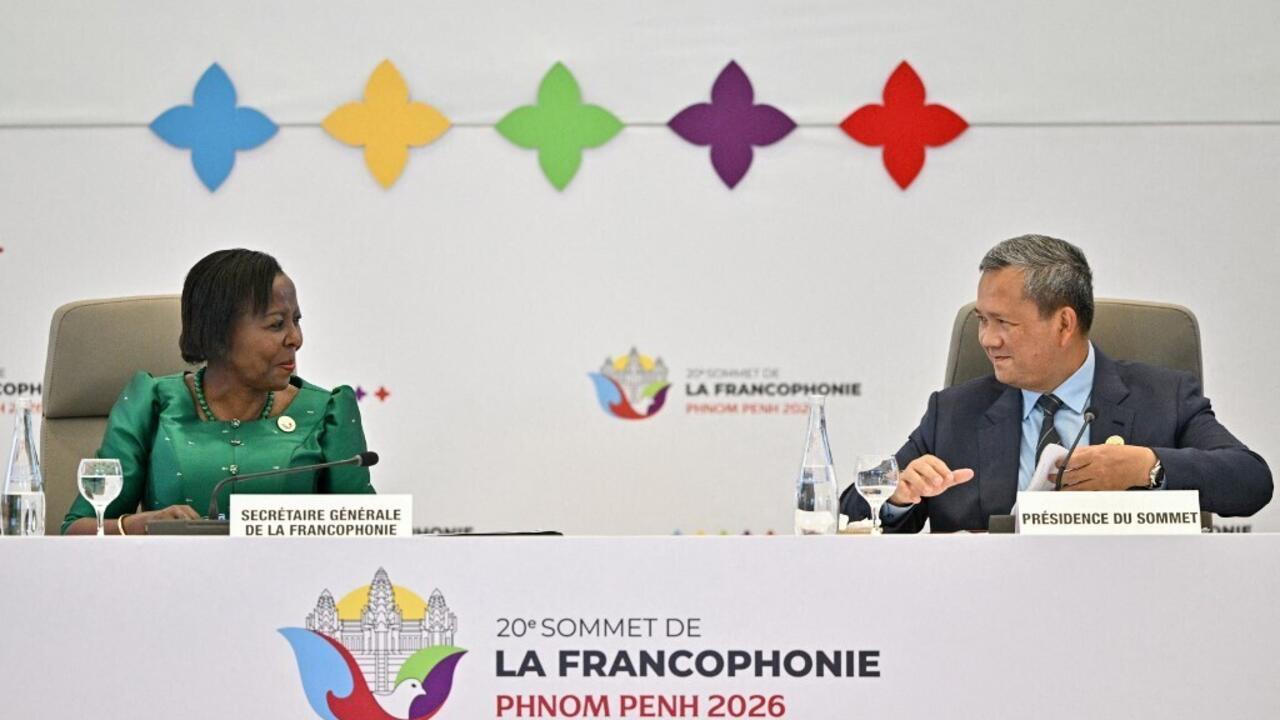
The International Organisation of La Francophonie has postponed the election of its next secretary-general by one year after members failed to reach a consensus at a summit in Cambodia. The decision follows a bitter dispute between the Democratic Republic of the Congo and Rwanda over the future of incumbent Louise Mushikiwabo. Following intense negotiations and a tense campaign, members of the International Organisation of La Francophonie (OIF) agreed on Monday to postpone the election of their next secretary-general by one year after failing to reach a consensus, several sources told RFI. Talks continued until the last minute, delaying the summit's scheduled programme by nearly three hours, according to RFI's reporter in Phnom Penh, but ultimately failed to break the deadlock. The mandate of the current secretary-general, Rwanda's Louise Mushikiwabo, who has already served two terms, has been extended by one year pending an extraordinary summit to elect her successor. According to several sources, she will not stand in the next election. French President Emmanuel Macron welcomed the outcome as a "compromise". "France welcomes the sense of responsibility shown by members of the Francophonie, which made this decision possible – a sign of their commitment to the Organisation and their ability, within it, to reach a compromise," the Élysée Palace said in a statement. Tensions and economic turbulence in Cambodia, as it hosts Francophonie summit The postponement follows months of tensions over the highly contested leadership position, with the conflict between the DRC and Rwanda spilling over into the campaign. Kinshasa, which accuses Kigali of supporting M23 rebels in eastern DRC, strongly opposed Mushikiwabo securing a third term, even threatening to withdraw from the organisation if she was reappointed. Macron's diplomatic efforts Macron sought to defuse the dispute by suggesting that Kigali and Kinshasa withdraw their respective candidates to allow a consensus to emerge around one of the other two contenders. On Saturday, the DRC said it was "prepared" to withdraw Juliana Lumumba's candidacy and "consider a joint approach in support of" Romania's Dacian Ciolos. Rwanda, however, denounced what it called "pressure" from Paris and insisted that Mushikiwabo would remain in the race. During a meeting with Rwandan President Paul Kagame on Sunday morning, Macron called for the DRC, Rwanda and Mauritania to hold talks "among themselves" to reach an "African consensus that France will support", according to the Élysée Palace. French overtakes Arabic to become world's fourth most spoken language He reiterated that position before heads of state on Monday morning, but the last-minute diplomatic efforts failed to produce an agreement. The DRC has the world's second-largest French-speaking population after France, with over 57 million speakers. Its withdrawal would represent a major setback for the OIF, which has already lost three Sahelian members – Burkina Faso, Mali and Niger – over the past year. The summit also confirmed that the next edition will take place in Ottawa, Canada. (with AFP) Following intense negotiations and a tense campaign, the member states of the OIF failed to agree on a consensus candidate, so they decided to postpone the vote to elect its next secretary-general by one year, several sources told RFI. Negotiations continued until the very last minute, extending the scheduled program by nearly three hours according to RFI's reporter in Phnom Penh, but ultimately proved futile. The term of the current Secretary-General, Louise Mushikiwabo, who has already been president for two terms, has thus been extended by one year, pending an extraordinary summit dedicated to the election. According to several sources, she will not be a candidate in the upcoming vote. France's President Emmanuel Macron hailed the outcome as a "compromise." "France welcomes the sense of responsibility shown by members of the Francophonie, which made this decision possible—a sign of their commitment to the Organisation and their ability, within it, to reach a compromise," the Élysée stated in a press release. Intense tensions This postponement comes after months of intense tension in the race for the highly contested position of secretary-general. The conflict between the DRC and Rwanda has spilled over into the campaign. Kinshasa, which accuses Kigali of supporting M23 rebels in its eastern provinces, has done everything in its power to prevent the incumbent, Rwandan Louise Mushikiwabo, from securing a third term. The DRC even threatened to leave the organisation should she be reappointed. Tensions and economic turbulence in Cambodia, as it hosts Francophonie summit Macron tried to calm the discussions. He suggested that Kigali and Kinshasa withdraw their respective bids to allow for a consensus to form around one of the other two candidates. On Saturday, the DRC stated that it was "prepared" to withdraw Juliana Lumumba’s candidacy and to "consider a joint approach in support of" the Romanian candidate, Dacian Ciolos. But Rwanda denounced "pressure" from Paris and insisted that Louise Mushikiwabo would remain in the race until the end. During a meeting with his Rwandan counterpart, Paul Kagame, on Sunday morning, the French president expressed a wish for the DRC, Rwanda, and Mauritania to hold discussions "among themselves" to reach an "African consensus that France will support," the Élysée Palace stated. On Monday morning, he once again advocated for this approach before the heads of state. However, these final attempts to shift positions proved insufficient to change the status quo, leading the organisation to schedule another vote for twelve months' time. The DRC has the second-largest number of French speakers (57.3 million) behind France. Its departure from the organisation would be a seismic event for the OIF, already weakened by the loss last year of three Sahelian nations: Burkina Faso, Mali, and Niger. The summit also confirmed that the next edition will be held in Canada, in Ottawa. (with AFP)
Francophonie summit delays secretary-general vote after Rwanda-DRC deadlock
Full Article
Original Source
Read the full article at Rfi →KhanList aggregates and links to publicly available news content. We do not host full articles from third-party sources. Always verify important information with original sources.