
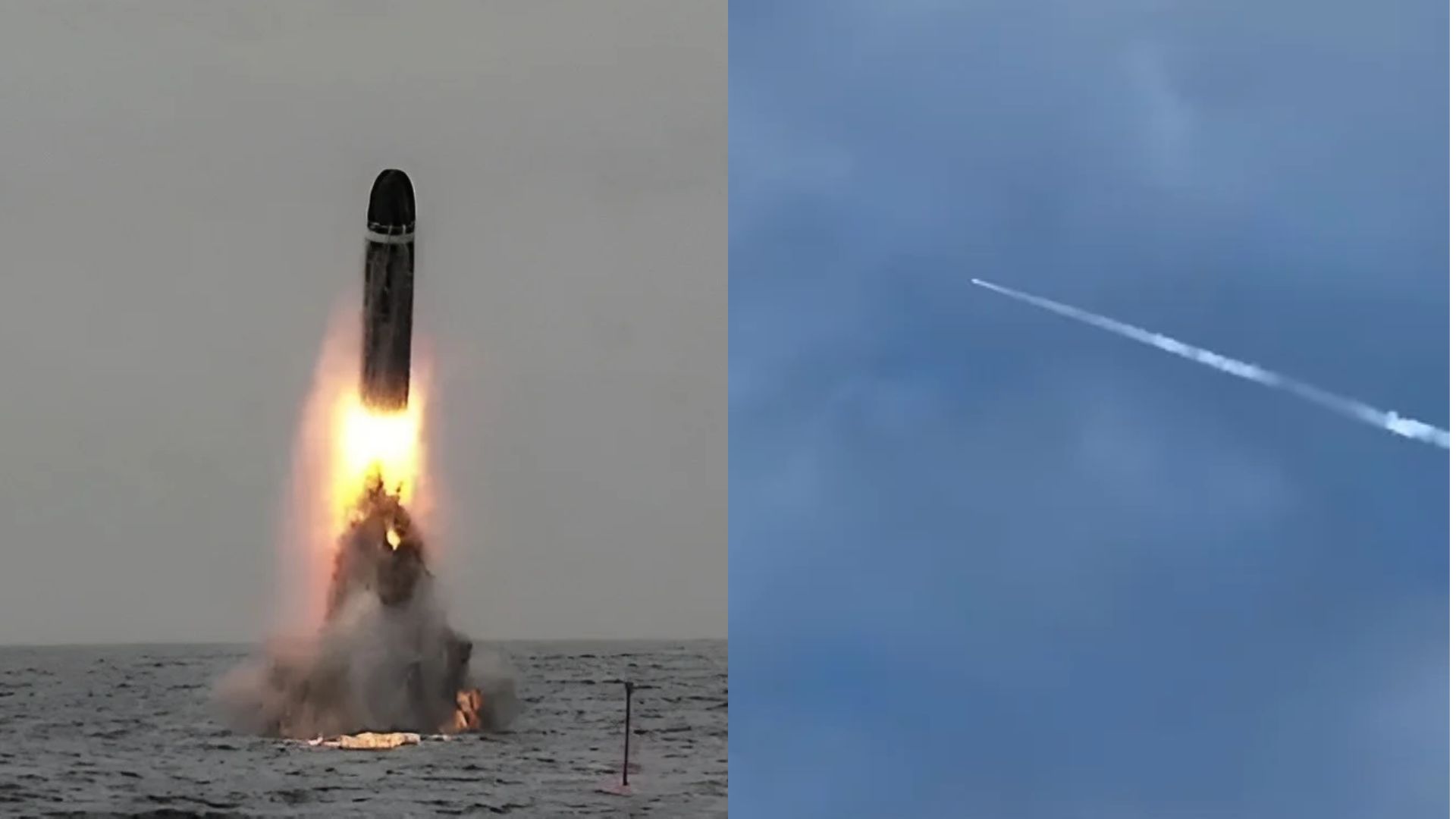
France has completed the first submarine launch of its upgraded M51.3 strategic nuclear-capable ballistic missile. The test checked how the missile performed from the nuclear-powered submarine Le Vigilant. The missile launched Tuesday off France’s western coast during an acceptance test. It carried no nuclear warhead and traveled toward the North Atlantic. French officials said the missile reached a designated area hundreds of miles from land. The test followed major maintenance work on Le Vigilant. Submarine completes missile test The launch tested more than the missile’s flight performance. Engineers also needed to verify the submarine’s ability to operate the upgraded weapon. Le Vigilant fired the M51.3 after completing a major overhaul. France routinely conducts an acceptance firing after extensive work on its ballistic-missile submarines. À bord de la frégate multi-missions Auvergne, j'ai assisté au premier tir du nouveau missile balistique M51.3 depuis le sous-marin nucléaire lanceur d'engins Le Vigilant.Très peu de nations disposent d'un tel savoir-faire. Félicitations à tous les acteurs de cette réussite… pic.twitter.com/bElCe99hMd— Emmanuel Macron (@EmmanuelMacron) October 6, 2026 The process checks whether the submarine and missile can function together as an integrated system. That includes the launch sequence and the missile’s performance after leaving the boat. The M51 launches from a submerged submarine using a gas-powered ejection system. Its solid-fuel rocket motors then propel the missile through the atmosphere. A successful submarine launch represents a critical step beyond ground-based flight testing. The weapon must remain compatible with the submarine’s launch systems and operating environment. M51.3 extends the missile’s reach The M51.3 is the newest operational version of France’s M51 submarine-launched ballistic missile. ArianeGroup developed the missile with France’s Directorate General for Armament. The missile’s official range remains classified. Independent estimates put the M51.3’s range above 5,900 miles. That would give the M51.3 greater reach than earlier versions. The previous M51 variant reportedly had a range exceeding 5,600 miles. ArianeGroup says the M51 can climb beyond 1,240 miles above Earth. The missile can then reenter the atmosphere at approximately Mach 20. The M51 family also uses multiple independently targetable reentry vehicles. The technology allows several warheads to follow separate trajectories after the missile’s boost phase. The M51.3 also introduces improvements aimed at accuracy and penetration against missile defenses. Those upgrades make the missile’s guidance and reentry systems particularly important. Flight testing moves underwater ArianeGroup and France’s defense procurement agency first flight-tested the M51.3 from a land-based facility in 2023. That test helped validate the upgraded missile before submarine deployment. The new test adds another layer of validation. Engineers can now assess the missile’s complete launch sequence from its intended operational platform. Launching a ballistic missile from a submarine creates additional engineering challenges. The weapon must leave a moving platform safely before its rocket propulsion takes over. The submarine also has to manage the launch without compromising its own operation. That requires precise coordination between the boat’s launch system and the missile.France placed the M51.3 into operational service in 2025. The country’s next planned upgrade, the M51.4, is expected to push the system’s capabilities further. Tuesday’s test therefore marks an important checkpoint for the M51 family. It demonstrates that the upgraded missile can transition from development testing into submarine-based operation.Get the latest in engineering, tech, space & science - delivered daily to your inbox.Aamir is a seasoned tech journalist with experience at Exhibit Magazine, Republic World, and PR Newswire. With a deep love for all things tech and science, he has spent years decoding the latest innovations and exploring how they shape industries, lifestyles, and the future of humanity.
France launches nuclear-capable missile at sea with 1,240-mile climb, Mach 20 reentry
Full Article
Original Source
Read the full article at Interestingengineering →KhanList aggregates and links to publicly available news content. We do not host full articles from third-party sources. Always verify important information with original sources.