
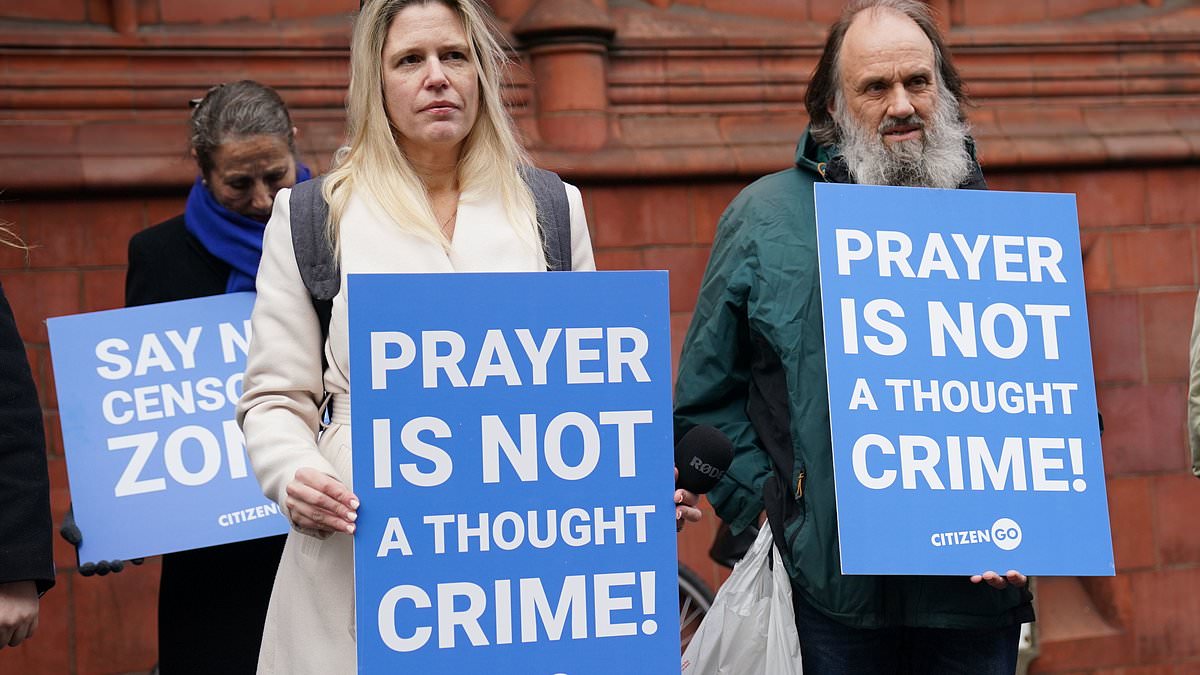
A new report on anti-Christian discrimination has found that France, England and Wales record the highest number of hate crimes and anti-Christian incidents.OIDAC Europe's Annual Report 2026 found 2,465 anti-Christian hate crimes and incidents in Europe in 2025, including at least 396 attacks on individuals.These attacks, including physical violence, threats and harassment, increased by 44 per cent, compared with 274 incidents in 2024.Government data revealed the highest year-on-year increases in France, with a 9 per cent spike overall and a 70 per cent increase in attacks on individuals Authorities in England and Wales recorded 624 anti-Christian hate crimes in 2025/26, a 24 per cent increase from the previous year. Most recorded incidents across Europe targeted churches and other Christian sites, with arson, vandalism and desecration. But violent incidents towards individuals are also on the rise.In Lyon, France, an Assyrian Christian who had fled persecution in Iraq, was stabbed to death while livestreaming Christian messages. Meanwhile, in Poland, a Catholic priest was bound and killed in his presbytery. Authorities in England and Wales recorded 624 anti-Christian hate crimes in 2025/26, a 24 per cent increase from the previous year A new report on anti-Christian discrimination has found that France, England and Wales record the highest number of hate crimes and anti-Christian incidentsOther incidents include an attempted homicide in Germany and a stabbing in Spain that injured three people. The report also suggests anti-Christian hostility may be underreported due to inconsistencies in how incidents are recorded. In Germany, for example, offences targeting Christians are logged under the country's politically motivated crime framework, meaning attacks on churches are not always classified as anti-Christian hate crimes. In Poland, a survey found nearly half of Catholic priests had experienced aggression in the previous year, yet more than 80 per cent had not reported it to police.The report also cites a range of restrictions on religious freedom across Europe between 2025 and 2026.This includes workplace discrimination, limits on public expressions of faith, interference in church governance, and measures affecting conscientious objection and parental rights. According to the findings, the UK accounted for the highest number of employment-related discrimination cases, as well as restrictions on public prayer, including dismissals for expressing Christian beliefs and prosecutions for silent prayer.Cases highlighted in the report include teachers losing their jobs after expressing Christian views in classroom discussions, as well as legal action against individuals for silent prayer, open-air worship services and other religious activities near abortion clinic buffer zones.One case in Scotland saw American-born teacher Sarah Morse secure a settlement after losing her position following answers to pupils' questions about abortion.The 66-year-old was dismissed by Arbroath High School after she answered questions in class from students about her position on abortion, which she opposes. She was sacked the same day by the deputy head teacher, and subsequently sued Angus Council. A view of debris caused by a fire inside the Cathedral of Saint Pierre and Saint Paul in Nante A French gendarme takes a bunch of flowers at the entrance of where a French catholic priest was murdered An employment tribunal was due to be held, but the council approached Morse with a financial settlement, which she accepted. Other cases examined included teachers being dismissed after referring to Britain as a 'Christian State' and expressing pro-life beliefs.One social worker was found to have had a job offer withdrawn after his publicly expressed beliefs on marriage and sexuality were discovered.Meanwhile, in Switzerland, legislation has been approved requiring Christian hospitals and care homes to permit assisted suicide on their grounds despite religious objections.The report also looked at negative stereotyping in media and political discourse. Cases examined included broadcasts criticised for conflating traditional Christian convictions with extremism and advocacy publications labelling Christian organisations 'anti-rights'.The report cites one case in Spain, where broadcaster RTVE was forced to apologise after describing evangelical church growth as 'worrying' and 'dangerous' During another broadcast with channel Cadena SER, a presenter described Mass as 'Sunday witchcraft' and the Church as a 'sect'.OIDAC Europe has called for an EU Coordinator on combating anti-Christian hatred, with resources comparable to those addressing antisemitism and anti-Muslim hatred.
France, England and Wales are the worst countries in Europe for discrimination against Christians, report finds
Full Article
Original Source
Read the full article at Dailymail →KhanList aggregates and links to publicly available news content. We do not host full articles from third-party sources. Always verify important information with original sources.