
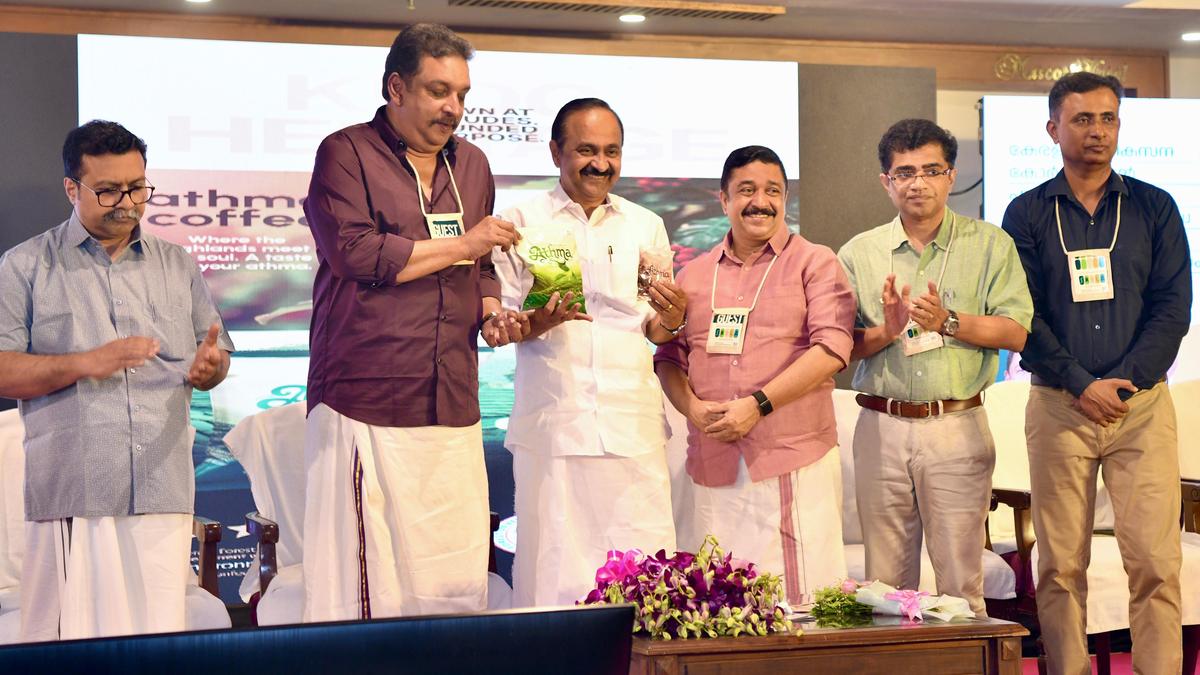
Chief Minister V.D. Satheesan launching the ‘Athma’ brand of tea produced by Kerala Forest Development Corporation at a function in Thiruvananthapuram on Wednesday Cautioning that unscientific human intrusions into forest corridors and severe habitat-space imbalances are triggering recurring man-animal conflicts in the State, Chief Minister V. D. Satheesan on Wednesday said that Keralam is examining the feasibility of translocating surplus wild tigers to other tiger reserves in consultation with the Central government.Formally rolling out five new ecotourism and value-addition initiatives of the Kerala Forest Development Corporation (KFDC), the Chief Minister highlighted the instances of unchecked construction, the mushrooming of resorts in fringe belts and the fragmentation of traditional elephant paths with fencing in places like Chinnakanal in Munnar. Such tendencies have deprived wild animals of their natural migratory corridors and grazing lands, inevitably pushing them into human settlements.Mr. Satheesan also drew attention to the growing imbalance of wild animal population in regions like Wayanad, where an estimated 150 tigers occupy nearly 350 sq.km. of forest cover. However, the available space was far below the territorial requirement of approximately 20 square kilometres per adult tiger, whereas in Periyar, where around 50 tigers inhabit over 900 sq.km., instances of human-wildlife conflicts remain low due to sufficient territorial space, he pointed out.Under such circumstances, the State government is actively exploring modern scientific mitigation strategies, including inter-reserve translocation of surplus tigers to suitable reserves having low tiger populations.Presiding over the function, Forest Minister Shibu Baby John pointed out that despite managing 10,000 hectares, including 7,500 hectares of forest farming and 2,500 hectares of tea estates, KFDC’s annual revenue hovers around only ₹30 crore.Pointing out that over 90 lakh tourists visited Keralam‘s ecotourism areas along forest fringes last year with the average spending standing at a meagre ₹78 per person, the Minister urged KFDC to take inspiration from successful public sector undertakings like Karnataka’s Jungle Lodges and Resorts to tap high-value ecotourism potential, while upholding conservation and sustainable development ideals.Forest Department secretary Biju K. elaborated on KFDC’s transition towards experiential, low-impact tourism models. He stated that rather than directing larger influxes of tourists into interior forest tracts, the Forest department has structured experiential circuits rooted in community partnerships.The new projects of KFDC include ‘SHOLA’ (Seek-Hike-Observe-Lodge-Absorb) initiative, which introduces guided forest trails, wellness walks and forest-bathing components.The other flagship schemes include ‘Workcation’ facilities that are equipped with high-speed internet connectivity at KFDC’s properties at Gavi and Suryanelli; a flexible installment-based ‘Travel Today, Pay Tomorrow’ holiday scheme for ecotourism travellers; and the commercial release of KFDC’s high-value retail tea and coffee brand ‘Athma’. A premium pod stay project at Vagamon was also launched on the occasion.Najeeb Kanthapuram, MLA, Head of Forest Force Rajesh Ravindran, Chief Wildlife Warden P. Pugazhendi, Principal Chief Conservator of Forests (Forest Management) Deepak Mishra, and KFDC managing director Raju K. Francis were among those who participated. Published - September 30, 2026 07:06 pm IST
Fragmented wildlife corridors, shrinking habitats behind recurring human-wildlife conflicts: Chief Minister
Full Article
Original Source
Read the full article at Thehindu →KhanList aggregates and links to publicly available news content. We do not host full articles from third-party sources. Always verify important information with original sources.