
As the anchor and executive editor of The Story with Martha MacCallum on Fox News, Martha MacCallum attends to the stories, momentous and fleeting, that constitute the daily news cycle.As an author, though, MacCallum prefers to focus on the stories from the past that have the capacity to inspire in the present. In 2020, she wrote Unknown Valor: A Story of Family, Courage, and Sacrifice from Pearl Harbor to Iwo Jima, and this month, she returns to bookstore shelves with The Book of Valor: America’s Story of Survival, Gallantry and Grace. The book stylishly and convincingly offers the sagas of a dozen heroes, historical and contemporary, whose defining characteristic is their valor. Several of the subjects from modern times were interviewed by MacCallum herself, but many others had to be brought back to life by the author, who burrowed into the historical record to come up with artfully imagined first-person accounts. (The chapters based on MacCallum’s interviews are also presented in the first-person.)MacCallum, a 22-year veteran of Fox News, recently spoke with the Washington Examiner about her book, but began by reflecting on the midterm elections, which had taken place a few days earlier. This interview has been edited for length and clarity.Washington Examiner: How did the midterm elections compare to other midterms you’ve covered?Martha MacCallum: We’ve covered a lot of surprising elections over the years, actually, and I think in some ways we always go into the night sort of thinking that we have some feel for what’s happening in the exit polls. But more and more, we are used to being surprised, especially since 2016. So it was absolutely a bigger wave than anyone anticipated. I think it was a very loud comment from voters across the country, and that’s what the process is all about. Sometimes getting a big reality check is a good thing. We’ll see where it leads.One of the things that we’re going to be doing is just continuing to press on these ideas, particularly of democratic socialism. I just played a Margaret Thatcher quote on my show a short time ago, and we’re looking at these scenes of what’s happening in Paris. And for some reason, when I interview [Democratic Socialists of America] representatives, they [say], “Oh, well, that’s what happened there. That won’t happen here.” To educate and inform is our goal, and we have a tall order where that’s concerned, just covering this whole story, but that’s what we’re going to do. The Book of Valor: America’s Story of Survival, Gallantry & Grace; By Martha MacCallum; Harper; 224 pp.; $35.00 Washington Examiner: The surprise wasn’t that it was a blue wave but that it was a blue tsunami, then.MacCallum: Absolutely. You have a lot of young voters, and particularly young men and Hispanic voters, who are proving that they are a force to be reckoned with, and that they are persuadable.… They really swung hard for President [Donald] Trump in 2024. And I was thinking back to President Trump driving the dump truck and at McDonald’s handing out fries, and I think that those images were very powerful around 2024. Not to mention [the 2024 assassination attempt against Trump] at Butler — I think very galvanizing in its own scary way for his supporters.But I think we live in a world where, especially with younger voters, this is an Instagram society. Basically, you get five minutes. You get five minutes of war in Iran, you get five minutes of fixing the economy. And when that clock runs out, people want to ditch for someone else.… I think also that tells you that the communication has not been laid well when it comes to the Iran war, when it comes to what’s actually happening in the economy. The message didn’t get through. If there is a positive story to tell, it did not get through.Washington Examiner: How did The Book of Valor begin to take shape in your mind?MacCallum: Well, the idea of valor is something that’s been with me for a long time. My first book is called Unknown Valor, and it’s the story of eight young men who come from all over America.… They all end up together in the middle of one of the fiercest battles for the Marines at Iwo Jima. One of them was my mom’s first cousin. He died at the age of 18 in his first day at the front lines. In that book, I really addressed valor as something that can be very small — as small as being a reassuring voice in a foxhole, or cracking a joke that helps a homesick friend get through the night, through the battle, [or] a prayer.This book started rolling into my head, in visions and pieces and images of what it might look like. Then I expanded the idea to do a story of America. You can’t tell the whole story of America, so I picked 12 voices to be first-person narrators, from the Mayflower women through Lewis and Clark through the Civil War, World War I, World War II, Vietnam, 9/11, Afghanistan.But also in here you’ll find Mother [Francesca] Cabrini, a great woman of valor, [and] Jonas Salk, who really answered the fear that permeated the country of parents that their child was going to be paralyzed or killed by polio at a very scary time in the mid-1950s in America. There are five Medal of Honor recipients in the book, including Captain [Patrick Henry] Brady, who I interviewed … and was also a pivotal character in forming my ideas for the book. But there are other ways to be valorous than on a battlefield.Washington Examiner: How did you settle on the concept of using first-person?MacCallum: I sort of did the same thing with Unknown Valor. I wanted it to be very active, that you’re in the middle of the action and you’re hearing these voices of these real people who were there. I just wanted it to be fresh.… William Dawes took the southern route of the midnight ride of Paul Revere, and was every bit as involved, but he sort of gets left out of [Henry Wadsworth] Longfellow’s poem and has a little bit of a grudge. I have him tell the whole story from his perspective. For me, it just felt much more active and fresh and engaging. It’s more fun for me to write in the voice of these different characters.Martha MacCallum. (Evan Agostini/Invision/AP) Washington Examiner: Which was the most challenging historical figure for you to inhabit?MacCallum: The one that springs to mind is [Thomas] Chamberlain. Joshua Chamberlain has been written about so much — great war hero of Little Round Top at Gettysburg — but I loved having his younger brother [Thomas] tell the story because he admires him so much, but he [thinks], “My brother is this bookish professor at Bowdoin College, and now he’s overseeing the 20th Maine and all these soldiers.” Through Thomas’s eyes, you see the evolution and the growth of this professor, [who] becomes this war hero and really just cares so much about the men under his care and his charge, and knows that he has to inspire them.… I just loved watching it through his younger brother’s eyes, and that was challenging because there’s not a lot of information on Thomas.Washington Examiner: What was it like going from your day job, dealing with the issues of the day, to working on these more timeless stories?MacCallum: Well, I do think it’s grounding. It’s always important to step back and have perspective, because the ups and downs that we experience now in some ways pale in comparison to some of the challenges that these people faced in their lives. To me, it’s a great and valuable escape to look into history and to see these stories. I really did wake up the morning after the election thinking, “This book is important because it tells Americans who we are and what we’ve been through.” There’s a strong thread of faith that runs through some of these characters, as well. There’s also poetry, [including] Emma Lazarus’s poem on the Statue of Liberty. There are songs. Each chapter has something on the left side of the beginning of the chapter that relates to the chapter that’s coming.The bridges [between the chapters] are really important, because they take you through tyranny in World War II, and then the emergence of the threat of communism that leads to Vietnam, and then as that subsides in history, you see the emergence of the threat of Islamic radical terrorism that led to 9/11.MAGAZINE: DAVID MCCOLLOUGH’S AMERICA IS OUR AMERICA TOOWashington Examiner: Did you find common threads between these 12 people that you weren’t anticipating?MacCallum: What emerged to me was that, at one point or another, they all confront their fear.… Fear can be debilitating, something they all recognize. Mother Cabrini, when she was afraid, she just went to St. Paul: “I can do all things through God, who strengthens me.”Peter Tonguette is the Life & Arts editor of the Washington Examiner magazine.
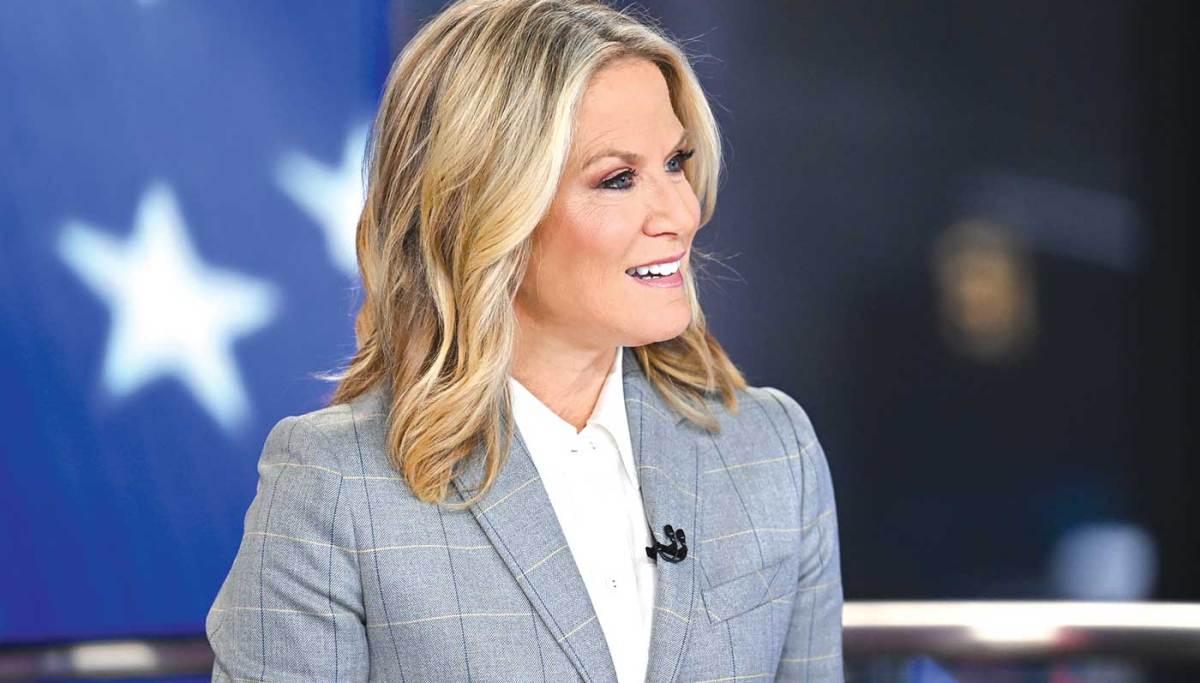
Fox News anchor Martha MacCallum talks about her new book
Full Article
Original Source
Read the full article at Washingtonexaminer →KhanList aggregates and links to publicly available news content. We do not host full articles from third-party sources. Always verify important information with original sources.