
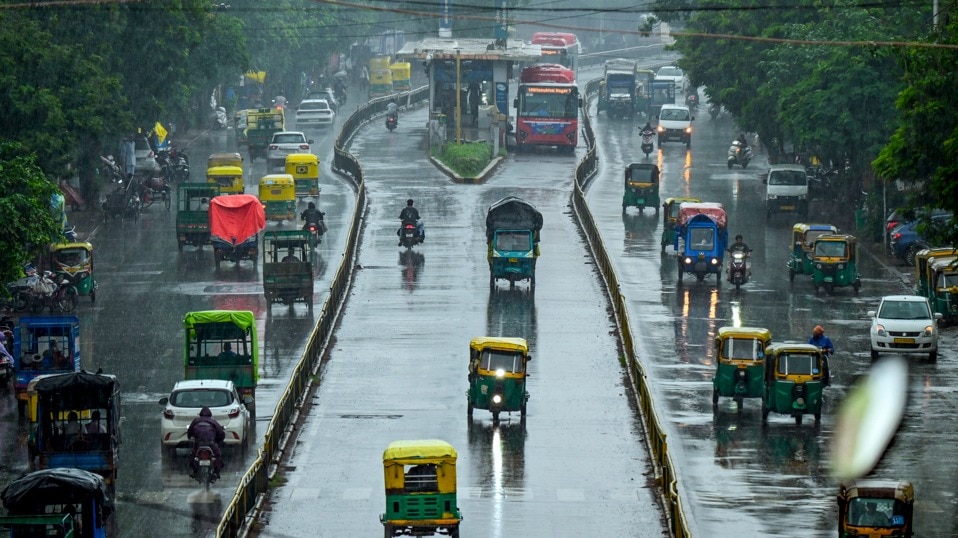
India's cities are growing rapidly, but are they keeping pace with a climate that is becoming increasingly difficult to deal with?A new analysis of some of the world's biggest cities suggests there is reason for concern.Two of India's largest cities are among the six cities with the highest climate risk, according to a global assessment by climate intelligence company AlphaGeo. Commuters wade through a flooded road in Kolkata. (Photo: PTI) The report, released in March 2026, analysed 72 major cities using its Climate Risk & Resilience Index, looking at physical hazards including extreme heat, flooding, drought and wildfires. Keeping these factors in mind, it then assessed how much existing adaptation measures reduce that risk.INDIAN CITIES AMONG THE WORLD'S MOST AT-RISKThe highest-risk major cities in AlphaGeo's analysis were ranked according to a metric called resilience-adjusted risk (RAJ). AlphaGeo's RAJ score represents the climate risk that remains after accounting for adaptation. A cityline of Kolkata, depicting urban heat. (Photo: Unsplash) As for who stands where, Ahmedabad ranked the worst globally, sharing the spot with Pakistan's Hyderabad, with a resilience-adjusted risk (RAJ) score of 41. Kolkata ranked sixth, with a score of 35. Additionally, Bangalore made the list at rank 12, and Chennai at rank 15.The six highest-risk major cities in AlphaGeo's analysis, other than Ahmedabad, Hyderabad, and Kolkata were Multan with a score of 38, Dhaka with 36, and Lahore with a score of 35.All six of these highest-risk cities are in South Asia, with Ahmedabad and Kolkata making India the only country other than Pakistan to have more than one city in the group. (Source: AlphaGeo) The assessment, however, covers cities as a whole, while climate risks can vary considerably between neighbourhoods.But what's also apparent is that the warning comes as Indian cities are increasingly dealing with a changing climate.Heat exposure was identified as a major factor behind the high risk for these South Asian regions.INDIA'S CLIMATE PROBLEMIndia recorded its warmest year since nationwide records began in 1901 in 2024, according to the India Meteorological Department (IMD).The country's average land-surface air temperature was 0.65°C above the 1991–2020 average.This pressure is particularly visible in Indian cities, where heat and intense rainfall can combine with dense construction and inadequate drainage to make extreme weather more disruptive.12th April 2026: India Under the Dome: 6-Day Intense Dry Spell to Grip Subcontinent. The loan oasis, Northeast India Defies National Trend with Rain and Thunderstorms until 15th April.Mercury Surge: Central and South India Brace for 40°C+ as High Pressure Caps the Skies pic.twitter.com/iitYYFOzoA— Parthan IN Weather (@PIW44) April 12, 2026A 2025 World Bank assessment of 24 Indian cities found that urban areas are becoming increasingly exposed to extreme heat and flooding as they expand.Urban centres can be 3–4°C hotter than surrounding areas because of the urban heat-island effect, the same phenomenon that was experienced earlier this year, and was behind making even the nights warm.But the threat is not simply hotter summers.Indian cities are increasingly having to deal with extreme heat, sudden heavy rain, flooding and water stress. A person wades through a waterlogged road in Kolkata, West Bengal. (Photo: PTI) A SMALL WINDOW TO PREPAREThe silver lining is that when it comes to preparing for a future riddled with climate impacts, India is not starting from scratch.Cities have been developing heat-action plans, flood-management measures and broader climate-resilience strategies.Ahmedabad, for instance, has its own Climate Resilient City Action Plan.The challenge is the scale and speed of change. People fly kites as dark clouds hover, in Kolkata, West Bengal. (Photo: PTI) India's urban population is expected to grow substantially in the coming decades, meaning much of the infrastructure that will determine how cities cope with climate extremes is yet to be built.AlphaGeo's findings do not mean Indian cities are helpless, but they point instead to a gap between the climate risks cities face and their ability to adapt to them.And with extreme heat and flooding already affecting urban India, the question is no longer whether climate change will hit Indian cities. It is whether they can prepare quickly enough.- EndsPublished On: Sep 8, 2026 15:07 IST
Four Indian cities among the world's least climate-resilient. Check the list
Full Article
Original Source
Read the full article at Indiatoday →KhanList aggregates and links to publicly available news content. We do not host full articles from third-party sources. Always verify important information with original sources.