
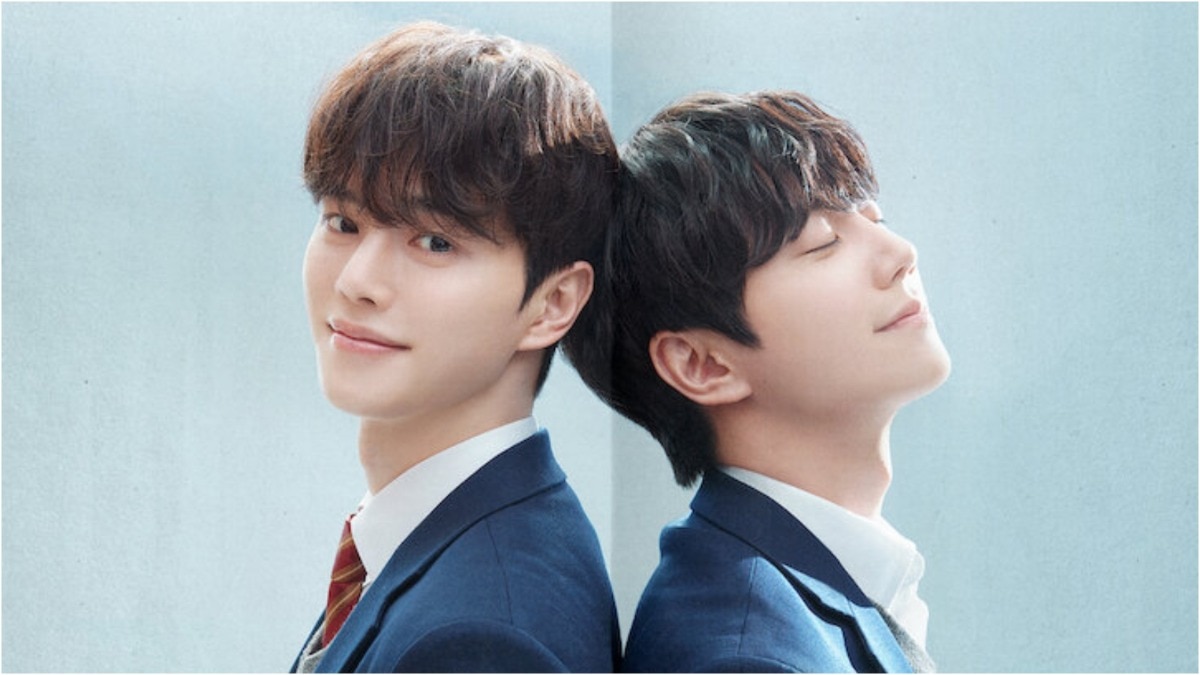
A piano is an unforgiving instrument. One wrong note can expose everything. Four Hands, Two Sonatas builds its story around two young pianists who could hardly be more different, then asks what happens when they are forced to share the same instrument.Kang Pi-o (Song Kang) is technically near-perfect, disciplined to the point of detachment and shaped by the enormous expectations of his grandfather, celebrated conductor Kang Seung-woon (Jung Jin-young). Choi Jeong-yo (Lee Jun-young), meanwhile, is gifted in a messier, more instinctive way. He comes from a financially difficult background and plays with an emotional abandon that Pi-o cannot quite understand.Their rivalry begins at an elite arts school but soon becomes something more complicated. A contest between precision and feeling, privilege and struggle, ambition and the need to simply be heard.The premise isn’t exactly unfamiliar. Korean dramas have explored competitive schools, prodigies and impossible parental expectations many times before. What makes Four Hands, Two Sonatas interesting is the way it uses music to express the conflict instead of merely decorating it. Pi-o and Jeong-yo don’t just disagree. They hear the world differently. One plays as though every note must be controlled; the other seems to discover the music as he goes. Their differences make their inevitable rivalry engaging, but it is their growing bromance that becomes the emotional centre of the drama.The banter has an ease that suggests history, even when the characters are still figuring out what they mean to each other. Their arguments are as revealing as their performances, and the tension between them feels less manufactured than the usual K-drama rivalry. There is also a welcome lack of romance overpowering the story. Hong Jae-in (Jang Gyu-ri), a talented viola student, adds another dimension to the relationship between the two pianists, but the drama’s strongest dynamic remains between Pi-o and Jeong-yo. Their friendship, competitiveness and occasional inability to understand each other give the series its pulse.Song Kang deserves more credit for the kind of roles he has been choosing. Whether it is the monstrous vulnerability of Sweet Home, the unusual world of Navillera or now a piano prodigy carrying the weight of expectations, there is a discernible hunger in his performances. He seems increasingly willing to move away from simply playing the charming leading man and towards characters whose appeal depends on what they conceal. Pi-o is particularly restrained, and Song Kang uses that restraint effectively. His character’s silence often says more than his dialogue.Lee Jun-young, meanwhile, has built an impressive range in a relatively short period. Jeong-yo allows him to be rougher around the edges, more impulsive and emotionally exposed. He brings a physicality to the character that makes his relationship with music feel instinctive rather than academic. Together, the actors understand something important about rivalry: the person who irritates you most can also be the person who understands your talent best.The music itself deserves equal credit. The drama’s classical score, particularly its use of piano and chamber music, gives the series a sombre, intimate quality. The performances aren’t treated simply as showcase sequences. Music becomes a language for emotions the characters are often unable – or unwilling – to articulate. A change in tempo can communicate insecurity; a missed note can reveal pressure; two people playing together can say more about their relationship than a romantic confession.That gives the drama a visual and sonic identity that separates it from the more familiar school-set K-drama.But the series isn’t entirely immune to those familiar conventions. The pressure of family expectations, the privileged prodigy versus struggling talent dynamic and the competitive arts-school environment are well-worn territory. Some of the emotional conflicts also arrive with the predictability of a genre that has spent years dramatising damaged young geniuses. The drama occasionally leans so heavily into melancholy that its darker moments begin to feel expected rather than genuinely surprising.Its pacing, too, asks for patience. The story takes time to establish the characters and their musical worlds, and while that measured approach suits the atmosphere, it can sometimes make the narrative feel slower than its central rivalry deserves. Still, restraint is preferable to melodrama for the sake of it.Four Hands, Two Sonatas is most compelling when it allows the characters to sit with their contradictions. Pi-o can be technically brilliant and emotionally lost. Jeong-yo can possess extraordinary musical instincts while struggling to find stability elsewhere in his life. Neither is simply the gifted one nor the underdog. Their strengths expose each other’s weaknesses, which is what makes their eventual collaboration so interesting.The drama isn’t always as original as its music. But Song Kang and Lee Jun-young give the rivalry enough texture to rise above its familiar framework, while the jazz-tinged mood and classical performances create an atmosphere that lingers.Four Hands, Two Sonatas may be playing a familiar composition. But its two leads are beginning to find their own rhythm.New episodes drop Saturday and Sunday on Netflix.- EndsPublished On: Sep 3, 2026 09:07 IST
Four Hands, Two Sonatas review: Song Kang and Lee Jun-young play a fine duet
Full Article
Original Source
Read the full article at Indiatoday →KhanList aggregates and links to publicly available news content. We do not host full articles from third-party sources. Always verify important information with original sources.