
SEPTEMBER 3, 2026 20:55Former Biden administration senior adviser Amos Hochstein rejected opposition leader Yair Lapid’s claim that Israel had previously succeeded in blocking a US-Saudi nuclear agreement, saying Washington’s negotiations with Riyadh were conducted independently and only gained momentum after the Bennett-Lapid government left office.“Did Israel at some point manage to stop the US from doing a nuclear deal with the Saudis?” Hochstein was asked by The Jerusalem Post.“The easy answer, and the simplest answer, is absolutely not,” he said.Hochstein, who served as a senior adviser to former president Joe Biden and was the administration’s lead negotiator on the nuclear component of the proposed US-Saudi agreement, said the talks were conducted directly between Washington and Riyadh.“We negotiated a comprehensive agreement with the kingdom, and at no time did Israel, or any other country, block that deal,” he said.Head of opposition and head of the Yesh Atid party MK Yair Lapid leads a faction meeting at the Knesset, the Israeli parliament in Jerusalem, on June 29, 2026. (credit: CHAIM GOLDBERG/FLASH90)Lapid slams US-Saudi nuclear agreement His comments came in response to Lapid’s criticism on X of the nuclear agreement with Saudi Arabia submitted to Congress this week. Lapid called the agreement “one of the biggest and most dangerous failures of Israeli foreign policy of all time,” arguing that the Trump administration was pursuing what it considered the US interest, but that the agreement would symbolize Israel’s declining influence in Washington.Both as foreign minister and prime minister, and later as opposition leader, Lapid warned senior US officials and members of Congress about the prospect of Saudi Arabia receiving uranium-enrichment capabilities as part of a civilian nuclear program.“A normalization agreement with Saudi Arabia is a welcome development, but not at the price of a nuclear arms race throughout the Middle East. Netanyahu has spent his entire life fighting precisely against such moves. These are the foundations of our nuclear strategy,” Lapid said in September 2023, at the height of normalization talks between Israel and Saudi Arabia under then-prime minister Benjamin Netanyahu and President Joe Biden.“Strong democracies do not abandon their security interests for the sake of politics. It is dangerous and irresponsible. Israel must not agree to any form of uranium enrichment in Saudi Arabia".Despite Lapid’s public opposition to the deal, Hochstein pushed back on the broader suggestion that Israel could determine or block US foreign policy.“Israel can have input, and it could express its interests to the United States, but it cannot block or initiate any American policy,” Hochstein said. “That is done by the United States.”According to Hochstein, the process that ultimately produced the Biden administration’s proposed nuclear agreement with Saudi Arabia began in earnest in 2023, as the administration sought to establish a broader normalization framework between Israel and Saudi Arabia.He pointed to Biden’s July 2022 visit to Israel, followed by his trip to Jeddah, as an important starting point for the wider diplomatic effort. However, Hochstein stressed that the nuclear agreement itself was not being negotiated at that stage.“The seed of the normalization negotiations started during that trip to Saudi Arabia in Jeddah in 2022 and picked up in earnest in 2023," he said.The talks were led by Hochstein, Brett McGurk, and other senior US officials. They included a nuclear component alongside discussions on economic, defense, and security arrangements.The nuclear agreement was negotiated as part of a much wider normalization package, Hochstein explained, though each agreement was handled separately.“The normalization was the umbrella, but each of the agreements that we negotiated was separate,” he said.Hochstein said the Biden administration reached a final agreement on the nuclear component toward the end of 2024. The broader package ultimately did not materialize, preventing the agreement from moving forward at that time.Based on his understanding, he added, the agreement recently reached by the Trump administration is “largely based” on the framework negotiated under Biden.“I haven't seen the full text of it yet, so I can't fully comment on that,” Hochstein cautioned.Hochstein voiced support for the principle of a US-Saudi nuclear agreement.“On its own, a nuclear agreement between the United States and Saudi is a good thing,” he said. “It is a good development and a good policy for the United States and for the region.”He argued that Saudi Arabia’s importance as a US ally made the issue particularly significant, while emphasizing that his support depended on the agreement meeting American nonproliferation and security requirements.“I am fully supportive, and I think there's bipartisan support for that idea, as long as the deal is done in a way that lives up to American standards of security verification and so on,” Hochstein said. “I hope this deal has” those safeguards.Follow us on Google
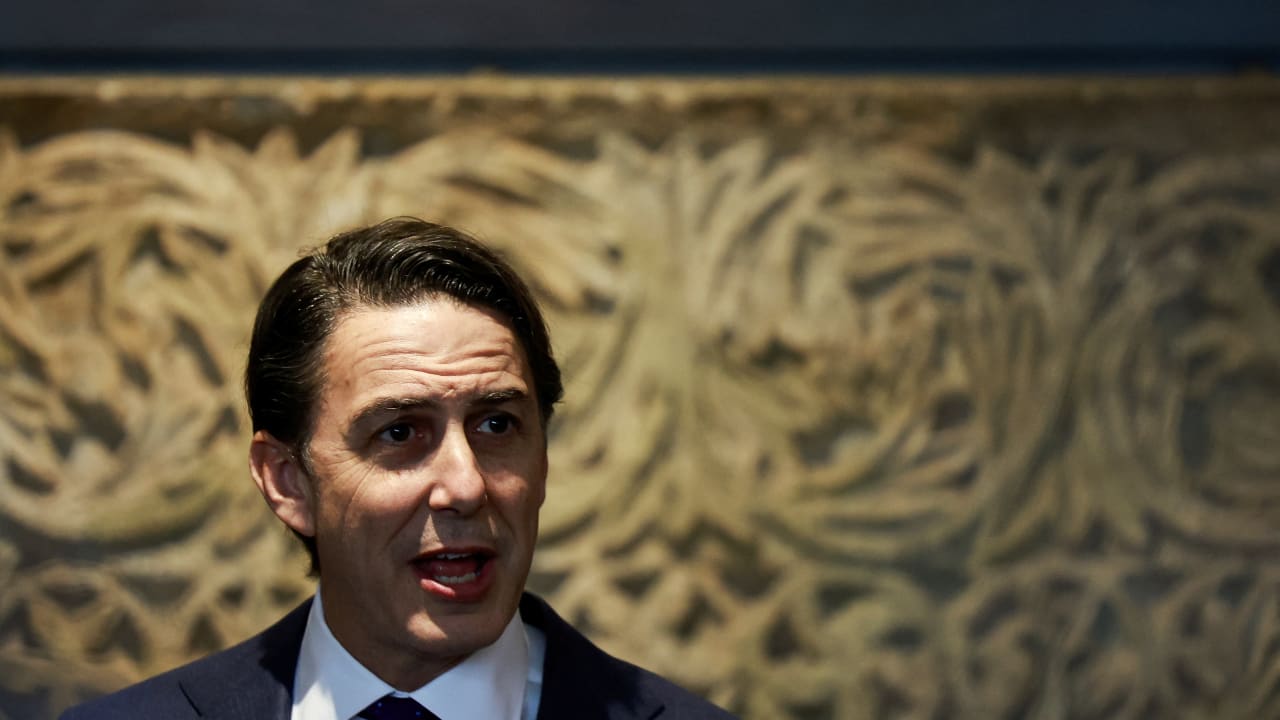
Former Biden adviser Hochstein rejects Lapid's claim Israel blocked a US-Saudi nuclear agreement
Full Article
Original Source
Read the full article at Jpost →KhanList aggregates and links to publicly available news content. We do not host full articles from third-party sources. Always verify important information with original sources.